
Reservoir spill will hurt wildlife more than war - study
- Home
- Events
- Terrorist attack
- Reservoir spill will hurt wildlife more than war - study

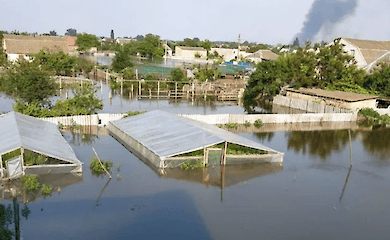
The destruction of the dam at the Kakhovska hydropower station will have negative consequences on various spheres. The flooding has already affected many people and killed many animals - this may be just the beginning.
Ukrainian nature is unique and it will be badly affected by an attack. In order to predict the possible developments, the Ukrainian Nature Conservation Group conducted research and found out what will happen to wildlife in the near future.
The researchers identified the following types of impacts:
- the draining of the Kakhovka reservoir;
- flooding.
The consequences of draining the bottom of the Kakhovka reservoir and water diversion from the reservoir include impacts on fish and birds, natural fauna (benthos) and plant life, rare types of habitats/settlements, areas of nature reserve fund and conservation objects of international importance.
The fish resource will be affected the most. As at the moment of dam failure only in Kakhovka reservoir there were about 43 species of fish, of which 20 species were of commercial value (annual catches amounted to 2.6 thousand tons). It is noted that recovery will take at least 7-10 years. And some of the surviving fish are likely to be carried to the sea and die in the salty water.
The disappearance of the reservoir will affect the bird population. According to the prediction, some species may simply disappear because some birds nest on so-called driftwood in the centre of the reservoir, which until now had been on isolated islands.
Impacts on plant life. As a result of the catastrophic drop in the water level of the reservoir, aquatic and riparian vegetation will disappear. Alien plants will replace them. And open areas at the bottom of reservoirs could become the largest breeding ground for dangerous invasive species.
In the category of consequences of inundation of the areas downstream of the destroyed dam, additional impacts are identified: terrestrial fauna, areas of nature reserve fund and Emerald Network areas, wetlands of international importance and flooding of rivers.
Apart from the Dnieper, its tributaries, the Ingulets and Vilovchina Rivers, will also be affected. Downstream these rivers have been flooded for many kilometres. As a result, the natural ecosystems along the banks of these rivers have been affected. The mixing of the Dnieper and Ingulets waters has also resulted in the introduction of new species in the rivers' fauna, worsening the living conditions of the local fishing industry. In addition, stagnant waters will result in pollutants rising with the current from the reservoir bed into these rivers.
In addition, desalination and pollution of the Black Sea could occur.
The collapse of the dam has released large quantities of fuels and lubricants into the water, which are toxic to aquatic organisms and can form a film on the surface of the water. There are other sources of marine pollution that can affect a wide range of biological communities, from plankton to marine mammals. In addition, large quantities of freshwater can provoke mass multiplication of micro-organisms and algae.


Oleg Kotov writes about the war in Ukraine and how it is changing the world.
Related news

Germany attackers were preparing a terrorist attack at a Christmas fair - mass media


There was an explosion in Rivne city centre: police said it was a terrorist attack

Russians hit the centre of Kramatorsk: two people killed, about 20 wounded


In Sumy, a Russian aerial bomb hit a boarding house for the elderly: there are dead and wounded people
Popular news

How to cook sweetcorn properly so that it’s juicy and sweet: the best method revealed
Archaeologists have discovered who actually built Colombia’s ancient canals


Scientists have uncovered the ‘true curse of the mummy’—and it turns out it’s not mystical at all
An expert explains how Russia is changing its tactics for strikes on Kyiv

News about war
An expert explains how Russia is changing its tactics for strikes on Kyiv
The UN has reported a sharp rise in the number of Ukrainian civilians killed as a result of the war