Will Ukrainians return home after the war?


Ukraine is actively discussing the return of its citizens home. However, this should be expected en masse only if security is improved. And also if there are programmes to provide housing, jobs, care infrastructure and clear rules of interaction with the state.
The discussion "What can bring Ukrainians back home? Conditions, Policies, Partnerships" from the SD Platform, held on 28 April 2026 in Kyiv, showed that the main problem is not only the scale of departure, but that Ukraine has not yet offered a sufficiently convincing model of return and reintegration.
Return of Ukrainians: why the issue cannot be solved with slogans
The return of Ukrainians to their homeland cannot be considered separately from the internal state of the country. It is impossible to return millions of people to a system that cannot cope even with internally displaced persons, says Olha Altunina, a representative of the Ombudsman for the Rights of Citizens Affected by the Armed Aggression against Ukraine.
According to her, in 2022, the office received 44 thousand appeals, and last year, 155 thousand. This speaks not only about trust in the institution, but also about the depth of the rights crisis faced by citizens during the war.
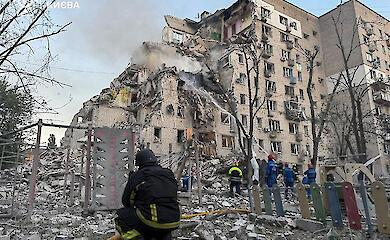
The first and toughest condition for return remains security. This is not just fear of missile attacks or shelling. It is a broader sense of predictability: whether it is possible to live, work, raise children, heal, study, and plan for the future without the constant feeling that at any moment everything will be destroyed again.
The discussion heard that 83 per cent of Ukrainians who are currently in different countries do not plan to return in the near future, precisely because of the security factor. This figure explains why financial incentives alone do not solve the problem. Altunina cited the example of Norway, where a programme of voluntary return of Ukrainians with payments was launched: 1.6 thousand euros to an adult and 3.6 thousand euros to a child. According to her, more than six thousand applications were submitted, but after the new shelling of the Ukrainian energy infrastructure, some people started to withdraw their applications.
This example showed that people may be willing to return if they see a chance for a normal life. But as soon as that chance looks fragile again, the decision changes. Return is not a one-off move across the border. It is a willingness to live in the country anew, to be involved emotionally and economically.
For Ukraine, this means that the conversation about return is inevitably about defence, infrastructure protection, urban regeneration, and the quality of basic services. Until a family understands whether the child will go to school, whether it will be warm in winter, whether there will be access to healthcare, and whether they will have to leave again in an emergency, any appeals will remain secondary.
Housing: there is often simply nowhere to return to
The second key factor is housing. According to Altunina, 4.3 million Ukrainians are left without housing or access to it. This is not just about destroyed houses. Housing may be intact, but it may be in occupied territory or in an area where it is impossible to return safely. Returning from abroad will often mean not a return to one's hometown, but a new internal displacement. A person may return to Ukraine, but not to Mariupol, Berdyansk, Severodonetsk, or another city associated with occupation or constant threat. He will be looking for a new place in another area where housing, work, school, medicine, and social support are needed.
This is where one of the most difficult political issues arises. Ukraine already has millions of internally displaced people. According to Altunina, there are 4.6 million IDPs in the country, and only about 80,000 live in temporary accommodation. Social support is also limited: not everyone receives payments.
This means that the state has not yet created a full-fledged infrastructure even for those who have moved within the country. Therefore, promising separate large-scale benefits to those who return from abroad will not only be financially difficult, but also socially risky. People who stayed in Ukraine all the years of the war, lived under shelling, lost their jobs and homes, should not feel that their problems were less important.
Therefore, we need a unified policy to support people affected by the war: regardless of whether they were in Ukraine, travelled abroad, or returned after several years of living in another country. The criterion should not be real need: loss of housing, loss of employment, disability, presence of children, need for retraining, psychological trauma, or lack of access to basic services.
Work and wages: what is the situation in Ukraine?
After security and housing, the question of work inevitably arises. Ukrainians may be emotionally connected to the country, helping the army, supporting relatives, and following the Ukrainian agenda. But the decision to return will almost always be a rational one: what to live on, where to work, whether the family will be able to pay for rent, medical treatment, education, and everyday expenses.
Altunina said that 48 per cent of Ukrainians abroad have already found a permanent job, more than 70 per cent have higher education, and 46 per cent have permanent housing. This means that a significant part of those who have left are not in a state of temporary waiting. They are integrating, entering local labour markets, although not always in their specialty, building connections, and gaining experience of a different social system.
Ivanna Khrapko, representing the Trade Union of Workers of State Institutions of Ukraine, emphasised that decent working conditions are one of the main conditions for return. Ukraine was facing labour migration even before the full-scale war: people left not only because of the lack of work, but also because of low wages. The war intensified this process.
This is especially painful in the spheres that are the basis of national sustainability: education, health care, social and public services, and manufacturing. If a teacher, a doctor, a lecturer, a local administration worker or a qualified specialist cannot live on his or her salary, the country loses not only a specific person. It loses the ability to maintain the quality of institutions.
Khrapko cited the personal example of a teacher colleague who went to Germany, works in Frankfurt am Main as a tax agent, and earns about 2,000 euros. According to her assessment, the probability that such a specialist will return to Ukraine on a much lower salary is very low, even if she loves Ukraine and continues to help it.

This is one of the central conclusions of the whole discussion: return cannot be built on moral obligation. A person may feel responsible to the country, but he is also responsible for his children, parents, his own health, and his future. If Ukraine wants to bring people back, labour in the country must stop being a sacrifice.
Young people are leaving due to uncertainty
A separate risk is the outflow of young people. Natalia Starepravrava, an activist of the SD Platform, noted that young people leave not only because of the war. They are pushed out by uncertainty: weak social guarantees, lack of a clear labour market, fear of the future, distrust of state institutions, and the feeling that it is impossible to build a life plan in Ukraine.
Starepravo noted that after the government's decision to open the possibility of departure for men aged 18-22 years old, about 400 thousand young men went abroad. Youth migration is dangerous not only demographically. It affects the quality of future politics, economy, civil society, and local government. Potential engineers, teachers, managers, social activists, and reconstruction specialists are leaving. If the country does not offer them a clear place in post-war development, it will lose not only its population, but also its ability to renew itself.

Therefore, the return strategy should include a separate youth block: first job, internships, affordable housing, educational programmes, participation in decision-making, support for youth entrepreneurship, honest communication about military service, rights, and responsibilities. Young people need a route to build a future.
Education as a condition for return
A family will not return if they do not understand where and how the child will be educated. A student will not return if he or she does not see quality and perspective. A teacher will not stay if the system holds only on his personal endurance, believes Natalia Shevchenko from the NGO "Progressivni".
She emphasised that after 2022, the conversation about education has gone far beyond universities. Kindergartens, schools, vocational education, adult retraining and support for teachers themselves are important. The war showed that education is not only about knowledge, but also about the social infrastructure that holds families and communities together.

According to Shevchenko, teachers in the frontline and affected regions continue to work, participate in projects, take refresher courses, master new methods and artificial intelligence. But at the same time they are in a state of constant exhaustion. Teachers support children and parents, but they themselves are often left without sufficient psychological and professional support.
This is an important layer of the problem. The return of Ukrainians is impossible without working schools, kindergartens, universities and vocational training centres. And they are impossible without the people who work in them. If the pedagogical system is based on dedication alone, it will not be able to withstand the long-term strain.
Vocational education is of particular importance. To rebuild the country, we need specialists in working and technical professions, as well as retraining programmes for adults who have lost their previous jobs. This applies to both civilians and veterans. Ukraine must not just bring people back physically, but help them re-integrate into the economy.
Veterans and rehabilitation: a test for the maturity of the state
The issue of returning Ukrainians cannot be separated from the treatment of veterans. The story of Natalia and Ruslan Afanasyev from the Veterans' Pro Movement organisation shows this particularly clearly. Natalia said that after the full-scale invasion began, she left Nikopol with her mother and son, then lived for about two and a half years in Brno, Czech Republic. She had an official job, paid taxes, had medical care, her child went to school, and learnt Czech. After her husband was mobilised, wounded in the summer of 2024, and lost his sight, the family returned to Ukraine. The family was adapted abroad, but the war changed their plans. After their return, they had to re-adapt to life in Ukraine.

Ruslan Afanasiev, for his part, said that support for veterans should be universal and automatic. If a veteran is not sure that he or she will receive treatment, rehabilitation, payments, support and the opportunity to work after an injury, then people abroad will also not be sure that the state will be able to protect them in a crisis situation. Support for veterans is the foundation of the future social contract.
European partners can help, but not create a strategy
One practical approach on the part of the EU, which was discussed at the discussion, is targeted support for Ukrainian communities that are ready to receive people. If it is known that a certain number of Ukrainians are planning to return to a particular region, European aid can go towards social housing, schools, retraining, jobs and services exactly where the strain will arise.
Another area is training and requalification. European countries, where Ukrainians are now located, can coordinate training programmes with the needs of the Ukrainian labour market. If Ukraine understands what professions will be in short supply, people can be trained in advance. But for this purpose the Ukrainian state itself should have a forecast, strategy and communication with partners.
The participants noted that a number of changes, such as labour law reforms, should not be presented as a requirement of European integration if they worsen the situation of workers. For Ukrainians to return, Europe should be associated with dignity, labour protection and fair rules.
The participants also emphasised the importance of creating a coherent social rights policy in Ukraine, which would allow people to see their future in their home country.
Earlier, Socialportal wrote about a new study on Ukrainian migrants, which shows who exactly left, how Ukrainians integrate in Europe and what can influence people's decision to return home. As well as what the state can do for this and whether those who became part of the Ukrainian diaspora abroad help the country.
Subscribe to our Youtube channel to not miss new videos on acute social issues. Read all about migration in the Social section on Socialportal. Join the channel "Shcho zhodam iz sotsialkoyu" Viber in or in Telegram. Do you have a specific question? Contact SocialGRT!
Maria Grynevych, project manager, journalist, co-author of Guidebook Sacred Mountains of the Dnieper Region, Lecture Course: Cult Topography of the Middle Dnieper Region.
Related news

Why migration policy in Ukraine is becoming a matter of rebuilding the country

"I work at a supermarket checkout because I don't want to be woken up by patients calling at night." How Ukrainians work in Poland now


The Ombudsman's representative named the main problems of IDPs: housing, work, and reduction of benefits


Pro-Russian march with St. George ribbons and Night Wolves allowed in Vienna

Popular news

An antidote to one of the most potent marine venoms has been found in frogs

Traces of water heated to 300 degrees have been found near the “Lost City”

A gold tiara found in a woman’s tomb has astonished archaeologists


News about war
The UN has reported a sharp rise in the number of Ukrainian civilians killed as a result of the war

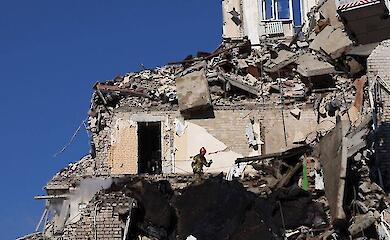
3 July has been declared a day of mourning in Kyiv. The number of dead and injured is rising