
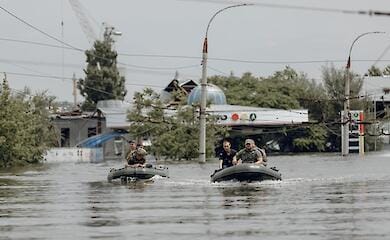

General Staff update on enemy losses at the front


The Russian occupiers continue to focus their efforts on trying to fully occupy Luhansk and Donetsk regions.
Over the past 24 hours, Ukrainian defence forces eliminated another 980 occupiers. Since the start of the full-scale invasion, Russia has lost around 215640 manpower. This was reported on the Facebook page of the General Staff of the Ukrainian Armed Forces.
Total combat losses of the enemy from 24.02.22 to 11.06.23 are estimated as follows:
- personnel - about 215640 (+980) men eliminated,
- tanks - 3926 (+17) vehicles
- armoured combat vehicles - 7,631 (+24) units
- artillery systems - 3736 (+19) units
- Multiple rocket launchers - 601 (+1) units
- air defence means - 362 (+0) units
- aircraft - 314 (+0) units
- helicopters: 299 (+0) units,
- UAVs - 3,300 (+37),
- cruise missiles - 1183 (+7),
- ships / boats - 18 (+0) pcs,
- vehicles and tankers - 6,461 (+33) pcs,
- special vehicles - 509 (+2).
Over the past 24 hours, the Russian occupiers carried out another missile and aviation strike against Ukraine, using eight missiles, in particular four Iskander ground-launched cruise missiles, and 35 Iranian Shahed-type attack UAVs against military facilities and critical infrastructure.
In addition, the enemy carried out 92 air strikes and 45 multiple rocket launches against our military positions and population centres.


Artur Zayonts specialises in news from the frontline. A historian by education, Arthur has always sought to bring depth and context to his journalistic work.
Related news
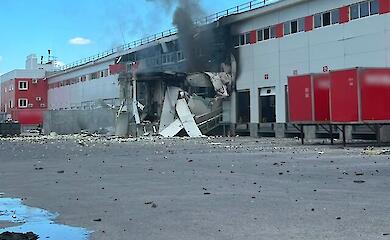
Russia struck a "Nova Poshta" terminal near Kharkiv: staff members were killed and more than 20 people were injured

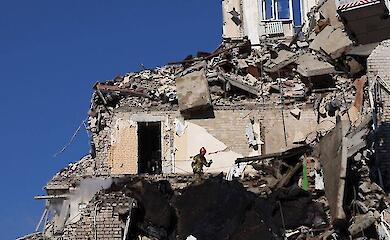
3 July has been declared a day of mourning in Kyiv. The number of dead and injured is rising

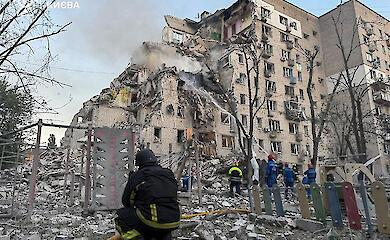
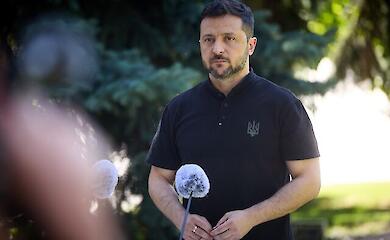
Strikes on both sides of the Crimean Bridge: Zelenskyy announced that Russia’s key logistics and air defence systems had been destroyed
Popular news

A gold tiara found in a woman’s tomb has astonished archaeologists



Irina Levchenko, the abducted Ukrainian journalist, has been transferred to the Donetsk remand centre: what is known


How much coffee can you drink without harming your heart: the cardiologists’ answer
News about war
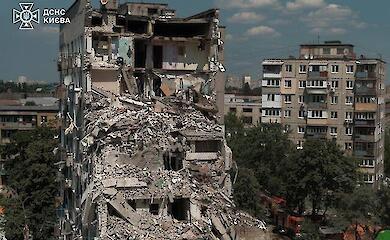
The UN has reported a sharp rise in the number of Ukrainian civilians killed as a result of the war
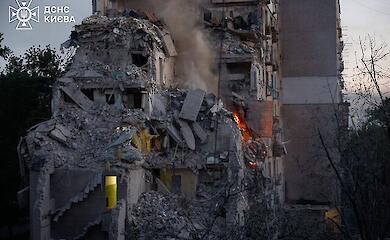
3 July has been declared a day of mourning in Kyiv. The number of dead and injured is rising