Historians have discovered an unexpected origin for the term ‘burnout’


The term ‘burnout’ came into use long before offices, deadlines and email. A researcher has discovered that the expression ‘burned out’ was in use over 250 years ago, and its origins are closely linked to hard physical labour, fires and the early days of capitalism.
Today, the World Health Organisation defines occupational burnout as a syndrome resulting from chronic stress at work.
However, the history of the expression itself began much earlier.
A researcher analysed 18th-century English agricultural records and discovered that the phrase ‘burned out’ was initially used in a literal sense — when candles, fuel, stoves or farm buildings had burnt out.
Gradually, the expression came to be used to describe people who were completely exhausted by hard work.
A farmer lost his barn and nearly lost himself
One of the most striking examples is the story of the English farmer William White, described by the agricultural reformer Arthur Young in his book *The Farmer’s Tour Through the East of England* (1771).
White lost his barn twice as a result of fire. Whilst he was rebuilding his farm with his own hands, he had to continue working on the farm at the same time.
This combination of hard physical labour and the need to quickly rebuild his property led to complete exhaustion. It was in this context that Young used the expression ‘burned out’.
According to the author of the study, even then, material disaster and human exhaustion were perceived as interrelated phenomena.
Working 20 hours a day
Even more telling is the story of the miner James Croft.
During the day he toiled in a coal mine, and after his shift he worked on his own small farm until late at night to feed his family.
According to Arthur Young’s calculations, the man slept for around four hours a day and worked for almost 20 hours out of every 24.
His contemporaries marvelled at his industriousness, although even then they noted that constant overwork had seriously undermined his health.
When people became ‘fuel’
The researcher believes that, over time, the expression ‘burned out’ evolved from a literal description of burnt objects into a metaphor for human exhaustion.
This linguistic transformation reflected a shift in attitudes towards work.
Whereas previously it was candles or firewood that ‘burned out’, workers themselves gradually began to ‘burn out’ – as if they were a resource to be expended in the pursuit of economic goals.
The author links this to the emergence of the 18th-century capitalist economy, where long and arduous labour gradually came to be seen as the norm.
However, the study does not claim that people in the 18th century suffered from occupational burnout syndrome as understood in modern medical terms.
The focus is on the history of the concept itself and how the language used by society to describe the consequences of excessive work has changed.
According to the author, this offers a different perspective on contemporary discussions about burnout and serves as a reminder that the problem of excessive labour exploitation has much deeper historical roots.
Source
Research: based on material from the forthcoming book *Whistling at the Plough: Poetic Infrastructure from Improvement to Romanticism*.
Maria Grynevych, project manager, journalist, co-author of Guidebook Sacred Mountains of the Dnieper Region, Lecture Course: Cult Topography of the Middle Dnieper Region.
Related news

Moonlight has helped solve the mystery of Egypt’s sacred baboons


The history of silk turned out to be almost two thousand years longer

A gold tiara found in a woman’s tomb has astonished archaeologists

They were regarded as housekeepers — yet they were in charge of winemaking in Ancient Rome
Popular news
A gold tiara found in a woman’s tomb has astonished archaeologists



Irina Levchenko, the abducted Ukrainian journalist, has been transferred to the Donetsk remand centre: what is known


How much coffee can you drink without harming your heart: the cardiologists’ answer

News about war
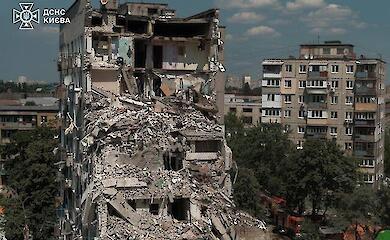
The UN has reported a sharp rise in the number of Ukrainian civilians killed as a result of the war
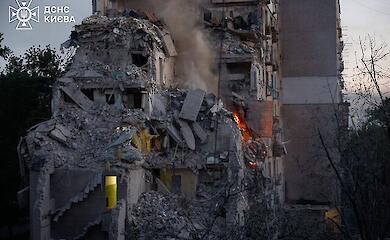
3 July has been declared a day of mourning in Kyiv. The number of dead and injured is rising