Ukraine's recovery hampered by housing crisis, debts and lack of people


Despite a partial economic recovery, Ukraine remains vulnerable to deep structural problems ranging from a housing crisis and rising household debt to labour shortages and dependence on foreign aid.
This is stated in a publication by the Foundation for European Progressive Studies (FEPS), which analyses the war's losses and key barriers to the country's sustainable recovery.
How much Ukraine has lost due to Russian aggression
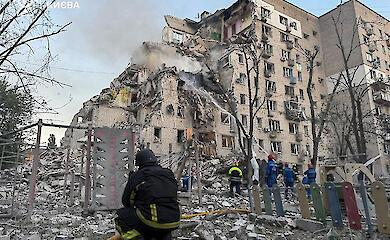
According to the study, direct damage to Ukrainian infrastructure due to the Russian invasion by February 2025 was estimated at $176bn. Economic losses, including the decline in production, were estimated at $589 billion. Environmental damage was estimated at more than $56.4 billion, and 30% of Ukraine's territory is contaminated with mines and unexploded ordnance. At the same time, about 20 per cent of the territory remains occupied, and the true scale of destruction along the front line and in the occupied territories has not yet been fully calculated.
The economy is formally growing, but remains extremely fragile
Despite this, the Ukrainian economy is showing recovery: real GDP in 2024 will grow by 2.9 per cent after 5.5 per cent in 2023. But the growth comes against a background of deep failure, so it is premature to talk about normalisation. Inflation has risen to 12.9%, and the budget deficit for 2025 was planned at 19.6% of GDP.
The country's fiscal sustainability remains dependent on foreign aid, fiscal changes, debt restructuring, and the ability to manage investments in a war. External support remains critical. In particular, the unblocking of €90bn from the EU is so important.
A separate source of vulnerability is the dependence on private remittances from abroad: in 2021, they reached $18.2 billion, almost 10 per cent of GDP; in 2023, they dropped to 9.1%.
At the same time, the debt burden on households is growing. The retail loan portfolio grew by about 38% per year, mortgages almost doubled in 2023, and consumer loans are issued at 30-50% per annum.
Half of borrowers, the paper notes, use "quick" loans to cover everyday expenses, and about 36% of such loans are problem loans.
This is no longer a story about investing in the future, but about surviving on expensive debt.

The vicious circle of female employment
The study estimates that to truly boost the economy and reach its target benchmarks by 2032, productivity would need to grow at an average annual rate of 6.1 per cent - about double the historical rate. This is unimaginable without labour. If the country fails to retain and bring people back, investment in reconstruction will not translate into working businesses, municipal services, transport, and infrastructure.
The study indicates that the deficit of women in the labour market is particularly sensitive: their participation in paid employment in Ukraine is estimated at 47.7%. This low level is attributed to the problematic situation with social support, medicine, and childcare infrastructure, the inability to guarantee stable employment, and the lack of psychological support.
For example, Ukraine has lost about 14 per cent of its health workers due to fighting, occupation, and migration.
At the same time, almost half of all health care costs are still paid directly out of households' pockets. Mental health and rehabilitation remain the most scarce.
Education looks no less depleted - educational losses are estimated at the level of one missed school year. This is compounded by crumbling infrastructure, lack of shelters, distance, hybrid formats, blackouts, and chronic underfunding.

In addition to the military threats, the social sphere is sagging because a significant proportion of women who left the country were employed in it:
16 per cent used to work in education,
another 7 per cent worked in health care and the social sphere.
The study stresses that Ukraine's recovery is impossible without the inclusion of women's labour in the paid economy. However, as long as women are forced to compensate for the unavailability of services by unpaid care, the country loses not only human potential but also taxes, domestic demand, and economic growth rates.
Housing problem: more and more Ukrainians are becoming renters
One of the most long-lasting social problems, which, along with the sagging social sphere, keeps people from returning, is the affordability of housing. In the first year of the war alone, about 10 per cent of the country's housing stock was damaged or destroyed, and the situation is worsening daily.
The pre-war model of privatised housing is changing rapidly.
Whereas in 2021, 95 per cent of Ukrainians lived in their own housing, in 2024, this share has fallen to 79 per cent, and the share of renters has risen to 14 per cent.
In regional centres, renting became particularly common - 24% compared to 12% in other cities and 6% in rural areas.
Overall, 42% of households have difficulty paying for housing:
- 29% spend 31-50% of their income on it,
- 13% - more than half.
And among renters, the picture is even tougher:
- 31% spend more than 70% of their income on housing and utilities,
- 54% - more than half.

Against this backdrop, rising prices, weak rent regulation, and a shortage of social housing make the housing crisis a major obstacle to recovery.
There is also an extreme point to this crisis. Nearly a quarter of people living on the streets became homeless precisely after displacement due to the war, according to data cited in the study.
Concessional mortgage programmes remain virtually unaffordable for the majority. Formally, the rate on "єOsela" is 3%, but the minimum down payment is 20% of the cost of housing. For a person with a Ukrainian salary, it is almost unaffordable: with an average salary of 500 euros, a studio on the secondary market in Lviv costs about 32 thousand euros, on the outskirts of Kyiv, about 25 thousand. Against this background, the idea that the market itself will solve the housing issue looks less and less convincing.
The main conclusion: recovery starts with people
The study summarises that Ukraine needs not only money for reconstruction, but also conditions under which people can live and work. And as a consequence, the masses will return home. Money for reconstruction is important, but it does not create the country anew.

Expert on women's rights, persons with disabilities, motherhood in the modern context, health care reform, education and social welfare.
Related news

Why migration policy in Ukraine is becoming a matter of rebuilding the country


"I work at a supermarket checkout because I don't want to be woken up by patients calling at night." How Ukrainians work in Poland now


The Ombudsman's representative named the main problems of IDPs: housing, work, and reduction of benefits


Popular news

An antidote to one of the most potent marine venoms has been found in frogs


Traces of water heated to 300 degrees have been found near the “Lost City”

A gold tiara found in a woman’s tomb has astonished archaeologists


News about war

The UN has reported a sharp rise in the number of Ukrainian civilians killed as a result of the war


3 July has been declared a day of mourning in Kyiv. The number of dead and injured is rising