
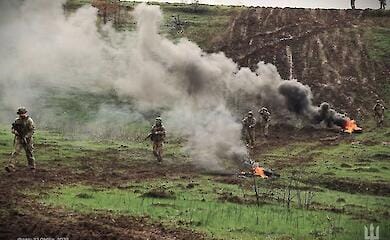
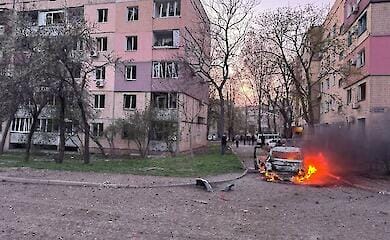
Russian troops test new Molniya drones in Kharkiv region


Russia is hitting Ukraine's frontline towns with Molniya drones, which it first made out of plywood.
The head of the Kharkiv regional military administration, Oleh Sinegubov, has said that Russian invaders are actively testing their new Molniya drones near the front line, carrying out strikes in the regions, especially in populated areas near the border. About this he told in an interview with Novosti Live.
Sinegubov stressed that the Ukrainian military has recorded new types of enemy drones, which are apparently still at the testing stage.
We are sure that the enemy continues to test these drones, as the strikes on Kharkiv are not of a mass nature. But there has been a significant increase in the number of attacks using 'Lightnings' on settlements that are in close proximity to the front line and the border," he said.
The OBA head added that several generations of these drones have already been recorded, which confirms the active development and improvement of technologies for more targeted strikes.

"Molniya," a Russian kamikaze drone shaped like an aeroplane, is used to strike not only Ukrainian troop positions but also civilian infrastructure and Ukrainian cities, including Kharkiv, Zaporozhye and Kherson, within range. Its low cost and availability of materials allows Russia to establish mass production of such UAVs. At the first stages, they were made of plywood, and later a variant with a plastic body was developed.
The flight range of "Molniya" type drones is from 35 to 50 kilometres, depending on the modification.
Such a drone can carry a heavy warhead and shells of various types. At first, the Russians equipped it with grenades or sapper charges, but later began to arm it with heavier explosives - for example, TM-62 anti-tank mines.
Basic parameters of the Molniya UAV (basic model):
- Length: about 1.5 m
- Weight: about 10 kg
- Combat load: up to 5 kg
- Flight range: up to 35 km
- Speed: 80 km/h
- Flight time: 40 minutes
- Cost: approximately $300
These drones have become a frequent target of the Russian army for strikes in Kharkiv, where they hit civilian targets, residential areas and high-rise buildings, as well as strikes in the Kherson and Zaporozhye regions. In April 2025, one of these drones hit a Ukrainian Witness film crew vehicle 20 kilometres from the front line.
Elena Rasenko writes about science, healthy living and psychology news, and shares her work-life balance tips and tricks.
Related news
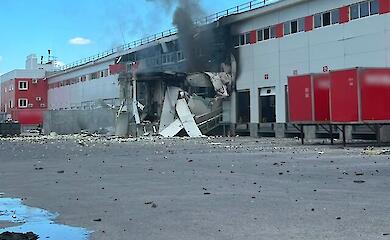
Russia struck a "Nova Poshta" terminal near Kharkiv: staff members were killed and more than 20 people were injured

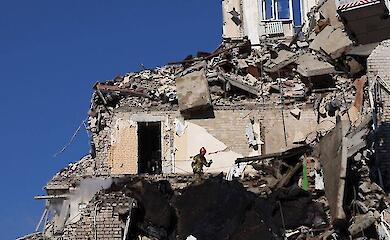
3 July has been declared a day of mourning in Kyiv. The number of dead and injured is rising

Strikes on both sides of the Crimean Bridge: Zelenskyy announced that Russia’s key logistics and air defence systems had been destroyed
Popular news

Ukrainian security services have been recognised as among the best intelligence services in Europe – L'Express

Irina Levchenko, the abducted Ukrainian journalist, has been transferred to the Donetsk remand centre: what is known


Scientists have put forward an explanation as to why there were no tiny dinosaurs

Russia has attacked Lviv with drones and missiles: dozens of residential buildings have been damaged and there are casualties
News about war
The UN has reported a sharp rise in the number of Ukrainian civilians killed as a result of the war
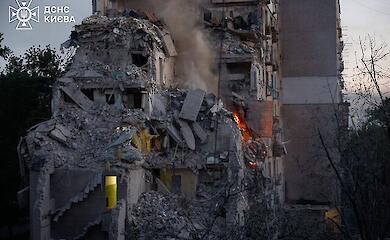
3 July has been declared a day of mourning in Kyiv. The number of dead and injured is rising