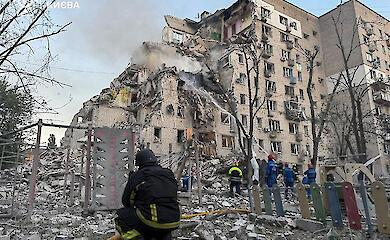
The European Union has explained why Ukraine’s accession process is being delayed – FT


The Financial Times reports that Brussels supports Ukraine’s European path, but considers further reforms to be necessary. Among the main challenges are the fight against corruption and the EU’s own readiness for enlargement.
The European Union is not yet considering the possibility of admitting Ukraine into its ranks via a fast-track procedure. The main obstacles to full membership remain issues relating to corruption, the independence of the judiciary and respect for the rule of law. This is reported by the Financial Times, citing European diplomats.
Corruption remains the main challenge
Brussels acknowledges that, had it not been for Russia’s full-scale invasion, Ukraine would be unlikely to have been granted EU candidate status. However, the prospect of membership does not automatically mean the process will be fast-tracked. One of the key issues for European partners remains the level of corruption in the country and the effectiveness of anti-corruption reforms.
“You cannot admit a country with a population of around 40 million people, which ranks 104th in the global corruption index, into the EU. That would make a mockery of the entire European project,” the Financial Times quotes a senior EU diplomat as saying.
At the same time, European officials emphasise that Brussels understands Ukraine’s strategic importance and has no intention of leaving Kyiv without support. In their view, the target of completing the accession process by 2027 was more of a political signal and a call for help than a realistic timetable.
Since the outbreak of full-scale war in Ukraine, the EU’s enlargement policy has taken on a new dimension. Whereas economic reforms were previously the main argument, the issue of security has now come to the fore, and European countries are keen for Ukraine, with its combat experience and strong armed forces, to become part of Europe’s common security system, officials in Brussels noted.
However, as the publication points out, the problem lies not only with Ukrainian reforms. The European Union itself is not yet fully prepared for large-scale enlargement and the admission of new member states.
France and Germany propose gradual integration
To resolve the issue, France and Germany are advocating a model of so-called phased integration. This would allow future EU members to gradually gain access to specific EU programmes, the single market and economic mechanisms even before their official accession.
This approach would allow candidate countries to integrate more deeply into the European system, whilst maintaining the requirements for reform.
EU enlargement after 2022
The EU enlargement process has effectively been on hold since Croatia’s accession in 2013. Russia’s full-scale war against Ukraine has given new impetus to the negotiations.
The candidate countries currently include Ukraine, Moldova and the Western Balkan states, including Montenegro and Albania. Montenegro is currently regarded as one of the countries that has made the most progress in meeting Brussels’ requirements and may be the first to complete the technical phase of the negotiations.
Despite support for Ukraine at the level of European institutions, public sentiment within the EU remains mixed. According to the latest polls, around half of EU citizens support Ukraine’s accession to the bloc. However, in some countries that previously actively supported Kyiv, the level of support is gradually declining. In particular, in Poland, around half of citizens oppose Ukraine’s EU membership.
Elena Rasenko writes about science, healthy living and psychology news, and shares her work-life balance tips and tricks.
Related news

Refugee policy as a test for European integration: how Ukraine and other candidate countries pass it


Russia has little time left, Europe even less. What the Western media say about the possible end of the war


Popular news
Ukrainian security services have been recognised as among the best intelligence services in Europe – L'Express

Irina Levchenko, the abducted Ukrainian journalist, has been transferred to the Donetsk remand centre: what is known

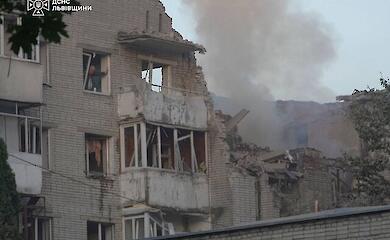
Russia has attacked Lviv with drones and missiles: dozens of residential buildings have been damaged and there are casualties

News about war

The UN has reported a sharp rise in the number of Ukrainian civilians killed as a result of the war

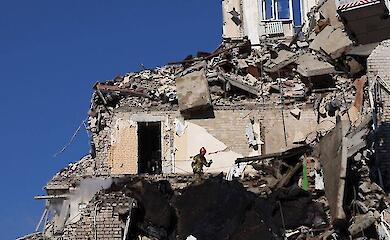
3 July has been declared a day of mourning in Kyiv. The number of dead and injured is rising