

Why do mosquitoes bite some people and leave others alone?


It’s a familiar scenario: after an evening walk, one person is covered in bites, whilst the person standing right next to them has barely been touched by the mosquitoes. Scientists have discovered that the smell of the skin may be the reason. However, the researchers did not find any universal ‘mosquito magnets’: a person who attracts one species may be almost invisible to another.
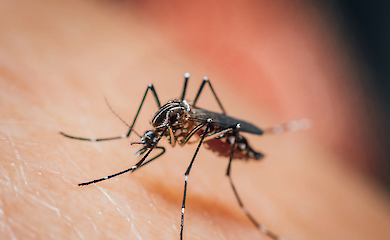
The study involved 119 volunteers from Miami. The researchers tested the response of three common species: the yellow fever mosquito (Aedes aegypti), the Asian tiger mosquito (Aedes albopictus) and the southern house mosquito (Culex quinquefasciatus).
The volunteers placed their hands in a special chamber through which the scent of their skin was delivered to the insects. For the southern house mosquito, the participants’ scent was first collected on nylon sleeves and then used in the experiments.
The researchers also analysed the chemical composition of the air near the skin and the bacteria living on the participants’ forearms.
Details
Some volunteers did indeed attract a particularly large number of insects. However, no single person was among the most attractive to all three species at once.
This means that different mosquitoes choose people according to their own criteria. A scent that appeals to one species may not interest another, or may even cause it to stay well away.
Therefore, the claim ‘all mosquitoes love me’ may be an exaggeration. It is more likely that a person is particularly attractive to certain species found in their region.
The scent of the skin plays a key role
Every person emits their own unique blend of odours. This depends on sweat, sebum and the activity of bacteria that constantly live on the body’s surface.
These bacteria break down the substances secreted by the skin and produce odours that mosquitoes can detect. The composition of these substances and bacteria varies from person to person, which is why we do not all smell the same to insects.
Two out of the three species studied were less likely to approach people who had higher levels of certain fragrant substances resembling plant compounds and essential oils. The Asian tiger mosquito, by contrast, was attracted by a different set of odours.
The scientists emphasise that they have not found a single substance that would make a person irresistible to all mosquitoes. It is the combination of many different odours that is crucial.
Bacteria can also influence choice
The researchers found 246 different types of bacteria on the participants’ skin. Some were more common in people who were particularly attractive to mosquitoes, whilst others were found in those whom the insects chose less frequently.
However, this does not yet prove that a specific bacterium, on its own, attracts or repels mosquitoes. It may simply alter the overall odour of the skin in conjunction with dozens of other microorganisms.
Therefore, it is not yet advisable to attempt to alter the skin’s bacteria yourself or to use them as a remedy for bites. Further experiments are needed to confirm their role.
One species favoured men slightly more
Yellow fever mosquitoes showed a slight preference for men. No such difference was found in the other two species. Consequently, it cannot be concluded that men are generally more attractive to all mosquitoes.
The reason could be differences in odour, body size, heat emission or other characteristics. The study itself did not establish exactly which factor influenced this species’ choice.
Why the result may differ outdoors
In the experiment, the insects’ reaction to a hand or a collected odour was measured, rather than the number of actual bites in the wild.
In real-world conditions, mosquitoes are also guided by carbon dioxide from breathing, body heat, humidity, air movement and clothing. The species living in a particular area also play a role.
Furthermore, all the volunteers were recruited from a single city. The results still need to be tested on people from other regions and climate zones.
Will this discovery help protect against bites?
In future, the combinations of odours identified may be used to develop new lures or repellents. For example, scientists will be able to search for substances that repel several dangerous species at once.
However, the study does not offer a ready-made ‘invisibility scent’. It merely shows why the same person can be a desirable target for some mosquitoes whilst being of almost no interest to others.
Why this is important
Different species of mosquitoes carry different infections. If certain people are particularly attractive to a specific species, they may be bitten more frequently and potentially play a greater role in spreading the diseases carried by that species.
Understanding how insects select their victims could help to improve traps, protective measures and the monitoring of dangerous species.
Source
Study: Kaylee M. Marrero et al. Individual humans are more attractive to certain mosquito species.
Journal: iScience, 2026.
Mykola Potyka has a wide range of knowledge and skills in several fields. Mykola writes interestingly about things that interest him.
Related news
150 years on, scientists have confirmed Darwin’s hypothesis about carnivorous plants

The British swallowtail has turned out to be an ancient and unique species
Fossils dating back 309 million years have cast doubt on the ‘frog’ model of evolution
Popular news

Ukrainian security services have been recognised as among the best intelligence services in Europe – L'Express


Irina Levchenko, the abducted Ukrainian journalist, has been transferred to the Donetsk remand centre: what is known


Russia has attacked Lviv with drones and missiles: dozens of residential buildings have been damaged and there are casualties
News about war

The UN has reported a sharp rise in the number of Ukrainian civilians killed as a result of the war


3 July has been declared a day of mourning in Kyiv. The number of dead and injured is rising