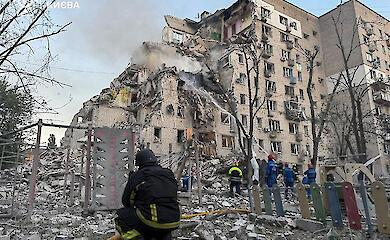

Russia may resume shelling power plants in autumn, so air defence is the key issue today

More air defence complexes are needed to cover Ukraine's most strategic sites and cities
Possible shelling of energy facilities in the autumn is not ruled out because Russia has arms production," Vadim Skibitsky, deputy head of the State Security Service of Ukraine, told RBC.
In the first 'campaign', they did not achieve results - our power supply system survived. We are preparing for it, we are strengthening our air defence system, we are getting new complexes. One of the key issues today is the air defence. It is about missiles, about the possibility of increasing the number of complexes. To cover the most strategic facilities and cities of Ukraine, more air defence complexes are necessary.
Skibitskyy also thinks that the subject of nuclear weapon is being constantly heated up in the Russian mass media in order to keep this issue topical to put pressure on Ukraine and its partners, on the world community. After all, everyone understands that the consequences of a nuclear catastrophe are unpredictable, so Russia will actively continue to use the subject. Although, the risks of using nuclear weapons may be in case of their presence:
If there is an understanding of what is placed there, what the consequences may be, what means will be used to deliver these nuclear weapons, to use them. At the moment these are just statements. There are some preparations, but we will monitor everything related to the relocation of nuclear weapons and the plans the Kremlin is developing regarding this issue.
According to Skibitsky, massive missile attacks are predicted from May:
There is very active aviation along the front line, 20-25 air bombs every day near the front line, behind the front line. The Russian Federation will attempt to obstruct the logistical support of the AFU, it will carry out strikes on defence-related facilities. The Russian army is targeting airfields, oil refineries and other facilities that store fuel and other supplies needed by the AFU and defence forces.
Their aim is primarily to prevent the AFU from active operations on the front line:
According to our assessment, the strikes will continue despite the fact that they have started saving rocket weapons. We can see from the latest strikes that these are missiles made in April of this year. This indicates that the missiles are being used straight out of production.
Some reduction in missile attacks is due to the need for intelligence and a more deliberate approach to targeting and tactics:
But the Russians will try to maintain the frequency of their strikes, methodically, day after day, hitting our targets and keeping the population in suspense. This is what the Russian regime is counting on: to introduce nervousness, to destabilise.
Intelligence believes that critical infrastructure, both military and civilian, will be attacked first:
Because the main objective has not been achieved - they have not reached the borders of either the Luhansk or Donetsk regions, they have not fulfilled their objectives. That is why offensives, strengthening of defences continue, in order not to allow our strategic objectives to be fulfilled already: to reach the borders of 1991, to liberate all the territories.
According to Skibitsky, the increased use of "Daggers" is one of the methods of pressure on the European community to stop supporting Ukraine:
The daggers are used because it is believed that they cannot be shot down. But this is not the case, we see that the latest Western-style systems make it possible to destroy the Daggers. They are quite effective, much more effective in their application and in their potential than Russian-made missiles. This is evidenced by the percentage we shoot down - even our foreign partners are surprised at how professionally our military is working.
Now we are actively working with international partners to prevent Russia from setting up, much less increasing, the production of precision-guided weapons on Russian territory by cutting off the supply of foreign components. Russia has also not yet completed its contracts for supplies of Iranian drones; another 300 or so are expected.
Russia is also negotiating the delivery of other types of UAVs that are Iranian-made. There have been many statements about their own production, but so far we have not seen such mass production of "shahedin" in Russia. If it happens, we will know.
Skibitsky cannot predict military operations for the whole year, but he says that in the next 2-3 months there will be active military operations both of offensive and defensive nature:
Roughly from mid-summer, when the Russians execute their plans to modernise, to regroup, to form new units, it will be possible to forecast the nature of Russian actions for the autumn-winter campaign.
The Russians will implement measures to hold the captured territories of Kherson and Zaporizhzhia regions. They will also try to reach the borders of Luhansk and Donetsk regions. But they are unlikely to succeed in the near future because the main issue is weapons," Skibitskyy said.
Oleg Kotov writes about the war in Ukraine and how it is changing the world.
Related news
Ukrainian security services have been recognised as among the best intelligence services in Europe – L'Express


German intelligence: Russia may target top executives in the defence industry
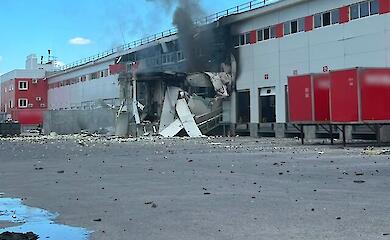
Russia struck a "Nova Poshta" terminal near Kharkiv: staff members were killed and more than 20 people were injured

3 July has been declared a day of mourning in Kyiv. The number of dead and injured is rising

Popular news
Ukrainian security services have been recognised as among the best intelligence services in Europe – L'Express

Irina Levchenko, the abducted Ukrainian journalist, has been transferred to the Donetsk remand centre: what is known


Scientists have put forward an explanation as to why there were no tiny dinosaurs

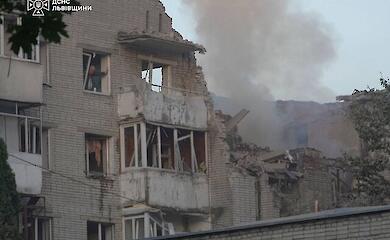
Russia has attacked Lviv with drones and missiles: dozens of residential buildings have been damaged and there are casualties
News about war

The UN has reported a sharp rise in the number of Ukrainian civilians killed as a result of the war

3 July has been declared a day of mourning in Kyiv. The number of dead and injured is rising