


More than 13,000 square kilometres of water bodies mined in Ukraine


More than 13,000 square kilometres of sea and inland water are in need of demining, according to the State Emergency Situations Service.
Most of the territories requiring demining have been de-occupied. Colonel Serhiy Reva, head of the humanitarian demining department of the State Emergencies Service of Ukraine, said this at a briefing at the Military Media Centre.
According to him, 7.3 sq km of water bodies in the de-occupied territories are in need of demining.
At the moment, SCES divers survey rivers, reservoirs, bodies of water, the waters of the Black Sea and the Sea of Azov. They have already surveyed about 3.2 thousand hectares of water bodies and removed 1.4 thousand explosive objects. To do this, employees of the State Emergency Situations Ministry involve 22 units and use modern equipment. In particular, underwater drones Sonobot and Chaisin.
Today, this equipment, along with other sonar and sonar sensors is used to survey the Dnieper River in Zaporizhzhia region, Kyiv reservoir, rivers and lakes of Kyiv region and Chernihiv region," said the representative of the State Emergency Service.
In total, almost 88 thousand hectares were cleared of mines in Ukraine, as a result of which 390 thousand explosive objects were deactivated. The most efforts for mine clearance are made by the State Emergency Situations Ministry employees in the de-occupied territories of Kyiv, Chernihiv, Sumy, Kharkiv, Mykolayiv, Kherson and Donetsk regions.
The most difficult situation is in Kharkiv and Kherson regions, as they have been under the occupation of the enemy for the longest time and Russian troops had enormous possibilities for mining," Serhiy Reva added.
According to him, critical infrastructure such as roads, gas pipelines and power lines were prioritised for explosive detection. Therefore, almost 3,500 km of roads, 600 km of railway tracks, 370 km of gas pipelines and 5,800 km of power lines have been inspected.
Artur Zayonts specialises in news from the frontline. A historian by education, Arthur has always sought to bring depth and context to his journalistic work.
Related news
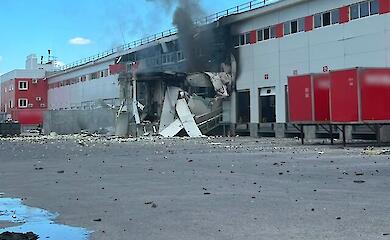
Russia struck a "Nova Poshta" terminal near Kharkiv: staff members were killed and more than 20 people were injured

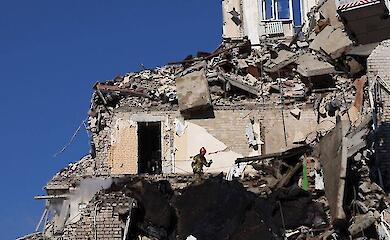
3 July has been declared a day of mourning in Kyiv. The number of dead and injured is rising

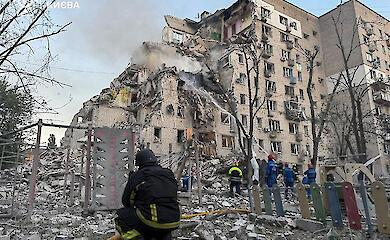

Why migration policy in Ukraine is becoming a matter of rebuilding the country

Popular news
Ukrainian security services have been recognised as among the best intelligence services in Europe – L'Express



Irina Levchenko, the abducted Ukrainian journalist, has been transferred to the Donetsk remand centre: what is known

Evidence has been found in Australia of an unusual ritual that has been practised for thousands of generations

News about war
The UN has reported a sharp rise in the number of Ukrainian civilians killed as a result of the war
3 July has been declared a day of mourning in Kyiv. The number of dead and injured is rising