


New opportunities are opening up for Ukraine in Europe
- Home
- Authorities
- New opportunities are opening up for Ukraine in Europe

The ouster of Hungarian Prime Minister Viktor Orban following his crushing election defeat has sparked a flurry of commentary.
James Stavridis writes about this in an article published in The Japan Times.
The author explains that much of it concerned the implications for far-right populism in Europe, while others focused on the possible impact on US politics, given the close ties between US President Donald Trump's MAGA movement and Orban's Fidesz party and the personal political capital spent by Vice President JD Vance, UNIAN notes.
At the same time, the article notes that less attention has been paid to how Orban's defeat will affect geopolitics and military strategy both in Europe and more broadly.
Stavridis said he first met the former Hungarian prime minister in the spring of 2010, when he was elected to office for the second time. The politician impressed him as a charismatic and intelligent person.
We discussed at length the NATO mission in Afghanistan, where Hungary had more than 600 troops, most of them engaged in training the Afghan national security forces," he recalled.
Remarkably, Orban generally expressed support but clearly had reservations about a number of other NATO missions. Stavridis recalls that when the war in Libya broke out a year later, Hungary refused to take part, and over the next decade Orban became a real headache for the alliance.
It is noted that what made matters worse was that Orban began to grow increasingly close to Russian President Vladimir Putin. This led to controversial energy agreements with Moscow and support for a number of Russian positions contrary to NATO's goals.
The journalist noted that since the alliance requires full consensus to make decisions on major issues, Orban managed to single-handedly delay Sweden and Finland's entry into the alliance for more than a year. The Hungarian politician also did his best to undermine European support for Ukraine.
At the time of his electoral defeat, he was considered Putin's main ally in Europe and a "Trojan horse" inside the alliance," the publication said.
Therefore, according to the author, with his defeat, three key geopolitical and military advantages appeared for the West.
It is explained that the first and most obvious is that Hungary will no longer try to obstruct European engagement and support for Ukraine.
While there may remain some residual problems from Slovak leader Robert Fitzo, the most vocal opponent of NATO and EU positions is gone," Stavridis states.
He adds that the second strategic aspect of Hungary's return to the West is geographical. It is noted that located in the heart of Central Europe, Hungarians border seven countries, including Ukraine.
It is a crossroads country that has been able to create strategic and logistical bottlenecks for NATO and the EU. This role goes back to the Austro-Hungarian Empire of the 19th and 20th centuries, when Hungarians used their geographical position to develop their trading economy," the journalist emphasised.
He predicts that as the country is likely to turn its back on Moscow, not only Ukraine but also Serbia will come to the fore, given Putin's constant attempts to expand Russian influence in the Balkans.
A third advantage is that the Hungarian armed forces will be able to modernise quickly and integrate seamlessly into NATO.
It is noted that although the Hungarian armed forces number only about 30,000, Hungary is investing in advanced modern equipment, notably new German Leopard 2A7 tanks and powerful Swedish JAS39 Gripen fighter jets.
Stavridis noted that although the country is barely meeting the old NATO spending target of 2% of gross domestic product on defence, new Prime Minister Péter Madjár has pledged to increase the share to 5% by 2034.
The end of Viktor Orbán's long political dominance in Hungary is great news from many perspectives, not least for the NATO alliance," the author concludes.

Journalist, publicist, and expert on European integration and Ukrainian-Polish dialogue. Author for several Polish media outlets, including the weekly Polityka, the online platform Oko.press, and others.
Related news
Callas: The EU is preparing its largest package of sanctions against Russia since the start of the full-scale war

Why Ukrainians may not return home after the war: it's not just about security

The European Union has explained why Ukraine’s accession process is being delayed – FT

Refugee policy as a test for European integration: how Ukraine and other candidate countries pass it

Popular news
Russia has received new weapons from North Korea: which regions of Ukraine could be at risk
Henry VIII’s long-lost castle has been found inside another castle

400 years ago, she was still feared even after her death — archaeologists have examined an unusual grave in Poland

Bones of ancient humans found on the seabed of the Taiwan Strait suggest they were up to 190 cm tall

News about war
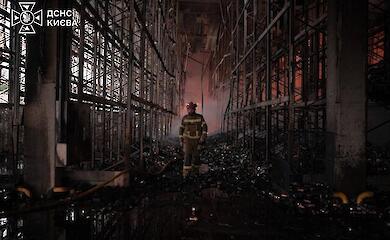
An expert explains how Russia is changing its tactics for strikes on Kyiv

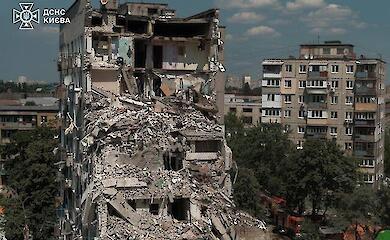
The UN has reported a sharp rise in the number of Ukrainian civilians killed as a result of the war
