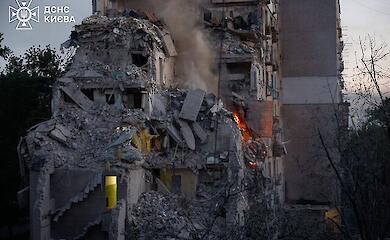
The European Parliament has called on Ukraine to improve pay and address the workload of nurses
- Home
- Society
- Health care
- The European Parliament has called on Ukraine to improve pay and address the workload of nurses

On 8 July, the European Parliament adopted a resolution on Ukraine, in which it commended the work of healthcare workers during the war and highlighted the need to improve nurses’ working conditions and regulate their workload.
In the document, MEPs highlighted the contribution of Ukrainian healthcare workers, including nurses serving on the front line.
The European Parliament also drew attention to the fact that a significant proportion of public sector healthcare workers are paid the minimum wage. The resolution states that this amounts to 6,658 UAH ‘take-home pay’, whilst the actual cost of living, as calculated by the Ministry of Social Policy in December 2025, stood at 10,979 UAH.
In addition, MEPs highlighted the need to introduce clear and well-founded workload standards for nurses. The document emphasises that the lack of modern regulation in this area affects both the working conditions of healthcare professionals and the quality of medical care.
European Parliament resolution:
- commends the extremely important work carried out every day by the Ukrainian health services,
and in particular Ukrainian nurses, throughout the war;- notes that a significant proportion of public sector healthcare workers receive the minimum wage, which currently stands at 6,658 hryvnias net;
- recalls that the actual subsistence minimum for one person, as calculated by the Ministry of Social Policy in December 2025, was 10,979 hryvnias;
- further emphasises the need to introduce specific and reasonable regulations governing nurses’ workloads.
The medical advocacy group ‘Bud’ yak My’ (Be Like We Are), which defends the rights of healthcare professionals, noted that the findings of their research into the working conditions of Ukrainian nurses during the war were taken into account whilst drafting the resolution. Representatives of the movement also reported that, with the support of Members of the European Parliament, they had the opportunity to present the problems faced by Ukrainian healthcare workers within the European institution.
The movement welcomed the European Parliament’s focus on issues of pay, workload regulation and the development of social dialogue in the healthcare sector.

Socportal previously reported that Ukrainian medical staff working in areas of potential or active hostilities are entitled to higher pay. However, the figures set out in the government decree remain merely on paper unless the administration of healthcare institutions shows goodwill. The government decree on additional payments must be incorporated into the collective agreement. Otherwise, these ‘frontline’ payments will not be fully guaranteed. However, in many cases, staff – particularly middle and junior staff – have little influence over the drafting of this document or are not even aware of its existence.
Subscribe to our YouTube channel so you don’t miss new videos on pressing social issues. Read related news in the ‘Social Affairs’ section on Socportal. Join the “What’s Up with Social Affairs?” channel on Viber or Telegram, and follow our public pages on Facebook and Instagram. Got a specific question? Get in touch with SocGPT!
Expert on women's rights, persons with disabilities, motherhood in the modern context, health care reform, education and social welfare.
Related news
Petition calling for Lyashko’s resignation: why medical workers want the minister to step down


Why Ukrainian medical workers won't receive the promised frontline bonuses — study results
In the Donetsk region, mass layoffs of ambulance medics were canceled after media coverage

The Ministry of Health of Ukraine responded to statements about a massive reduction in ambulance doctors in the Donetsk region
Popular news

How to cook sweetcorn properly so that it’s juicy and sweet: the best method revealed


Archaeologists have discovered who actually built Colombia’s ancient canals


Russia has received new weapons from North Korea: which regions of Ukraine could be at risk

Bones of ancient humans found on the seabed of the Taiwan Strait suggest they were up to 190 cm tall

News about war

An expert explains how Russia is changing its tactics for strikes on Kyiv

The UN has reported a sharp rise in the number of Ukrainian civilians killed as a result of the war