
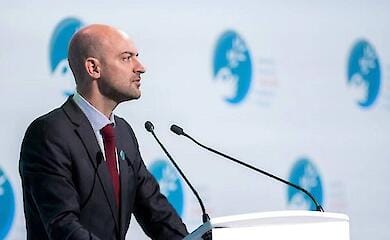

The Daily Mail has estimated the time it will take for the Hazel to approach key centres in Europe


The flight time to London is less than 20 minutes.
The British publication Daily Mail has published calculations of the approach of the Russian experimental hypersonic missile "Oreshnik" to large European cities. The missile, according to Russian military sources, is a projectile capable of flying at 10 times the speed of sound (about 12,200 kilometres per hour) and can travel up to 5,000 kilometres.
Vladimir Putin's experimental hypersonic missile, first fired at Ukraine, can hit any city in Europe in less than 20 minutes," the newspaper said.
It is pointed out that if the missile is launched from the Kapustin Yar test site in Russia's Astrakhan region, the missile's flight time to London will be 16-17 minutes, to Paris - 15-16 minutes, and to Berlin - only 11-12 minutes.
Russian military analysts say that the Oreshnik is definitely capable of carrying nuclear weapons.

At the same time, the publication writes that Putin's "weapons" are not as powerful or fast as Russia's most formidable ICBMs, such as the RS-24 Yars, which are capable of firing several individual nuclear warheads anywhere in the United States.
But regardless, Europe must be mindful of the threat, especially as the Russian ambassador to the UK has openly stated that Ukraine's use of Storm Shadow missiles on Russian territory means that the UK is now directly involved in this war. He also believes that NATO specialists are involved in the strikes against Russia. Putin himself is also talking about the West's involvement in the war," the newspaper points out.
The Daily Mail recalls that the US and UK authorised Kiev to hit targets on Russian territory with Storm Shadow and ATACMS missiles. Ukrainian forces acted quickly, using them in two different attacks in Russia's Bryansk and Kursk regions. Putin responded by hitting the Dnieper River with the Oreshnik.
Moreover, a number of European politicians said that support for Ukraine will remain and the West will continue to supply military equipment to the Ukrainian Armed Forces so that they can defend their country from Russian invaders.
Thus, British Prime Minister Keir Starmer said that Russian strikes on Ukraine would only strengthen the determination of allies to help Kiev, while Swedish Defence Minister Pal Johnson said that Stockholm would not be intimidated by Russian provocations.
Experts said Putin's use of advanced hypersonic weapons to launch a non-nuclear strike on Ukraine was very costly, but served to illustrate how Moscow could dramatically escalate the conflict.
Dr Ruth Deiermond, senior lecturer in post-Soviet security at King's College London, told reporters, "This strike has no obvious military value. It is very much a signal to the West of what Russia might do if it dared. But it is actually a sign of weakness," she added.
In addition, the publication notes, the West has at its disposal many modern missiles capable of hitting major Russian cities and military facilities.
Journalist and volunteer with extensive experience.
Related news
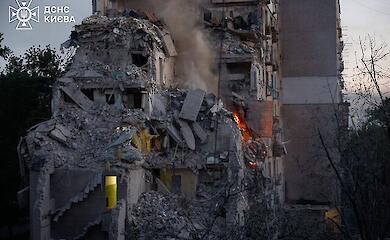
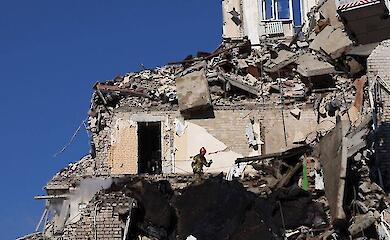
3 July has been declared a day of mourning in Kyiv. The number of dead and injured is rising


Poland’s Foreign Minister has warned Putin against attacking NATO countries

Popular news




Scientists have discovered that power among the Scythians was passed down through the family line


Why children’s accounts of the trauma they have experienced may vary
News about war
3 July has been declared a day of mourning in Kyiv. The number of dead and injured is rising

Ukrainians have to help wounded during Russian shelling on their own
