

Petition calling for Lyashko’s resignation: why medical workers want the minister to step down
- Home
- Society
- Health care
- Petition calling for Lyashko’s resignation: why medical workers want the minister to step down


Representatives of the organisation ‘Medical Movement “Be Like We Are”’ have backed a petition calling for the dismissal of Health Minister Viktor Lyashko.
According to the organisation’s head, Oksana Slobodiana, staffing issues in the healthcare sector have been building up for years; however, it is the Ministry of Health that must be responsible for ensuring clear rules governing the sector and maintaining an effective dialogue with healthcare professionals.
She made this statement during the round-table discussion ‘Ukrainian Healthcare Dialogue’, held to mark Healthcare Workers’ Day.
Slobodiana emphasised that activists are not placing the blame for all the problems facing Ukrainian healthcare solely on the minister. At the same time, they believe that it is the Ministry of Health that should formulate a predictable policy for the sector’s development.
According to her, healthcare professionals do not understand how working conditions will change in the near future, what will happen to the workload on nurses, how the new National Health Service of Ukraine (NSZU) packages will operate, or what changes hospitals can expect.
When will even the most basic laws on nurses’ workloads be introduced? What about the procedure for implementing the National Health Service of Ukraine (NSZU) packages? When will healthcare professionals know what lies ahead for them tomorrow, what will happen in six months, what they should oppose, and how they should carry out their work? Unfortunately, the Ministry fails to address even such minor and relatively straightforward matters. And that is why our first step following this dialogue is to replace the minister, emphasised Osana Slobodyana.
The Ukrainian healthcare sector is already facing a staff shortage
Furthermore, according to Slobodyana, there is currently a sharp decline in the number of applicants to medical colleges and universities.
We said back in 2023 that a staffing crisis would hit in 2028. But it has already arrived. If the situation does not change, in a few years there will be a catastrophic shortage of emergency care workers and specialist doctors, she emphasised.
Slobodyana also noted the reluctance of young professionals to work in state hospitals.
For her part, Olga Lisivets, a nurse and head of an independent trade union, pointed out that the younger generation of medical professionals are more outspoken and find it much easier to demand decent treatment and working conditions. At the same time, there are too few of them to turn the situation around.
Unfortunately, there are very few of them. There are simply no nurses aged 20 and over. And if they do join, they only last a month or two before, unfortunately, resigning to seek alternatives in private practices, she noted.
That is precisely why, according to the head of the NGO, after prolonged attempts at dialogue, the organisation supported the petition calling for Viktor Lyashko’s resignation. Previously, the Medical Movement had also highlighted other issues. Among them:
- The inability to ensure that guarantees are upheld for medical staff working on the front line or who have been injured in Russian attacks. Medical staff face widespread non-payment of ‘frontline allowances’ and compensation under Law No. 2980 in the event of injury or death at work.
- Salaries for healthcare workers remain low. According to State Statistics Service data for 2025, the average salary was 19,594 UAH, which is one of the lowest figures across all economic sectors and amounts to around 70 per cent of the average. The minimum guaranteed salaries of 20,000 for doctors and 13,500 for nurses are often not fully paid, particularly in underfunded hospitals.
- Workload on nurses. Ukraine still lacks modern state-set workload standards for nursing staff, meaning that hospital administrations can significantly increase the volume of work without a corresponding increase in staffing levels. The European Parliament has drawn attention to this issue.
- Insufficient social dialogue. Ukraine has yet to adopt a new sectoral agreement for the healthcare sector, which is intended to regulate basic guarantees for healthcare professionals. Furthermore, the Ministry of Health does not sufficiently involve staff representatives as social partners in the development of decisions regarding working conditions, pay, and reform of the system.
- Staffing crisis. During the war, the shortage of healthcare staff has only worsened. The Ministry of Health has failed to propose a comprehensive policy to retain healthcare workers, particularly nurses and junior doctors. Between the end of 2014 and the end of 2023, the number of nurses fell by a third. Moreover, the number of nurses per capita is half the EU average.

Socportal previously reported that Ukrainian medical staff working in areas of potential or active hostilities are entitled to higher pay. However, the figures set out in the government decree remain merely on paper unless the administration of medical institutions shows goodwill. The government decree on additional payments must be incorporated into the collective agreement. Otherwise, those working ‘near the front line’ will not be fully guaranteed these payments. However, in many cases, staff – particularly middle and junior staff – have little influence over the drafting of this document or are not even aware of its existence.
Subscribe to our YouTube channel so you don’t miss new videos on pressing social issues. Read related news in the ‘Social Affairs’ section on Socportal. Join the “What’s Up with Social Affairs?” channel on Viber or Telegram, and follow our public pages on Facebook and Instagram. Got a specific question? Get in touch with SocGPT!
Expert on women's rights, persons with disabilities, motherhood in the modern context, health care reform, education and social welfare.
Related news

A hidden source of resistance to the latest antibiotics has been discovered in Australia


The European Parliament has called on Ukraine to improve pay and address the workload of nurses


“A nurse is a person on whom everything depends”: three stories about work in a hospital, school, and on the front

“Want extra pay? Go to the trenches." Why Ukrainian medical staff in frontline areas are not receiving the promised payments
Popular news

How to cook sweetcorn properly so that it’s juicy and sweet: the best method revealed


Archaeologists have discovered who actually built Colombia’s ancient canals


Scientists have put forward an explanation as to why there were no tiny dinosaurs

Scientists have discovered how snakes lived during the age of the dinosaurs
News about war

An expert explains how Russia is changing its tactics for strikes on Kyiv

The UN has reported a sharp rise in the number of Ukrainian civilians killed as a result of the war

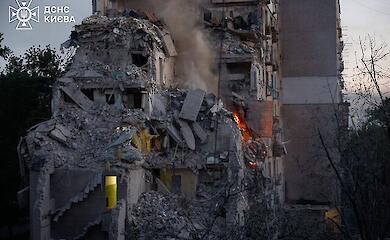
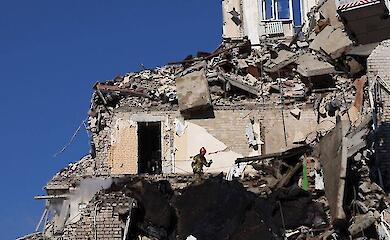
3 July has been declared a day of mourning in Kyiv. The number of dead and injured is rising