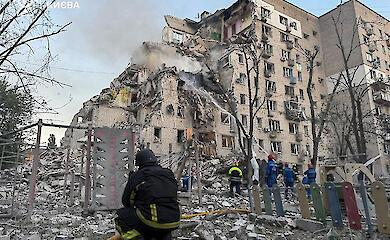
Labor reform in Ukraine: why the new Labor Code could be a blow to workers' rights


The discussion about labour reform in Ukraine has long gone beyond the technical update of legislation. It is about who will determine the rules of the labour market after the war: the state, employers, trade unions or the workers themselves.
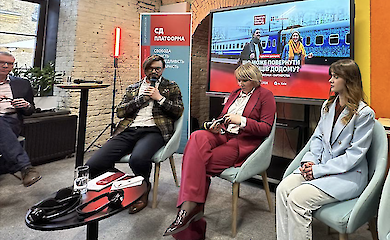
The participants of the discussion at the SocForum - activists of the Social Rukh organization Vitalii Dudin and Oleksandr Skyba, head of the Union of Builders of Ukraine Vasyl Andreev, co-founder of the SD Platform Kateryna Zadoenko, and activist of the Narodovladdya party Ihor Tokovenko - agree on one thing: the reform, carried out in conditions of limited social dialogue and war, may not bring Ukraine closer to European standards, but perpetuate the imbalance in favor of employers.
Labour reform as a question of power, not just rights
Labour reform in Ukraine is often presented as an inevitable modernisation: outdated norms need to be updated, legislation needs to be brought up to date, and the labour market needs to be made more flexible and attractive to investors. But during the discussion at the SocForum another emphasis was made: labour legislation is not just a legal document. It is a reflection of the balance of power between the employee, the employer, and the state.
That is why the issue of the new Labour Code cannot be considered separately from the state of trade unions, the level of social dialogue, the ability of workers to defend their rights, and the role of the state as an arbiter. If this balance is disturbed, the reform may not become a renewal but a legalisation of already existing inequalities.
Lawyer Vitalii Dudin spoke about a comparative study of labour reforms in EU countries. He analysed the experience of the states that had gone through a similar path to Ukraine's: from a socialist planned economy to a market economy. Among the examples were Estonia, Poland, Slovenia, and the Czech Republic.
The lawyer's main conclusion was that the success of labour reform depends not only on the content of the law, but also on the political and institutional context. Who is designing the reform? Are there strong trade unions? Is social dialogue working? Is there a separate ministry responsible specifically for labour policy? Without answers to these questions, the new code may turn out to be a document that formally talks about modernisation but actually weakens workers.
European experience: liberalisation does not always mean development
Vitaly Dudin suggested comparing several models. In his speech, Estonia was presented as an example of a fast and radical reformer. Already in the early 1990s, the regulation of hiring and dismissal of employees was significantly simplified there. According to him, the country followed the path of neoliberal modernisation, and the 2008 law on labour relations was drafted by the Ministry of Economy, a body that is close in logic to the current Ukrainian model.
Poland, on the contrary, was cited as an example of a country that had not abandoned the Labour Code adopted back in the 1970s. The legislation was updated in accordance with EU requirements, but the code itself was not radically dismantled. From this, Vitaly drew an important conclusion: an old or "socialist" code does not in itself hinder development.
The socialist labour code, as in Poland, does not hinder development," he said.
Slovenia was described in the presentation as a country where labour reforms took place with a strong social dialogue. There, according to Dudin, trade unions play a significant role, and the state acts in a more socially responsible way, avoiding changes that could dramatically increase poverty or social inequality.
The Czech Republic was cited as an example of a more gradual and balanced path. There, reforms were implemented not as a collapse of labour guarantees, but as a movement towards renewal while maintaining social logic. Dudin stressed that in the Czech Republic, trade unions even advocated labour reform, as they saw it as an opportunity to strengthen the position of workers.
The lawyer emphasised that the European way is not necessarily deregulation and weakening of guarantees. There have been different models in the EU countries, and not all successful examples involve maximum liberalisation.
The problem of the Ukrainian model: labour policy without the Ministry of Labour
One of Vitaliy's most acute theses concerned the Ukrainian institutional model.
Ukraine has no Ministry of Labour, he noted.
Instead of a separate body that would deal with labour policy as an independent area, a significant part of these issues is under the responsibility of the Ministry of Economy.
For the panellists, this is a fundamental problem. The Ministry of Economy, by its very nature, is focused on business development, investment, economic growth, and the interests of owners. The rights of employees in such a model may be secondary.
Vitaly Dudin called this a conflict of interest: if the body responsible for attracting investment and protecting business is simultaneously developing labour reform, there is a risk that workers' interests will be subordinated to employers'. According to him, for the new Labour Code to at least take into account workers' interests, the country should have a full-fledged Ministry of Labour.
As examples, he cited Lithuania, Romania, Slovakia, Slovenia, Croatia, and the Czech Republic - countries where the relevant labour or social agencies played a significant role in the development of labour legislation. The exceptions were Estonia and Hungary, where reforms were implemented through economic ministries. These examples, according to Vitaly, demonstrate the risks of the neoliberal model.
Why is the new Labour Code proposed to be postponed
The expert is sure that Ukraine is not ready to adopt a new Labour Code now. The reason is not only the war, although the war is the most important factor. The problem is deeper: limited opportunities for social dialogue, the absence of a separate labour department, and low efficiency of control over compliance with the already existing norms.
Vitaly suggested not to rush into a new code, but to focus on the real problems that already exist. Among them are non-payments to medics in the frontline areas, undeclared employment, and weak labour control. According to him, if the state wants to preserve Ukraine, it should show efficiency here.
Otherwise, the country risks adopting a law that will soon have to be amended again after full integration into the European system.

Activist: There is a trade union, but no defence
The second important block of the discussion was devoted to trade unions. Oleksandr Skyba, head of the Free Trade Union of Railwaymen of the Darnitsa Locomotive Depot, spoke about the systemic crisis of the trade union movement.
According to him, the formal existence of trade unions does not mean real protection of workers.
Offices are there, offices are there, reporting is there, membership fees are there, he said, but this formal structure often does not affect wages, working conditions, illegal dismissals, or working hours.
According to Olexander Skyba, for many workers today, the trade union is perceived as something abstract: a structure that congratulates with holidays, gives gifts, but is not able to change the situation in the workplace. Hence, the low level of trust in trade unions.
However, it does not reduce the problem to the unions themselves. The weakness of organisations is also related to legislation. According to him, the current legal field objectively limits the possibilities of real collective struggle. This is especially true for strikes.
Alexander Skiba called the procedure of strike organisation excessively bureaucratic. In fact, a legal strike becomes almost impossible.
Strike should be a collective tool, not a bureaucratic quest, he emphasised.
According to Olexander, there is a vicious circle. On the one hand, weak unions cannot achieve a strong law. On the other hand, a weak law prevents unions from becoming strong. As a result, workers do not have a sufficient pressure tool, and employers get to keep cheap labour and a controlled environment.
According to him, such a system is favourable for employers but not for the state. However, for the state, weak trade unions are not stable, but a delayed threat: social tension, distrust in institutions, and shadow employment.
Therefore, as Olexander pointed out, one cannot wait for the law to change first and then build strong trade unions. And you cannot first try to modernise trade unions without changing the rules. These processes must go simultaneously.
In practice, this means creating independent trade union cells in enterprises, hospitals, IT teams, logistics, and other spheres. Independence from the administration, real participation of workers, legal support, public campaigns, work with the media, and international trade unions are important.
The man of labour must become visible again
In turn, Katerina Zadoenko, co-founder of SD Platform, spoke about the public perception of labour. According to him, the topic of the man of labour in Ukraine is often perceived as something outdated, Soviet, or irrelevant. But the reality of war and crises shows the opposite.
Kateryna recalled that in the context of energy and utility problems, society has felt particularly acute dependence on those who provide basic infrastructure. When there is no water or heating at home or the sewerage system does not work, it becomes obvious that the person who comes in and restores normal living conditions is no less important than the authors of political decisions.
According to her, labour rights cannot be protected if the worker himself remains invisible. If society does not see the people of labour, it does not see the value of their rights.
Without the political representation of workers, the reform will be written by others
Igor Tokovenko, co-founder of the Narodovladdya party and a senior lieutenant of the Armed Forces of Ukraine, raised the issue of political representation of workers. He noted that not all people of labour realize themselves as "people of labour", but the majority understand their economic interests: higher wages, normal working hours, safe and comfortable working conditions.
According to him, these interests should be protected not only economically, through trade unions, but also politically, through civil society organisations and parties.
Tokovenko sharply criticised the current draft of the labour reform. Among the key risks, he named the expansion of grounds for dismissal, simplification of dismissals, and an increase in overtime work from 120 to 250 hours per year if it is stipulated in the collective agreement. With weak trade unions, he argued, such rules would almost inevitably be fixed in favour of the employer.
He described this as a move towards "19th century labour standards" - effectively a 9-hour working day or a 6-day working week.
He said the current Labour Code, despite its many problems, now retains at least a formal framework within which unions can agree on labour standards, pay, leave, shift schedules, and other important issues. The new approach, in his estimation, could shift labour relations to a vertical plane: the employer as master, the worker as a subordinate party. In this logic, labour reform becomes not a movement towards the European model, but a consolidation of the employer's power in the workplace.
That is why Igor Tokovenko believes that labour reform should not be carried out in the current parliament, since the parliament represents the interests of big capital, and the reform will be written in its interests.
Labour safety is a matter of life, not a formality
Vasyl Andreev, head of the Union of Builders of Ukraine, who spoke on the topic of labour safety, reminded that labour reform is not only about dismissals, salaries, and trade unions. It is also the health and sometimes the life of the worker.
He drew attention to the indicators of fatal injuries and said that the situation in Ukraine is much worse than in several EU countries. At the same time, official statistics reflect only registered cases, while some accidents may be hidden.
According to him, a draft law on the safety and health of workers is being developed from 2019. This document cannot be called perfect, but it has an important European logic: risks should be prevented, not only by investigating accidents after a tragedy.
Risks must be prevented, he emphasised.
This means that the state and employers must see the danger before a cooker falls, equipment breaks down, or an employee is injured.
Vasily Andreev named worker representation on labour safety issues as one of the key elements. Such a system can be a way for people to organise themselves, even where independent trade unions are difficult to establish. Through safety issues, workers learn to unite around their basic interests - health, life, and decent working conditions.
Andreev emphasised that norms do not work without coercion. Employers will not massively fulfil safety requirements only out of goodwill. We need fines, control, responsibility, courts, and an effective labour inspectorate. But, according to him, the State Labour Service is now actually limited in its capabilities.
The main conflict of the reform
A common picture emerges from all the speeches. Ukraine really needs a modern labour policy. But modernisation should not mean dismantling workers' rights. European standards are not only about business flexibility, but also about strong trade unions, safe workplaces, social dialogue, and a state that protects the balance of interests.
Vitaly Dudin showed that the experience of EU countries is ambiguous: radical liberalisation does not guarantee success, and an old code does not necessarily hinder development. Oleksandr Skiba explained why, without strong trade unions, the law will remain a dead letter. Kateryna Zadoenko reminded that the man of labour must become visible on the public agenda again. Igor Tokovenko linked labour reform to the political representation of workers. Vasily Andreev showed that the price of weak regulation can be measured in injuries, illnesses, and human lives.
The main question, therefore, is not whether Ukraine needs a new Labour Code. The question is who will write it, under what conditions, and in whose interests.


Expert on women's rights, persons with disabilities, motherhood in the modern context, health care reform, education and social welfare.
Related news

The Ombudsman's representative named the main problems of IDPs: housing, work, and reduction of benefits



“Want extra pay? Go to the trenches." Why Ukrainian medical staff in frontline areas are not receiving the promised payments

The new Labor Code of Ukraine will not provide the promised economic effect, it is worth preserving the current one, an expert says
Popular news
Ukrainian security services have been recognised as among the best intelligence services in Europe – L'Express



Irina Levchenko, the abducted Ukrainian journalist, has been transferred to the Donetsk remand centre: what is known


Evidence has been found in Australia of an unusual ritual that has been practised for thousands of generations

News about war
The UN has reported a sharp rise in the number of Ukrainian civilians killed as a result of the war

3 July has been declared a day of mourning in Kyiv. The number of dead and injured is rising