The invisible labor of war: why Ukraine should review salaries and social guarantees


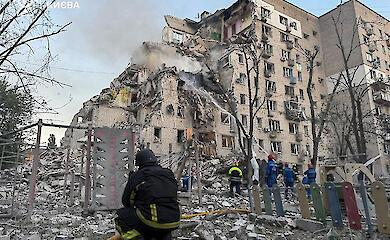
Full-scale war has changed the very notion of work. A hospital in a frontline region, a nuclear power plant, an energy facility, or a defence plant can now be as dangerous places as military infrastructure.
But the Ukrainian system of wages and social guarantees often continues to operate according to pre-war logic: risk is not always recognised, extra payments depend on the legal address or the administration's decision, and people who keep the medicine, energy, and defence industries running have to prove their own importance.
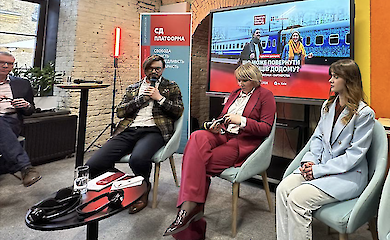
Ruslana Mazurenok, an activist of MedRukh "Be Like We Are", Natalia Zemlyanskaya, the head of the All-Ukrainian Trade Union of Industrialists, Entrepreneurs and Migrant Workers, Pavlo Oleshchuk, an activist of the Atomprofsoyuz, and Karina Plakhova, an activist of the Trade Union of Aviation and Mechanical Engineering, spoke about this during the SocForum.
Frontline medics: promised justice and real lack of transparency
One of the most illustrative examples was the situation with front-line additional payments to medics. According to Ruslana Mazurenok, since May 2023, medics in frontline areas have been entitled to increased payment. In the autumn of this year, the additional payments were raised to 8,000 for doctors, 4,500 for nurses, and 1,000 hryvnias for orderlies in areas of possible hostilities, and to 20,000, 15,000, and 10,000 hryvnias respectively for active zones.
However, as the study of medics showed, about 12,000 medics worked in hospitals with funding for "frontline" surcharges, while there were more than 53,000 medics in the frontline territories. Even when funding was restored to many institutions by the end of 2025, the state did not compensate for the period when people were already working under fire without additional payments.
Mazurenok singled out three levels of obstacles: the status of the territory, the rules of the NHRI, and the decisions of the administration of a particular medical centre.
- The first level is the legal address. The right to additional payment may depend not on where a person actually works, but on where the institution is registered.
- The second level is the NHIS. Even if an institution is at risk, it does not always receive funding. Specialised dental clinics were excluded from the system. There were also problems with psychiatric hospitals.
- The third level is the hospital administration. It is here that supplementary payments often become a manual instrument: to whom to pay, how much to pay, and under what conditions. In one hospital, an inpatient nurse can get 2500 hryvnias, and a polyclinic nurse can get 1200 hryvnias, although both work in the same institution and under the same firings.

Behind the numbers are specific stories. The medics talked about shelling, working under drones, travelling to their shifts, and injuring colleagues. Even when a hospital has a shelter, a doctor or nurse cannot always go down there: you cannot leave a patient connected to the equipment. Often, the shelters are not adapted for heavy patients.
According to Mazurenok, medics should automatically receive the promised additional payments, not after complaints, pressure, and long proving the obvious.
Minimum wage: standard of survival or standard of dignity
After talking about frontline medics, the discussion turned to the topic of the minimum wage. Natalia Zemlyanska, the head of the All-Ukrainian Trade Union of Industrialists, Entrepreneurs and Migrant Workers, spoke about it as a basic social standard, which determines not only the standard of living, but also Ukraine's ability to retain people.
During the discussion, it was voiced that the Ukrainian minimum wage in euro terms was the lowest among comparable European countries. Even in Moldova, it is about twice as high. But the problem is not only in the size. Nataliya Zemlyanskaya emphasised that the minimum wage should be a payment for simple unskilled work. In Ukraine, however, it has become a universal lower threshold for everyone, including skilled workers.
According to Zemlyanskaya, the minimum wage should be calculated according to a strict and clear algorithm. She named at least 50 per cent of the average wage as a benchmark. According to her, this is not a whim of trade unions, but the European logic of an adequate minimum wage.
But in the conditions of war, this is no longer enough. The war risk factor must be added to the formula. War changes the structure of human costs: blackouts, medication, stress, relocation, damaged housing, additional household expenses, and security costs. If the minimum wage is calculated according to pre-war models, it does not even fulfil an insurance function.
Natalia Zemlyanska formulated this as a threat to the country: if the legal wage does not cover basic war risks, a person chooses between shadowing and going abroad. For Ukraine, this is no longer just a social problem. It is a question of demography, the labour market, and recovery.

Nuclear workers: specialists who cannot be replaced by orders
Pavlo Oleshchuk, Assistant Chairman of the Atomprofsoyuz, spoke about nuclear workers. Before his trade union activity, he worked at a nuclear power plant for about 20 years, including in operational staff. Even to be allowed to work independently as a fitter at a nuclear plant, according to Pavel Oleshchuk, one needs specialised education and months of training. It can take 10-15 years to become a unit shift supervisor. This is not a worker who can be quickly replaced after dismissal, departure, or mobilisation. This is a specialist whose loss means the loss of experience, money, time, and part of the safety net.
This is especially acute at Zaporizhzhya NPP and Energodar. After the occupation, some of the personnel continued to work at the plant because the facility could not simply be left behind. Pavlo insists: these people cannot automatically be considered traitors. Many stayed because they ensured the safety of the plant, could not leave, or found themselves in a situation where any choice was dangerous.
He spoke of people who made up elaborate legends to get through the filtration and get out of the occupation. About those who had to feign loyalty to the occupation authorities to get a chance to leave. About the 37 civilian residents of Energodar who are in captivity, among them are people from the trade union movement.

People from the occupation should know that they are needed
Pavel also described what the trade union and the company were already doing. Atomprofsoyuz and Energoatom, in the early years of the war, converted sanatoria into temporary accommodation for people who were leaving the occupied territories. The company paid funds to workers who were idle and helped them to find jobs at other facilities.
But these decisions do not replace state policy. A person leaving the occupation must understand that he is welcome here, and he will be helped with housing, work, documents, legal issues, and status. Otherwise, he can go further away - to Europe. There, the family adapts, the children learn the language, a job appears, and after a few years, the probability of return decreases.
This is especially dangerous for the nuclear industry. And if Ukraine needs such specialists, it is necessary to create support programmes for them. If not, then the country should honestly admit that it allows them to seek a future at French, German, or other nuclear power plants.
He also touched upon the Chornobyl nuclear power plant. On the eve of the 40th anniversary of the Chornobyl tragedy, the topic became public again, but, according to Pavel Oleshchuk, many problems are remembered only on anniversaries. One example is the financial paradoxes around pensions for harmful labour conditions at the facility, which is subsidised by the state. The state actually shifts some of its obligations from one of its own pockets to another, creating debts and deficits.
Workers of the military-industrial complex: the factory as a target
Karina Plakhova, Deputy Head of the Trade Union of Aircraft Builders and Machine Builders of Ukraine, spoke about workers of the defence industry complex. Her speech continued the main line of the discussion: people who ensure the country's defence often remain legally invisible.
Defence industry workers produce precision weapons, ammunition, and repair and modernise weapons. Their labour is directly linked to the army's ability to hold the frontline. But the enterprises themselves are targets for Russian attacks.
Today, our worker's workplace is the number one target for the aggressor, Karina said.
According to her, workers of the industry have been working for more than four years in a 60-hour working week, often without full rest and holidays. They are injured, undergo constant stress, and sometimes die on the job. But they do not have a separate status or a sufficient social protection system.
Karina gave an illustrative example: people survived the winter in workshops without roofs and windows after drone attacks, but continued to work. They don't complain because they realise the importance of their work. But the silence of workers should not be a reason for the state's inaction.

Bureaucratic traps for defence enterprises
Defence industry workers face not only the risk of shelling, but also bureaucratic injustice. Karina Plakhova recalled the 6,500 hryvnia aid at the beginning of a full-scale war. Due to the fact that many enterprises of the military-industrial complex were in the stage of reforming and were listed in the registers as being in a state of transformation or termination, their employees could not receive this aid for some time. Formally, it was as if the enterprise was "ceased", although in fact it was working for defence.
A more painful issue is injury and death. If an employee of a defence plant was injured by a missile, barely crossing the passageway, it is not always recognised as a production-related accident. Consequently, the worker himself or his family may be deprived of additional social protection.
There is also the problem of reservation. Even a defence enterprise has to prove its criticality to the state. While the documents are being considered, workers may lose their reservation and be mobilised, although their labour at the plant is also needed by the army. A paradox arises: a person can be critical of the production of weapons, but the system does not always have time to recognise this.
Karina spoke separately about front-line additional payments. Employees of defence enterprises in dangerous regions often do not receive them, although they work alongside doctors, teachers, public utilities workers, and civil servants, for whom such mechanisms are provided.
One of Karina Plakhova's key proposals was to grant defence industry workers the status of war veterans. The proposal is to include in the category of war veterans the workers of the defence-industrial complex, who worked continuously for at least one year during martial law, starting from 24 February 2022.
The state has funds, we need to know where to allocate them," she said.
The state counts on selflessness
All the speeches are united by a common conclusion: Ukraine too often counts on the dedication of workers, but does not always back it up with guarantees.
A medic will not abandon a patient during an alarm. A nuclear engineer will fulfil duties at a hazardous facility. A defence plant worker will go out to a damaged shop floor. An energy worker will rebuild infrastructure after a strike. These actions are perceived as heroism, but heroism should not become a substitute for adequate social and labour policies.
Expert on women's rights, persons with disabilities, motherhood in the modern context, health care reform, education and social welfare.
Related news

The Ombudsman's representative named the main problems of IDPs: housing, work, and reduction of benefits



“Want extra pay? Go to the trenches." Why Ukrainian medical staff in frontline areas are not receiving the promised payments

The new Labor Code of Ukraine will not provide the promised economic effect, it is worth preserving the current one, an expert says
Popular news
Ukrainian security services have been recognised as among the best intelligence services in Europe – L'Express



Irina Levchenko, the abducted Ukrainian journalist, has been transferred to the Donetsk remand centre: what is known

Evidence has been found in Australia of an unusual ritual that has been practised for thousands of generations

News about war

The UN has reported a sharp rise in the number of Ukrainian civilians killed as a result of the war

3 July has been declared a day of mourning in Kyiv. The number of dead and injured is rising