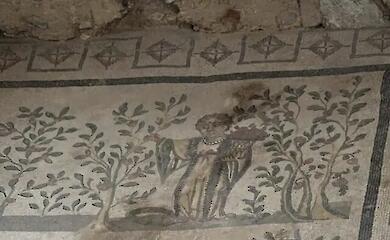

UNESCO may designate Chersonesos in occupied Crimea as a site under threat


Ancient Chersonesos Taurica in Russian-occupied Crimea may be included on the List of World Heritage in Danger. Its status is being considered at the 48th session of the UNESCO World Heritage Committee, which is taking place in Busan, South Korea, from 19 to 29 July.
Following the occupation of the peninsula, excavations were carried out on the site of the monument without Ukraine’s consent; tens of thousands of square metres of new buildings sprang up, and archaeological finds were removed from Crimea. On the site of the ancient city, the Russian authorities have built a complex called ‘New Chersonesos’.
No decision has yet been taken. The matter is being considered by the World Heritage Committee, comprising representatives from 21 countries. Potential inclusion on the List of World Heritage in Danger would draw further attention to the condition of the site.
What is happening to Chersonesos
Ukraine has submitted an official report to UNESCO on the state of Chersonesos Taurica and its ‘chora’ – the agricultural lands surrounding the ancient city.
The document was prepared by the National Commission of Ukraine for UNESCO in January 2026. As Ukrainian specialists have not had access to the site since 2014, the data was collected using satellite imagery, remote sensing, reports from independent experts and open sources.
In the report, Ukraine lists several key threats:
- large-scale excavations carried out without the consent of the Ukrainian authorities;
- the construction of modern buildings on the site of the monument and within its buffer zone;
- the destruction or displacement of archaeological layers;
- the removal of artefacts to Russian museums;
- the lack of access for Ukrainian and international experts;
- the use of the monument in political and religious projects by the Russian authorities.
These actions have caused irreversible damage to the authenticity and integrity of the ancient complex.
What has been built on the site of the ancient city
The most extensive intervention was the ‘New Chersonesos’ historical and archaeological park, which Russia constructed between approximately 2018 and 2024.
According to information provided by Ukraine in its UNESCO report, the construction affected around 24 hectares. The total area of the new above-ground and underground structures may have amounted to approximately 40,000 square metres.
The complex included new museums, religious buildings, landscaped park areas, footpaths and visitor facilities. Some of the structures were built on the site of ancient suburbs and a necropolis.
Heavy machinery was used during construction, and the excavation work affected archaeological layers up to ten metres deep. The remains of temples, burial sites and other structures from various historical periods may have been at risk.
Particular concern was raised by the open-air theatre, built directly over the archaeological remains of an ancient citadel. UNESCO was not notified of this work in advance, as required by the rules governing World Heritage sites.
Where the finds might have been taken
The report states that around 8.6 hectares were excavated over two years on the site of the future park. Millions of archaeological artefacts were discovered during the work.
The most valuable finds – coins, inscriptions, sculptures, pottery and architectural elements – may have been transferred to Russian museums, including the Hermitage. According to Ukrainian experts, some of the less valuable items may have ended up in rubbish tips or on the black market for antiquities.
Why is Chersonesos so important?
Chersonesos was founded by ancient Greek settlers in the 5th century BC in the south-west of the Crimean Peninsula. The city existed for around two thousand years and was linked to the Greek, Roman and Byzantine worlds.
The site includes not only the remains of the city itself, but also the chora – a system of agricultural plots, roads, vineyards and estates surrounding it. Fragments of the ancient town layout, fortifications, residential quarters, early Christian monuments and water supply systems have survived to the present day.
Of particular value is the division of the land into hundreds of rectangular plots. This provides an insight into the organisation of the economy and society of the ancient polis.
In 2013, ‘The Ancient City of Chersonesos Taurica and its Chora’ was inscribed on the World Heritage List as a site in Ukraine. In the official UNESCO record, it is designated as a Ukrainian monument.
What this ‘at risk’ status means
Inclusion on the List of World Heritage in Danger does not mean that Chersonesos will be removed from the UNESCO list. On the contrary, this status is intended to emphasise the urgency of its protection.
It may help to:
- step up satellite monitoring of changes within the site;
- document the destruction and removal of artefacts;
- attract international experts and funding;
- draw up a plan for priority restoration work;
- preserve the data necessary for a future investigation into the loss of cultural heritage.
However, until the occupation ends, the scope for practical protection of Chersonesos remains limited. International experts are unable to fully survey the ancient city on site and assess the condition of the archaeological strata.
Background
Russia occupied and illegally annexed Crimea in 2014. Since then, Ukraine has lost de facto access to Chersonesos, but remains the State Party responsible for the site within the World Heritage system.
Back in 2016, the UNESCO Committee called on all parties to refrain from taking any action that could irreversibly damage the site and proposed using satellite technology to monitor it. It has not been possible to carry out a full-scale international mission on site since then.
In 2024, Ukraine began preparing documentation to have Chersonesos inscribed on the List of World Heritage in Danger. In January 2026, it submitted a detailed report on construction work, excavations and the proposed relocation of artefacts.
At the current session, the Committee is also reviewing the status of other sites threatened by war and environmental crises, including monuments in Lebanon, Lake Baikal and the Boma–Badengilo natural complex in South Sudan.
Source
The main source is Ukraine’s official report on the state of Chersonesos Taurica, submitted to the World Heritage Centre in January 2026. The document contains the results of satellite monitoring, information on new constructions, excavations and the alleged removal of archaeological artefacts.
Information on the status, boundaries and significance of the site is provided on the Chersonesos page in the World Heritage database. Decisions will be taken at the 48th session of the World Heritage Committee, which can be followed on UNESCO’s official website.
Maria Grynevych, project manager, journalist, co-author of Guidebook Sacred Mountains of the Dnieper Region, Lecture Course: Cult Topography of the Middle Dnieper Region.
Related news
How new technologies have debunked old myths about African history

Scientists have investigated how a seashell bead travelled 8,500 years ago
Archaeologists suspect a mass murder took place at a luxurious Roman villa

A discovery in Spain has brought us closer to unravelling the mystery of human origins
Popular news

Ukrainian security services have been recognised as among the best intelligence services in Europe – L'Express


Irina Levchenko, the abducted Ukrainian journalist, has been transferred to the Donetsk remand centre: what is known

Scientists have put forward an explanation as to why there were no tiny dinosaurs


How to cook sweetcorn properly so that it’s juicy and sweet: the best method revealed
News about war
The UN has reported a sharp rise in the number of Ukrainian civilians killed as a result of the war
3 July has been declared a day of mourning in Kyiv. The number of dead and injured is rising