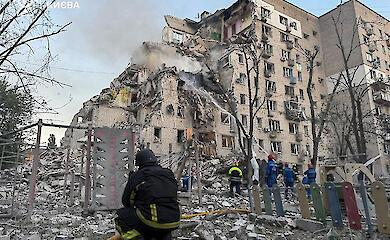
France and Poland have taken a step towards discussing a ‘nuclear umbrella’ for Europe


Poland and France have begun talks on expanding defence cooperation and establishing a new framework for nuclear deterrence in Europe. The two sides discussed strengthening the continent’s security, protecting NATO’s eastern flank and coordination in the field of nuclear safety.
Poland and France have taken the first practical step towards expanding their cooperation in the field of nuclear deterrence. The first meeting of a special coordination group on nuclear issues, set up to discuss strengthening Europe’s security, took place in Paris. The Polish Ministry of Foreign Affairs reported on the meeting.
The talks followed on from an initiative by French President Emmanuel Macron, who had previously proposed that European allies discuss the concept of enhanced nuclear deterrence.
This does not involve the creation of a single European nuclear weapon. Paris is proposing a different approach – shared responsibility amongst allies for the continent’s security and closer coordination regarding nuclear capabilities.
The establishment of a working group marks a concrete step in this direction. Warsaw and Paris intend to strengthen their defence partnership and seek new ways to protect Europe against a backdrop of growing threats.
What tasks has the group set itself?
The Polish Ministry of Foreign Affairs stated that during the first meeting, the delegations discussed issues of European security in the context of Russia’s war against Ukraine and the increasing risks to the continent.
During the meeting, the Polish and French delegations focused on pressing issues of European security against the backdrop of Russian aggression against Ukraine and the growing threats to the continent. The parties identified areas for further detailed talks and bilateral cooperation aimed at strengthening the security of Poland, France and the whole of Europe, according to a statement from the ministry.
The dialogue will not be limited to a single meeting. The parties have already identified the main areas for further work:
developing joint strategies to deter potential aggression;
strengthening the security of NATO’s eastern flank;
coordinating actions in the field of nuclear security.
The capabilities of the French ‘nuclear umbrella’
France remains the only country in the European Union to possess its own nuclear weapons. The French nuclear arsenal differs from that of many other powers in that the country does not deploy a land-based component. Its nuclear forces are based on submarines, surface vessels and aircraft. Paris has more than 300 nuclear warheads at its disposal. Furthermore, the French authorities have previously announced plans to further strengthen this capability.
Europe is reviewing its approach to nuclear security
Following the outbreak of Russia’s full-scale war against Ukraine, a number of European countries have begun to reassess their previous approaches to defence matters.
Some states that had previously maintained a non-nuclear status have begun to discuss the possibility of closer integration into NATO’s nuclear deterrence system. For instance, Lithuania has announced its intention to lift the constitutional ban on nuclear weapons, whilst Finland has amended its legislation to permit the import, transit and storage of nuclear weapons on its territory as part of its cooperation with NATO.
Elena Rasenko writes about science, healthy living and psychology news, and shares her work-life balance tips and tricks.
Related news
The Polish town of Sopot has adopted regulations to combat discrimination against Ukrainians

In Poland, a man has been charged with assaulting a 15-year-old boy for speaking Ukrainian

"Are you tired after 16 hours? Then have a rest on the bench!" The story of a Ukrainian carer in Poland


Navrotsky has announced a ban on the red-and-black flag in Poland: what will change
Popular news

A gold tiara found in a woman’s tomb has astonished archaeologists

Ukrainian security services have been recognised as among the best intelligence services in Europe – L'Express


Irina Levchenko, the abducted Ukrainian journalist, has been transferred to the Donetsk remand centre: what is known
News about war
The UN has reported a sharp rise in the number of Ukrainian civilians killed as a result of the war

3 July has been declared a day of mourning in Kyiv. The number of dead and injured is rising