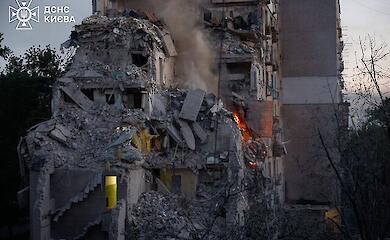
Navrotsky has announced a ban on the red-and-black flag in Poland: what will change


Polish President Karol Nawrocki has announced his intention to seek a ban on the red-and-black flag in the country, describing it as a symbol of the UPA and the OUN. The decision is linked to the ongoing dispute between Poland and Ukraine over the interpretation of historical events.
Polish President Karol Nawrocki has stated that he intends to seek an official ban on the use of the red-and-black flag in the country. According to him, this symbol is associated with the Ukrainian Insurgent Army (UPA) and the Organisation of Ukrainian Nationalists (OUN). The Polish leader made these remarks during events marking the anniversary of the Volhynia tragedy, reports RMF24.
Navrocki stated that he does not consider the display of such a flag in public spaces in Poland to be acceptable. In his view, the red-and-black symbolism is linked to the ideology of Ukrainian nationalism, whose representatives, he claims, are responsible for the murders of Poles during the Second World War.
“Under this red-and-black flag, which we do not want to see in Poland – and I will do everything to ensure it is not present in Poland. I believe that the Polish parliament will pass the relevant bill,” said the Polish president.
Navrotsky emphasised that this is not about accusing the entire Ukrainian people, but about criticising a specific ideology associated with the name of Stepan Bandera.
“Poland is not accusing the entire Ukrainian nation. This is about Bandera’s ideology,” noted the Polish President.
He also stated that, in his view, justifying or ignoring the crimes of the past could lead to a repetition of tragedies in the future.
What does the red-and-black flag signify?
The red-and-black flag first appeared in the Ukrainian nationalist movement in the 1940s following the split of the OUN into two factions – the OUN led by Stepan Bandera and the OUN led by Andriy Melnyk. It was the Bandera wing that officially adopted this symbolism.
At the same time, the combination of red and black had existed in Ukrainian culture long before the emergence of the OUN-B. These colours were found in traditional ornamentation, and in modern interpretations, red is often associated with struggle and bloodshed, whilst black is associated with Ukrainian soil.
At various periods in history, the flag was used by different Ukrainian movements. For instance, the flag was actively used not only by the Bandera wing of the UPA during the Second World War, but also by patriotic organisations and movements in Ukraine at the turn of the Soviet era and during the period of independence. Since 2014, it has also become a symbol of resistance to Russian aggression and often appears alongside the national blue-and-yellow flag.
The historical dispute between Poland and Ukraine continues
Earlier, Nawrocki and Ukrainian President Volodymyr Zelenskyy discussed this issue during a meeting on the sidelines of the NATO summit. The Polish leader stated that Russia remains a common enemy of the two countries, but that he does not intend to change his position on this historical issue.
Previously, right-wing Polish politicians had also stated that they would oppose Ukraine’s accession to the European Union unless Kyiv revised its stance on the UPA and Stepan Bandera in the national historical narrative.
Elena Rasenko writes about science, healthy living and psychology news, and shares her work-life balance tips and tricks.
Related news
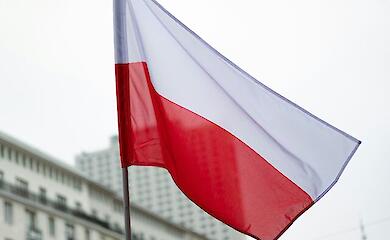
How many Ukrainians have been granted protection in Poland since 2022: data from the Ministry of Foreign Affairs

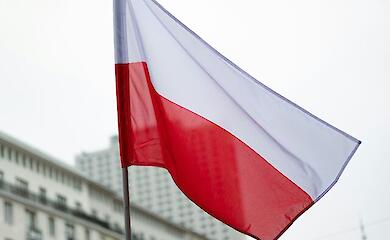
Two Ukrainian children were beaten up in Poland for speaking Ukrainian: the police are searching for the attackers
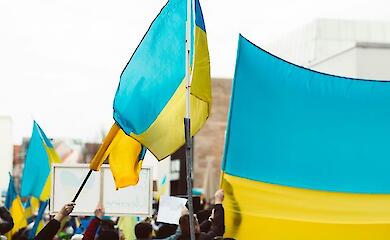
67.2 per cent of Poles support the idea of deporting Ukrainians: new survey figures
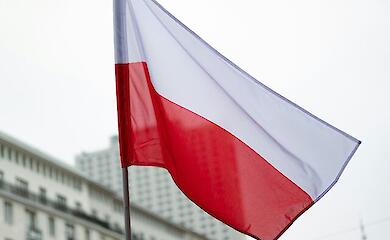
Poland intends to increase the size of its armed forces to 500,000 personnel: almost one in five will be a woman
Popular news

How to cook sweetcorn properly so that it’s juicy and sweet: the best method revealed

Archaeologists have discovered who actually built Colombia’s ancient canals


Russia has received new weapons from North Korea: which regions of Ukraine could be at risk

Bones of ancient humans found on the seabed of the Taiwan Strait suggest they were up to 190 cm tall

News about war

An expert explains how Russia is changing its tactics for strikes on Kyiv

The UN has reported a sharp rise in the number of Ukrainian civilians killed as a result of the war