Dogs slow ageing and cats keep us fit: study


Research from the Waltham Petcare Science Institute confirms that pets play an important role in the lives of older people, contributing not only to emotional wellbeing but also slowing down the ageing process.
Demographic change is rapidly transforming the global community. According to the UN, the number of older people will almost double by 2050, reaching about 1.5 billion. Today, one in five people in Europe is over 65. Along with this, mental health problems are increasing: loneliness, anxiety and cognitive decline are becoming more common among older people.
However, recent research from the Waltham Petcare Science Institute centre, the research arm of Mars, has shown that interacting with pets can significantly reduce feelings of loneliness and slow down brain ageing.
Therapy dogs against loneliness
According to statistics, about 29% of elderly people suffer from loneliness, which negatively affects their physical and mental health. Research shows that feeling isolated can be as harmful as smoking 15 cigarettes a day and is linked to a 26% increased risk of mortality. People who lose social connections or have limited mobility after retirement are particularly vulnerable.
Researchers from Waltham Petcare Science Institute conducted an experiment with patients aged 59 and over who had been in hospital for more than five days. Participants had daily 20-minute sessions with therapy dogs for three days. The results showed a significant reduction in loneliness, as measured by the UCLA Short Form and Analogue Loneliness Scale.
Importantly, socialising with the dogs had a stronger effect than usual care or talking to people. The reduction in feelings of loneliness was particularly marked among dog owners, which may indicate that pets fill the emotional void created by their absence during hospitalisation.
Duration of effect and need for continuation
However, the effects of these sessions proved to be short-lived. One and six months after completing the programme, loneliness scores returned to baseline values. This indicates the need for more frequent and prolonged interactions with the animals to achieve a sustained effect.
Emotional bonding with pets and slowing aging
The centre's second study focused on the impact of emotional bonding between older people and their pets on physical and cognitive health. Researchers followed 214 pet owners between the ages of 50 and 100 for 13 years.
Using the Lexington Attachment to Pets Scale (LAPS), the researchers assessed the level of emotional bonding. In parallel, participants' physical performance, such as walking speed and the ability to cover a distance of 400 metres, as well as cognitive functions: memory, speech and self-organisation, were monitored.
The results showed that strong emotional attachment to a pet was associated with slower physical and cognitive decline. And different types of animals had different effects on health. Dog owners showed a slower decline in attention span, although memory may have deteriorated more quickly. Cat owners, on the other hand, showed better retention of physical activity.
Maria Grynevych, project manager, journalist, co-author of Guidebook Sacred Mountains of the Dnieper Region, Lecture Course: Cult Topography of the Middle Dnieper Region.
Related news
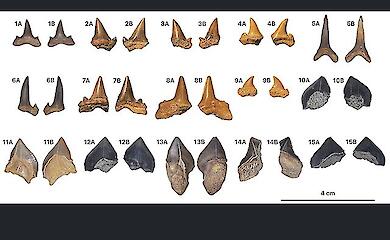
A ‘shark graveyard’ dating back some 80 million years has been discovered in the Egyptian desert



165 million years ago, the forests were already filled with ultrasound — scientists have discovered who was producing it


Turtles capable of crossing the ocean have unexpectedly turned out to be “homebodies”
Popular news

Russia has received new weapons from North Korea: which regions of Ukraine could be at risk


Henry VIII’s long-lost castle has been found inside another castle

Bones of ancient humans found on the seabed of the Taiwan Strait suggest they were up to 190 cm tall

News about war

An expert explains how Russia is changing its tactics for strikes on Kyiv


The UN has reported a sharp rise in the number of Ukrainian civilians killed as a result of the war