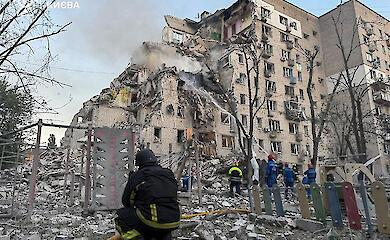
US experts stunned by Ukrainian military's ingenuity


In a restricted environment, the Ukrainian military has to come up with new technological solutions in their field on the fly.
This was reported by CNN citing unnamed US officials.
According to the publication, Ukrainians are developing modern applications for targeting, remaking Western weapons, and creating new solutions on the go.
For example, the paper describes a mobile application that can be easily installed on tablets and smartphones that transmits satellite and other reconnaissance images to a real-time guidance algorithm to help direct fire on specific targets.
Small plastic drones buzzing silently overhead are dropping grenades and other munitions on Russian troops. 3D printers are now making parts so soldiers can repair heavy equipment in the field. Technicians have turned ordinary pick-up trucks into mobile missile launchers. Engineers have figured out how to attach sophisticated US missiles to old Soviet fighters like the MiG-29, helping the Ukrainian air force keep flying after nine months of war.
Officials and analysts say Ukraine has become a veritable combat laboratory for finding cheap but effective solutions.
Ukraine is absolutely a weapons laboratory in every sense, because none of this equipment has ever been used in a war between two industrialised countries. This is combat testing in the real world.
A US officer said that one of the lessons the US can learn from this war is that artillery such as the M777 howitzer system may be a thing of the past. These systems are harder to move quickly to avoid return fire, and in a world of ubiquitous drones and surveillance from above it is very difficult to hide.
It is noted that some of the high-profile systems provided to the Ukrainians - such as the Switchblade 300 drone and a missile designed to defeat enemy radar systems - have proved less effective on the battlefield than expected, according to a US military operations officer.
Artur Zayonts specialises in news from the frontline. A historian by education, Arthur has always sought to bring depth and context to his journalistic work.
Related news
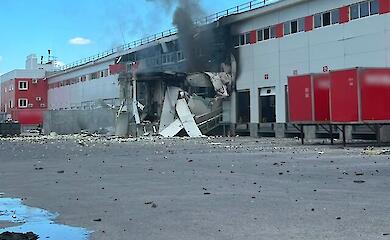
Russia struck a "Nova Poshta" terminal near Kharkiv: staff members were killed and more than 20 people were injured


Estonia is building a new military base near the border with Russia

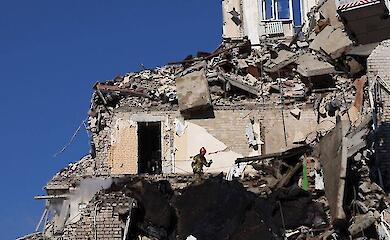
3 July has been declared a day of mourning in Kyiv. The number of dead and injured is rising

Popular news

Traces of water heated to 300 degrees have been found near the “Lost City”


Scientists have discovered that power among the Scythians was passed down through the family line


An antidote to one of the most potent marine venoms has been found in frogs
News about war
The UN has reported a sharp rise in the number of Ukrainian civilians killed as a result of the war

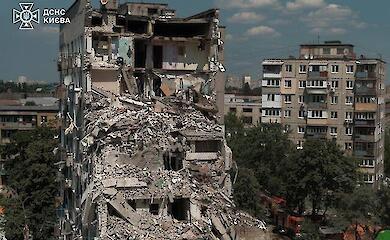
3 July has been declared a day of mourning in Kyiv. The number of dead and injured is rising