

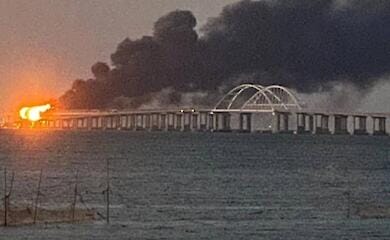
UN General Assembly condemns illegal "referendums" held by Russia in occupied part of Ukraine


The resolution was supported by 143 out of 193 members of the UN General Assembly.
The day before, the UN General Assembly adopted a resolution that condemns the “referendums” held by Russia in the self-proclaimed DPR and LPR and the occupied Kherson and Zaporozhye regions. The document also contains a demand for Russia to reconsider its statement on the annexation of Ukrainian territories.
The resolution was supported by 143 of the 193 members of the UN General Assembly, five states (Russia, Belarus, Syria, North Korea and Nicaragua) voted against, the remaining 35 abstained during the voting.
Thus, even more countries supported the resolution than during the condemnation of the Russian invasion of Ukraine in March.
The President of Ukraine Volodymyr Zelensky has already commented on the resolution.
We are grateful to 143 states that supported the historic resolution of the UN General Assembly "Territorial Integrity of Ukraine: Protection of the Principles of the UN Charter". The world has said its word - an attempt to annex the Russian Federation costs nothing and will never be recognized by free nations. Ukraine will return all its lands,” he said.
The Permanent Representative of Ukraine to the UN Serhiy Kislitsa also reacted to the UN statement. He ironically drew attention in his Twitter to how many countries came out in support of Russia.
Oh my God! I can not see! How many, you say, voted for Russia? 4. Wow!, he wrote.


Artur Zayonts specialises in news from the frontline. A historian by education, Arthur has always sought to bring depth and context to his journalistic work.
Related news
Germany has urged its citizens to avoid travelling to Ukraine ahead of Independence Day


Why Ukrainians may not return home after the war: it's not just about security

An expert explains how Russia is changing its tactics for strikes on Kyiv

Popular news

How to cook sweetcorn properly so that it’s juicy and sweet: the best method revealed

Archaeologists have discovered who actually built Colombia’s ancient canals

Scientists have uncovered the ‘true curse of the mummy’—and it turns out it’s not mystical at all
An expert explains how Russia is changing its tactics for strikes on Kyiv
News about war
An expert explains how Russia is changing its tactics for strikes on Kyiv

The UN has reported a sharp rise in the number of Ukrainian civilians killed as a result of the war

