

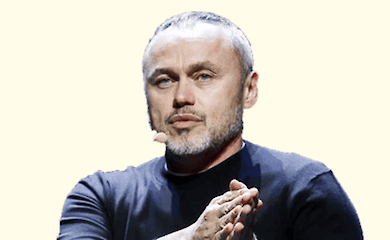
Two Ukrainians wrote an article for Politico on why Ukraine should receive an invitation to join NATO


Granting Ukraine a path to NATO will not lead to an escalation of the conflict with Russia - on the contrary, it will serve as a deterrent, say Aliona Getmanchuk and Olena Galushka.
"A historic turn is coming: Why should Ukraine be invited to NATO?" - Alyona Getmanchuk, head of the New Europe Center, and Olena Halushka, co-founder of the International Center for Ukrainian Victory and board member of the Anti-Corruption Action Center, pose this question in their article for POLITICO.
The issue will spark a considerable discussion at the upcoming NATO summit in Vilnius, scheduled for 11-12 July.
The authors believe that "launching the negotiation process for Ukraine's accession to NATO will not involve the Alliance in a war with Russia, but, on the contrary, may prevent it from starting".
They believe inviting Ukraine to NATO could be the key to ending the conflict, ensuring sustainable peace, securing reconstruction and offering a credible guarantee to potential investors by stopping the spread of Russian imperial ambitions.
Here's a closer look at what the Ukrainians wrote about in an article for Politico.
Alyona Getmanchuk and Olena Galushka are credited with researching Ukrainian politics and anti-corruption activism.
They note that historically NATO's approach to Ukraine has been defined by a desire to avoid "provocation" by Russian President Vladimir Putin. Unfortunately, the invasions of Georgia and Ukraine in 2008 and 2014 respectively have not taught NATO members that concessions, not a show of force, push Russia towards aggression.
The upcoming NATO summit in Vilnius offers a golden opportunity to correct the strategic mistakes of the 1994 Budapest Memorandum and the 2008 Bucharest Summit.
According to the authors, the summit offers an opportunity to introduce effective security guarantees for Ukraine, which voluntarily relinquished the world's third-largest nuclear arsenal.
Such a move could effectively remove the strategic ambiguity that gives Russia a de facto veto on admitting countries to NATO, preserving the illusion of a revived Russian empire in the 21st century.
Ukraine was promised in 2008 that it would one day become a member of NATO, but over the next 15 years, no clear steps towards integration have been taken. Now it's time to stop treating Ukraine as a cargo for transatlantic security and deliver on that promise, say Alyona Getmanchuk and Elena Galushka:
Ukraine is undoubtedly an asset. For more than 15 months, the country's armed forces have been repelling an invasion by one of the world's largest armies and defending NATO against "the most significant direct threat. Prior to that, Ukraine also contributed to all major missions and operations conducted by NATO, including Iraq and Afghanistan. When the world was hit by COVID-19, Ukrainian cargo planes delivered emergency medical supplies to allies via NATO's strategic airlift programme.
Meanwhile, the assertion that the NATO enlargement process cannot begin during the war only encourages Putin to prolong aggression.
In addition, it is a myth that NATO cannot invite countries during the war. There are no clear criteria for such a decision or formal restrictions in times of war. According to the 1995 NATO enlargement study, the decision to invite a particular country is made ad hoc. Although all previous NATO receptions have taken place in the absence of active warfare, the absence of such experience does not mean it is forbidden.
Many fear that inviting Ukraine to join the Alliance at the Vilnius summit would mean that NATO troops would march into Ukraine the next morning to fight the Russian army. But one needs only look at the official NATO admission procedure to see that this will not happen.
Moreover, Ukraine has significantly progressed in adhering to NATO principles and standards. Despite notable improvements, problems remain, such as corruption, which was recently mentioned by US President Joe Biden. However, issuing an invitation to NATO and starting a negotiation process will help reforms in the defence and security sectors.
The public in many NATO countries is surprisingly supportive of Ukraine joining NATO.
Many NATO leaders would probably be surprised to learn that their own citizens view the prospect of Ukraine joining NATO far more favorably than they do. A Kantar poll commissioned by the New Europe Centre found that among those surveyed, 70 per cent of Americans, 55 per cent of the Dutch, 53 per cent of Italians, 56 per cent of the French and 50 per cent of the Germans supported the idea that NATO would issue an invitation to Ukraine already at the Vilnius summit. And the number of respondents who directly oppose the invitation is strikingly low.
The impact of NATO membership on peacekeeping and reconstruction assistance is crucial. Potential investors in Ukraine's reconstruction are repeatedly raising security concerns, and an invitation to join NATO would provide them with far more reliable and cost-effective guarantees than establishing multibillion-dollar insurance funds or installing extensive air defence systems.
Not inviting Ukraine to join NATO is fraught with geopolitical and practical risks. It could reinforce Russia's perceived veto power over NATO enlargement, give the impression that Ukraine's NATO membership is negotiable in future negotiations, and discredit the Alliance in the eyes of Ukrainians and their citizens who support the invitation.
With an experienced armed force, a democratic country like Ukraine could become a significant asset for NATO, while keeping it in the "grey zone" could pose some risk.
Overall, the Russian army would stand no chance in a military confrontation with NATO - it can barely keep up with Ukraine's armed forces. Thus, inviting Ukraine into NATO is the only way to end - not expand - the war, bring sustainable peace back to Europe, end Russia's imperialist ambitions and ensure that the conflict does not repeat itself once Russia has rearmed and trained its new recruits.
This is a time of historic challenges that require historic leadership, and the West should not be afraid - the Ukrainians are not afraid," summarise Alyona Getmanchuk and Olena Galushka.


Artur Zayonts specialises in news from the frontline. A historian by education, Arthur has always sought to bring depth and context to his journalistic work.
Related news
NYT: Putin has instructed the Russian security services to work towards weakening NATO and the EU by 2026

British intelligence: Putin may stage a major provocation against NATO as early as the coming months

Poland’s Foreign Minister has warned Putin against attacking NATO countries
Popular news

How to cook sweetcorn properly so that it’s juicy and sweet: the best method revealed

Archaeologists have discovered who actually built Colombia’s ancient canals


Scientists have put forward an explanation as to why there were no tiny dinosaurs


Scientists have discovered how snakes lived during the age of the dinosaurs
News about war
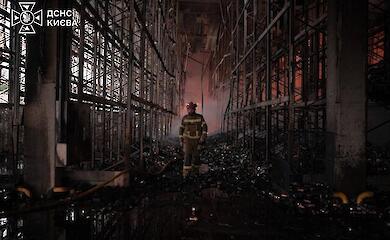
An expert explains how Russia is changing its tactics for strikes on Kyiv


The UN has reported a sharp rise in the number of Ukrainian civilians killed as a result of the war


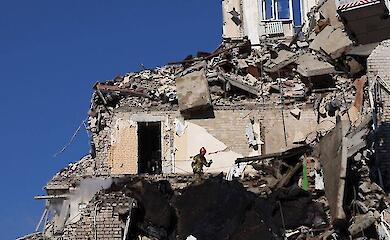
3 July has been declared a day of mourning in Kyiv. The number of dead and injured is rising