Several hundred students of Alabuga Polytechnic College (Tatarstan) were involved in the assembly of Iranian Shahed drones.
This was reported by Ukrayinska Pravda, citing the results of an investigation by journalists from the Protocol newspaper and the RZVRT YouTube channel.
Initially, according to the journalists' information, mainly teenagers aged 15-17 were involved in assembling drones. Currently, students of all courses are involved. Those involved in drone assembly are forbidden to disclose the nature of their work under threat of expulsion.
In addition, underage female students from Africa, referred to as "mulattoes" by the institution, are being recruited to produce the drones. Dating apps such as Tinder and Badoo are used to recruit these girls. Investigators claim they are offered the lowest-skilled jobs, such as mopping floors and cleaning rubbish in the workshops.
The head of Tatarstan, Rustam Minnikhanov, reportedly opened the Alabuga Polytechnic College on 5 April 2021 with plans to "grow Ilon Muskov". Teenagers entering college were promised the opportunity to learn by combining education with paid work.
From the students' stories, journalists learnt about the harsh living conditions at the college. One of the compulsory elements of the training is the game of paintball. Failure to participate in this game can result in a reprimand or expulsion. In 2022, paintball battles were held every weekend from September to October. Students woke up at 5 a.m. and reconstructed the "World War II battles." It is noticed that the Nazi flag in this game looks like the flag of Nazi Germany, but instead of a swastika in a white circle, the NATO bloc symbol is used.
The losing teams are subjected to "shootings", i.e. shooting paintballs. The losers are also forced to run and dig trenches in the rain and "storm" heights unarmed, during which they are fired upon by staff.
One of the journalists' sources said that he had heard from Sergei Alekseev, Deputy Director General of the SEZ, that "the purpose of paintball is to weed out the weaklings and brats at the initial stage".
Oleg Kotov writes about the war in Ukraine and how it is changing the world.
Related news

Why migration policy in Ukraine is becoming a matter of rebuilding the country


"EU residents will not be able to sleep in peace". Medvedev "warned" Europe that incidents with Russian drones will continue to occur


Pro-Russian march with St. George ribbons and Night Wolves allowed in Vienna


Popular news

An antidote to one of the most potent marine venoms has been found in frogs

Traces of water heated to 300 degrees have been found near the “Lost City”

A gold tiara found in a woman’s tomb has astonished archaeologists


News about war

The UN has reported a sharp rise in the number of Ukrainian civilians killed as a result of the war


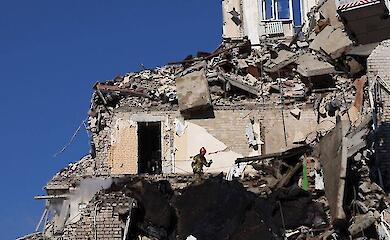
3 July has been declared a day of mourning in Kyiv. The number of dead and injured is rising