

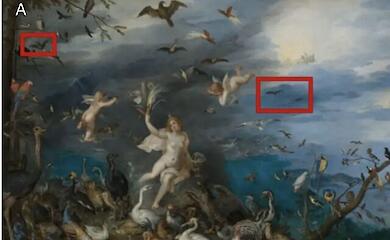
Scientists have explained why most medieval manuscripts have disappeared


When we talk about medieval literature, we tend to think that we are looking at the most significant works written at that time. But that is not entirely true. Not all medieval literature has survived to the present day; only the part that managed to survive has reached us.
A new study published in PNAS Nexus has revealed that up to 60 per cent of medieval chivalric texts and more than 95 per cent of the manuscripts may have been lost. In other words, behind every well-known hero, such as King Arthur or Roland, there may have been dozens of forgotten stories that simply did not survive the passage of time.
The main reason is that, in the pre-printing press era, books were extremely vulnerable. Texts were copied by hand, there were few copies, and a single fire, war, epidemic, damp or loss of interest could destroy an entire story forever.
Details
Before the invention of the printing press, a text only survived as long as it was being copied. One person would take a manuscript and create a new copy. Then, a further copy could be made from that one. In this way, a text developed a sort of ‘family’: different versions, branches, errors, corrections and additions.
Philologists have long used such differences to construct genealogies of manuscripts. These diagrams are called stemma. Put simply, they are ‘family trees’ of texts: by analysing errors and alterations, scholars attempt to understand which copy originated from which.
But there is a problem with this method. A family tree is constructed only on the basis of those manuscripts that have survived. And if an entire branch has disappeared completely, it is no longer visible. Therefore, the history of a text that we can reconstruct is almost always incomplete.
What the scholars did
Jean-Baptiste Camps and his colleagues proposed viewing the transmission of texts as a complex system. They used computer modelling similar to approaches found in evolutionary biology and statistical physics: texts ‘reproduce’ through copying, change, and can disappear in whole branches.
A prime example is the Old French chivalric tales of the Middle Ages. This is a world of romances about feats of valour, wars, heroes, courts, love and adventures. Such texts circulated throughout Europe in manuscript form from around the 12th century onwards.
The model showed that the losses could have been enormous. Not only individual copies but entire works disappeared. If a text was not copied several times in the first few years after its appearance, its chances of surviving the centuries fell sharply.
Why did manuscripts disappear?
The simplest reason is that there were few copies. Today, a file can be saved in the cloud, sent to dozens of people and reprinted. In the Middle Ages, a book was an expensive and physically vulnerable object.
A manuscript could burn, rot, get lost during a move, be destroyed during a war, or simply end up being of no use to anyone. Sometimes texts were no longer copied because fashions changed: some subjects became popular, whilst others fell out of cultural favour.
Chance also played a major role. If the sole copy was kept in a monastery or castle that suffered damage from fire, war or an epidemic, the text would vanish along with it. The Black Death and other major historical upheavals could sever entire chains of manuscript transmission.
Why the early years were decisive
One of the study’s key findings is that a text’s fate was often decided shortly after its appearance. If a work was copied quickly, it gained ‘spare lives’. Even if one manuscript was lost, another might survive.
If, however, a text existed in only one or two copies, it was virtually defenceless. For the Middle Ages, this meant that, in order to survive, a work had to do more than simply be good; it had to fall into the right hands, capture the interest of scribes and spread quickly enough.
This is precisely why it is not necessarily the ‘best’ texts that have survived to the present day. Often, these are texts that were simply lucky: they were copied, preserved, transported, quoted and included in libraries.
What does this change?
The research serves as a reminder: our understanding of the Middle Ages is built on surviving fragments. We are not reading the era’s complete library, but rather the part of it that has been preserved by chance.
This applies even to famous works. For example, whilst there are surviving versions of *The Song of Roland*, the earliest form of the text may be lost. What we read today may not stem from the very beginning of the manuscript tradition, but from a later branch of this textual tree.
Put simply, many of the original forms of medieval works may have been lost. We do not necessarily know the first version of a text, but rather the version that has managed to survive through the centuries.
Why this is important
This work is important not only for philologists. It shows how cultural memory is formed. What society considers to be ‘heritage’ depends not only on the talent of the authors or the significance of the works, but also on the vagaries of preservation.
The medieval literature we know today is the result of a selection process. But this selection was not always deliberate. It was shaped by fires, epidemics, wars, damp, human forgetfulness, fashion, the cost of copying, and sheer luck.
Therefore, lost manuscripts are not merely a minor loss to the archives. They are lost worlds: plots, characters, linguistic forms, and conceptions of love, power, war, religion and society.
Background
Before the printing press, books were not mass-produced items. Each manuscript was created by hand, often on expensive materials, with great effort and over a long period of time. Consequently, the number of copies of a single text could be very small.
After the advent of printing, the situation changed. Texts became easier to reproduce, and thus harder to destroy completely. But for medieval manuscript culture, this came too late: many works had already disappeared before mass reproduction became possible.
Today, scholars are attempting to piece together the lost picture using stemma, manuscript catalogues, digital archives and mathematical models. But the main limitation remains the same: we cannot study directly those texts of which not a single copy has survived. We can only estimate the extent of the losses.
Source
Study: Jean-Baptiste Camps, Julien Randon-Furling, Ulysse Godreau, “On the transmission of texts: Written cultures as complex systems”, PNAS Nexus, 2026.
An independent researcher, interested in archaeology and sacred geography. He researches them and writes about them.
Related news
Historians have discovered an unexpected origin for the term ‘burnout’

Moonlight has helped solve the mystery of Egypt’s sacred baboons


The history of silk turned out to be almost two thousand years longer
A gold tiara found in a woman’s tomb has astonished archaeologists
Popular news

How to cook sweetcorn properly so that it’s juicy and sweet: the best method revealed


Archaeologists have discovered who actually built Colombia’s ancient canals

Scientists have put forward an explanation as to why there were no tiny dinosaurs


Scientists have discovered how snakes lived during the age of the dinosaurs
News about war

An expert explains how Russia is changing its tactics for strikes on Kyiv

The UN has reported a sharp rise in the number of Ukrainian civilians killed as a result of the war


3 July has been declared a day of mourning in Kyiv. The number of dead and injured is rising