Scientists have discovered how bad cholesterol causes heart attacks


American scientists have made an important discovery that could help develop drugs to lower "bad" cholesterol (LDL or LDL) and therefore prevent heart attacks and strokes.
The most interesting part of this story is the technology that allowed us to look at LDL-cholesterol in detail by literally "freezing" it for a new type of microscope.
This technique is called cryo-electron microscopy (cryo-EM).
It won a Nobel Prize back in 2017, and since then scientists in various fields have been using it extensively to study the structure of proteins and other molecules. In the new study, scientists from the US National Institutes of Health (NIH) froze "bad" cholesterol in ice droplets, then illuminated it with an electron microscope and recreated a three-dimensional model on a computer. As a result, they saw for the first time exactly how LDL accumulates in the body and why it becomes so dangerous.
The fact is that "bad" cholesterol is necessary for some processes: it delivers some of the necessary substances to our cells. But when LDL is too much - for example, if a person abuses food with saturated or trans fats - this cholesterol begins to accumulate in the walls of the arteries. Over time, plaque forms, which narrows the vessel, and in the worst cases can suddenly rupture and block the blood flow. That's when a heart attack or stroke occurs.
Scientists have long known that LDL in excess is harmful, but until now there was no clear idea of what the process of cholesterol "stuck" in the blood vessels looks like at the molecular level. Now, thanks to cryo-electron microscopy, there is a chance to understand this mechanism more precisely and to propose new drugs.
According to experts, in some cases it would be possible to block the synthesis of LDL at the stage when it begins to accumulate, or to strengthen the work of proteins that remove cholesterol from the body.
Drugs that lower "bad" cholesterol (such as statins) have been around for a long time, but they have limitations. The new NIH findings offer hope for an even more targeted effect - and perhaps help beat rare genetic forms of hypercholesterolemia, where LDL levels are too high from birth.
Elena Rasenko writes about science, healthy living and psychology news, and shares her work-life balance tips and tricks.
Related news

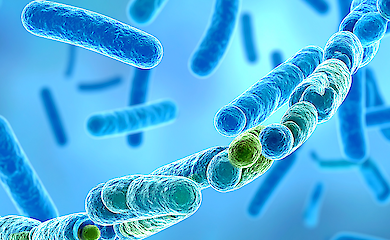
A hidden source of resistance to the latest antibiotics has been discovered in Australia


Traces of water heated to 300 degrees have been found near the “Lost City”

An antidote to one of the most potent marine venoms has been found in frogs
Popular news

Scientists have discovered that power among the Scythians was passed down through the family line



Navrotsky has announced a ban on the red-and-black flag in Poland: what will change

News about war

The UN has reported a sharp rise in the number of Ukrainian civilians killed as a result of the war



3 July has been declared a day of mourning in Kyiv. The number of dead and injured is rising