
Russian Federation steps up secret campaign in EU to disrupt military supplies to Ukraine


NATO ambassadors will meet next month with the U.S. director of national intelligence about Russia's growing sabotage.
US and allied intelligence agencies have been monitoring an increase in the number of Russian GRU sabotage operations in the EU, which they believe are part of Russia's campaign to disrupt the delivery of military aid to Ukraine. This was reported by The New York Times on 26 May.
The covert operations are mostly arson or attempted arson, targeting a wide variety of targets, including a warehouse in England, a paint factory in Poland, homes in Latvia and, most bizarrely, an Ikea shop in Lithuania," the report said.
While the actions may seem random, U.S. and European security officials say they are part of a concerted effort by Russian Federation to slow arms shipments to Ukraine and make it appear that there is growing European opposition to support for Ukraine. The campaign is being led by Russia's GRU military intelligence agency.
Some security officials say Russian Federation is trying to sow fear and force European countries to tighten security along the entire arms supply chain, which would add costs and slow the pace of deliveries.
Leaders of NATO and European countries are warning of the growing threat. Estonian Prime Minister Kaija Kallas said last week that Russian Federation is waging a "shadow war" against Europe.
Polish Prime Minister Donald Tusk announced the arrest of 12 people accused of "beatings, arson and attempted arson" for Russian intelligence.
Norwegian Prime Minister Jonas Gahr Store said Russian Federation posed a "real and serious threat" after his country warned of possible attacks on energy producers and weapons factories.
Amid growing concerns about sabotage, NATO ambassadors are set to meet next month with Avril D. Haynes, the U.S. director of national intelligence.
Haynes will give a briefing on Russia's war in Ukraine and discuss Moscow's covert sabotage campaign in Europe.


Eugenia Ruban writes about political and economic news. She looks at large-scale phenomena in Ukrainian politics and economics from the perspective of how they will affect ordinary Ukrainians.
Related news

Estonia is building a new military base near the border with Russia


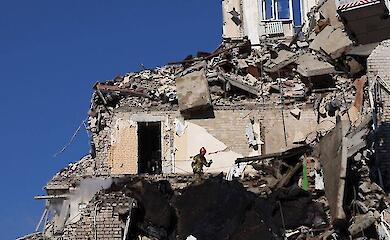
3 July has been declared a day of mourning in Kyiv. The number of dead and injured is rising

Popular news



Scientists have discovered that power among the Scythians was passed down through the family line



Navrotsky has announced a ban on the red-and-black flag in Poland: what will change
News about war

The UN has reported a sharp rise in the number of Ukrainian civilians killed as a result of the war

3 July has been declared a day of mourning in Kyiv. The number of dead and injured is rising