Latvian leader explains to Musk why NATO still exists


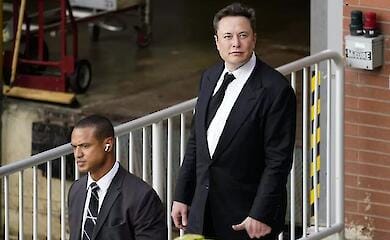
Ilon Musk, an American billionaire and founder of Tesla and Space X, has said that NATO should be disbanded.
Latvian President Edgars Rinkevics has explained to US billionaire and businessman Ilon Musk why NATO exists. The Latvian leader's reaction appeared on social network X after the businessman said he did not understand why the Alliance has not been disbanded yet, because the reasons for its emergence have allegedly already disappeared and its arch-enemy has disintegrated.
Dear Ilon Musk, the reason why NATO was founded, exists and will continue to exist is Russia and other enemies of the free world," Rinkevics wrote, commenting on the billionaire's scandalous statement.
The day before, Ilon Musk, founder of Tesla and Space X, said that NATO should be disbanded. According to him, the reason for the existence of the Alliance has disappeared. He wrote about this in the social network X (Twitter).
He wrote that in 1991 the Soviet Union collapsed and NATO faced an existential crisis: the reason for its existence no longer existed. But "instead of disbanding, the Alliance came up with a new mission: to expand." Mol, in a "self-referential cycle of expansion, NATO would create the hostility necessary to justify itself."
Note, the North Atlantic Alliance is a collective security system that does not target one particular adversary. NATO's primary role is to ensure the freedom and security of its member states.


Eugenia Ruban writes about political and economic news. She looks at large-scale phenomena in Ukrainian politics and economics from the perspective of how they will affect ordinary Ukrainians.
Related news
British intelligence: Putin may stage a major provocation against NATO as early as the coming months


Poland’s Foreign Minister has warned Putin against attacking NATO countries

В Чехии сказали, какую из стран НАТО Россия может рассматривать как "легкую цель"
Popular news
Ukrainian security services have been recognised as among the best intelligence services in Europe – L'Express

Irina Levchenko, the abducted Ukrainian journalist, has been transferred to the Donetsk remand centre: what is known


Scientists have put forward an explanation as to why there were no tiny dinosaurs

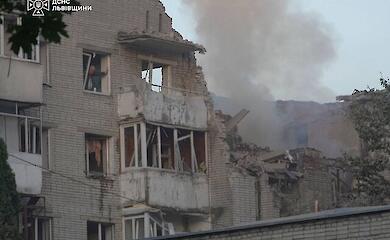
Russia has attacked Lviv with drones and missiles: dozens of residential buildings have been damaged and there are casualties
News about war
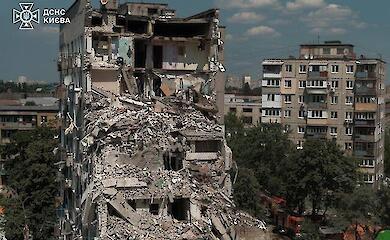
The UN has reported a sharp rise in the number of Ukrainian civilians killed as a result of the war
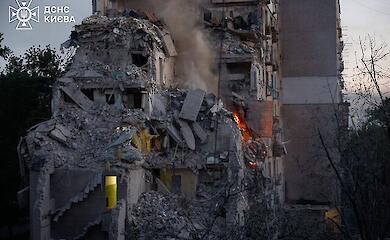
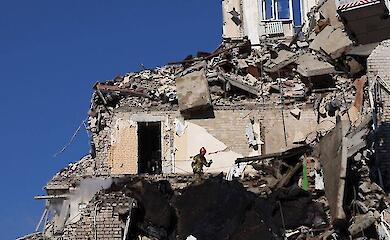
3 July has been declared a day of mourning in Kyiv. The number of dead and injured is rising