
Everest cemetery: why bodies of dead climbers remain on the mountain


It is difficult to determine the exact number of bodies on Everest, as many remains are covered by snow and ice, and new bodies are discovered as the ice melts.
Everest has hundreds of bodies of those who died climbing up and down the mountain. Some of the dead are clearly visible from standard climbing routes, while others are buried deep under the snow.
The high number of deaths on Everest is due to several factors, including the altitude, harsh weather conditions and a growing number of inexperienced climbers trying to reach the summit. The bodies of dead climbers serve as reminders of the risks and dangers involved in climbing the world's highest mountain, and also pose a problem for rescuers and other climbers who have to avoid them.

It is important to note that the presence of bodies on Everest is a sensitive issue, and many families of fallen climbers would prefer that the remains of their loved ones not be disturbed. Efforts have been made to remove some bodies from the mountain, but this is a difficult and dangerous task that requires considerable resources.
The presence of these bodies has become a concern as they serve as a constant reminder of the dangers of climbing Everest and can be seen by other climbers attempting to reach the summit. In addition, the bodies can pose a health hazard as they can attract birds and animals that feed on the remains.

Various organisations are making efforts to remove bodies from Everest, but the task is extremely difficult and dangerous and often impossible to retrieve due to conditions on the mountain.
In recent years, there have been increasing calls for stricter Everest climbing rules to reduce fatalities and ensure the safety of those attempting to reach the summit. This includes improving climbers' training and equipment, as well as tightening restrictions on the number of climbers allowed on the mountain at any given time.

There are several bodies on Everest that have become famous because of the circumstances of their deaths or their location on the mountain. Here are a few of the most famous:
George Mallory and Andrew Irvine: Mallory and Irvine were British climbers who went missing while attempting to summit Everest in 1924. Their bodies were recovered in 1999 and it is still unknown whether they reached the summit before their deaths.
Tsewang Paljor: Paljor, an Indian climber, died on Everest during a storm in 1996. He is often referred to as the "Green Shoes" because of the green boots he was wearing when his body was found. Paljor's body is visible from the standard climbing route and serves as a warning to climbers of the dangers of the mountain.

David Sharpe: Sharpe, a British climber, died on Everest in 2006. His death caused a scandal because of the number of climbers who passed him by without stopping to help. Sharpe's body is still on the mountain and serves as a reminder of the importance of helping those in need.
Scott Fischer: Fischer was an American climber who died on Everest in 1996 during the same storm that took the life of Tsewang Paljor. Fischer's body was found near the summit and serves as a testament to the dangers of climbing to high altitude.
These are just a few examples of the many climbers who have died on Everest. The bodies of these climbers serve as a sobering reminder of the risks involved in climbing the world's highest mountain, and serve as a warning to those trying to reach the summit.

The bodies of dead climbers on Everest have become part of the landscape and are often used as landmarks or markers by climbers. Some of these bodies have become famous and serve as landmarks on the climbing route. Here are some of the most famous, besides the 'Green Shoe'
"Black Triangle" (David Sharpe): David Sharpe's body is near the summit of Everest and is often referred to as the "Black Triangle" because of the black triangle that is visible from afar. Sharpe's body is often used as a landmark by climbers trying to reach the summit.
"Sleeping Beauty" (Hannelore Schmatz): Hannelore Schmatz was the first German woman to die on Everest. Her body is often called "Sleeping Beauty" because of the tranquil appearance of her remains. Schmatz's body is near base camp and serves as a reminder of the dangers involved in climbing to high altitude.
"Rainbow Valley": The Rainbow Valley is a section of the Everest climbing route that contains many bodies of dead climbers, and it gets its name from the colourful clothing seen on the bodies of dead climbers.
Rainbow Valley serves as a sobering reminder of the risks involved in climbing the world's highest mountain.

Retrieving bodies from Everest is a dangerous and difficult task due to the harsh weather conditions and the high altitude of the mountain. The presence of bodies on Everest has become a concern for climbers and local people alike, and efforts have been made to retrieve them. However, retrieving bodies from Everest can be a complex and difficult process for several reasons:
Altitude: The bodies of dead climbers are often at a very high altitude, making it difficult for rescuers to access them. High altitude also makes any operations difficult, as low oxygen levels can cause serious health problems.
Weather conditions: The weather on Everest can be extremely harsh, with strong winds, low temperatures and heavy snow. This makes it difficult for rescuers to access the bodies of the dead and carry out any operations.
Terrain: The terrain on Everest is rugged and difficult to traverse, making it difficult for rescuers to access the bodies of the dead. Steep slopes, crevasses and ice formations can also make it dangerous for rescuers to move around the mountain.
Logistics: Removing bodies from Everest requires a significant amount of equipment and resources, such as ropes, harnesses and oxygen tanks. This equipment can be difficult to get to the mountain and the cost of the operation can be prohibitive.

Despite these difficulties, attempts have been made to remove bodies from Everest. In some cases, families of deceased climbers have raised funds to pay for the removal of their loved ones' bodies, and in other cases climbers or mountaineering organizations have taken on the task of removing bodies from the mountain.
In conclusion, removing bodies from Everest is a complex and difficult task, but it is important for both the families of the dead climbers and the mountain itself. Efforts are being made to make the process of removing bodies from Everest safer and more feasible, but it remains a dangerous and difficult operation.
Elena Rasenko writes about science, healthy living and psychology news, and shares her work-life balance tips and tricks.
Related news

The death of Lindsey Graham: Zelenskyy and Trump react to the senator’s death



Popular news

Ukrainian security services have been recognised as among the best intelligence services in Europe – L'Express

Irina Levchenko, the abducted Ukrainian journalist, has been transferred to the Donetsk remand centre: what is known

Scientists have put forward an explanation as to why there were no tiny dinosaurs

Russia has attacked Lviv with drones and missiles: dozens of residential buildings have been damaged and there are casualties
News about war
The UN has reported a sharp rise in the number of Ukrainian civilians killed as a result of the war
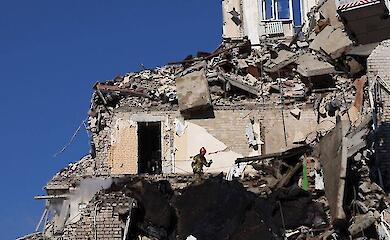
3 July has been declared a day of mourning in Kyiv. The number of dead and injured is rising