How relatives communicate with military personnel on duty and upon their return


The Ministry of Veterans predicts that after the war, Ukraine will have about 5 million people involved in veterans' policy. The WHO also notes that one in five Ukrainians will need psychological help.
Based on this data, the Government has begun work on reintegration programmes for military personnel and war victims. However, government programmes do not solve all problems. In particular, the question arises "how can ordinary Ukrainians and their relatives help the military to integrate into civilian life?". Such questions are mostly taken care of by volunteers and public organisations.
Socialportal asked Anna Naida, a counselling psychologist and a leader of support groups for wives of servicemen of the Psychosocial Support Service for Families of Servicemen of the NGO "Women's Power", about how to communicate with military men at the front and how to prepare for their return.
How to support a person who stays at the front
Anna says that this question is one of the most popular ones that come to the support line and is often discussed among the closest servicemen. However, our experience has shown that there is no single correct algorithm of action.
As our experience since the beginning of the full-scale invasion shows, there is no single algorithm for everyone. And I am also not in favour of taking a plan or conversation template from books for communication. Such boilerplate is always felt, especially by the military. So sincerity is something that will help in talking to them," said the specialist.
First, one should be oriented to the military's wishes: whether they are ready to talk about their mood, condition and events, or on the contrary, they are not ready to talk. To do this, it is recommended to ask the serviceman what would be nice to hear.
It is also possible to focus on what you had in common in peaceful life. Perhaps it is the discussion of certain topics. Yes, the context has changed now, but the military member's interest in the topic may not disappear. This will be your beacon in the conversation. You can also talk about your current state, life changes that are helping you now, your personal news and plans, family and friends, and general plans for the future. These are universal but important topics that can help a military person 'ground themselves' and discuss something other than war," Anna adds.
How should military families prepare for the return of loved ones from the front?
Although the return of a loved one is happy news, along with it can come certain difficulties due to the separation anxiety.
Often relatives fear that the military man has changed during this time, has seen the horrors of war and now he will never be the same. Yes, there will indeed be changes, but during this time not only the soldier has changed, but also the whole family. The children have become more mature during the waiting period, the wife has become more independent on many issues. The whole family needs time upon return to build a shared life again with the new experience. The military man needs time to return to civilian life with the acquired experience, and the family needs time to understand the changes of their relative and learn to live with them," says the expert.
During the adaptation period, it is important to remember that everyone has a different pace of adjustment. Peace, balance and understanding of the person can help to adapt to family life.
If there are children in the family, a talk should be given to them about dad or mum's impending return from war. Anna Naida says:
Children should be prepared and the main thing to remember is that children understand a lot despite their age. Therefore, you should be open and sincere with them. On the eve of the meeting with the children it should be discussed that dad/mum may behave differently for a while, but this is because of the experience of military service and not because they have stopped loving them. Rules of behaviour should be discussed, such as not jumping on dad/mum abruptly from the back, not starting to shout sharply or trying to scare by running out from around a corner. But father or mother will be pleased to hear words of love from the child and feel a light hug. It is better to hug from the front so he or she can see that the child wants to do it. Different militaries will react differently to their children, but the most important thing for a child is the internal climate of the family.
How to start a conversation
Starting conversations can be the hardest part because there are constant thoughts of "how not to hurt?".
Firstly, be genuine. If you are afraid to start a conversation with an acquaintance who has returned from the front and don't know where to begin - say "I really want to talk to you, but I'm really afraid of being inappropriate". Then the person will orientate himself about what he wants to talk about and what he doesn't want to talk about.
It is important to talk to the person as an equal, i.e. avoid the "civilian-military" opposition. At the same time, do not avoid long, confusing phrases - the military are used to clear wording.
If you are communicating with a loved one, you should tell them how you feel about them and show that you are ready to listen, support, help and so on.
In particular, the question "Are you doing well?" can be an invitation to share about an experience. However, it can sometimes sound generalised, so you can be more specific: "Do you feel ready to share your feelings with me?" or "Do you have a particular problem that I can help you with?". But don't force the military person to talk if he or she is not ready.

What you must not do
You should be careful about physical contact (hugging, holding hands, etc.). It is best to ask the person if you can do something. Strong sound stimuli (e.g. shouting) are also best avoided, because a loud sound can be perceived as an indicator of danger.
This also applies to guests - don't rush to call everyone over. A military person needs time to adapt and may not be ready for noisy encounters and attention.
It's important to avoid phrases that can create a negative atmosphere and become additional stressors. For example:
- "Oh, you've been terribly hurt."
- "This is so hard, I don't know how you're getting through this."
- "I can't even imagine what you've been through."
- "I know how you've been all the time."
- "Yeah, how could they, it's not fair."
Phrases like these can give a sense of hopelessness and worsen the military's condition and mood.
Don't tell the person what to do - you can only advise and the choice is theirs. For example, clichés like "If you're already back, you can put it behind you. Forget it."
In this case, advice should also be given carefully and only after you have listened carefully to the story.
We would like to add that servicemen and their families can contact the Service of psychosocial support for families of servicemen free of charge on the number 0 800 332 720 within Ukraine +48226022512 - from Poland.
In addition, Ukraine has created a "Guide for veterans and their families" from the Ukrainian Veteran Foundation. It contains all the necessary information on how to get psychological and social support, as well as self-help techniques in a critical moment.
Eugenia Ruban writes about political and economic news. She looks at large-scale phenomena in Ukrainian politics and economics from the perspective of how they will affect ordinary Ukrainians.
Related news

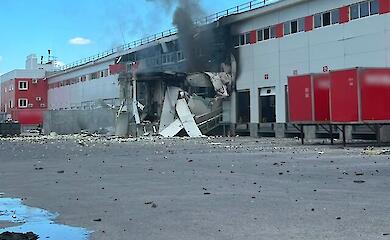
Russia struck a "Nova Poshta" terminal near Kharkiv: staff members were killed and more than 20 people were injured


Scientists have discovered a hidden mechanism behind the choice of friends


Why ‘dark’ personality traits can help us cope with stress more calmly
Popular news

An antidote to one of the most potent marine venoms has been found in frogs


Traces of water heated to 300 degrees have been found near the “Lost City”

A gold tiara found in a woman’s tomb has astonished archaeologists


News about war

The UN has reported a sharp rise in the number of Ukrainian civilians killed as a result of the war


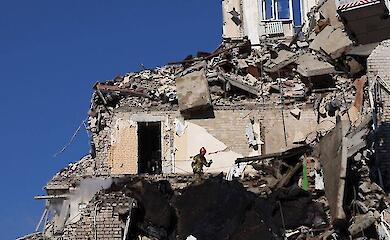
3 July has been declared a day of mourning in Kyiv. The number of dead and injured is rising