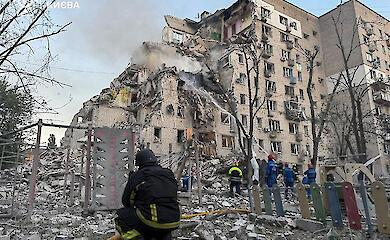

It became known how weapons were delivered to Azovstal and the wounded were evacuated at the height of the siege


The New York Times said that during the siege of Azovstal, Ukrainian forces delivered weapons to the plant, and how they even managed to evacuate the wounded from there.
The operation, organized by Ukrainian intelligence, was called "Air Corridor." At the Azovstal plant, 36 underground bomb shelters were built during the Cold War. It was in them that the defenders of the city and its inhabitants could hide.
The company stopped its work in early March for the first time since the Second World War. The decision was made by his CEO Enver Tskitishvili. At the same time, the management of the enterprise invited employees to take refuge on the territory in bomb shelters. Everyone hoped that this would all end soon. This is how civilians ended up on the territory of Azovstal.
But the Ukrainian military also began to arrive at the plant, and Azov fighters set up a command post there. In total, about three thousand servicemen ended up at Azovstal. As a result, the plant became a trap for everyone with us. At the same time, because of the civilians, the soldiers could not fully defend themselves.
Operation "Air Corridor" began early on March 21, when two helicopters with commandos landed on the plant's territory. They managed to get through unnoticed by Russian radars.
The military delivered ammunition, Stinger and Javelin missile systems, and Starlink satellite Internet systems. Having freed themselves from the cargo, they took on board a stretcher several wounded fighters from Azovstal and flew back to Central Ukraine. The helicopters spent no more than 20 minutes on the plant's territory.
Over the next two weeks, helicopters managed to infiltrate Azovstal seven more times - to deliver the necessary weapons and evacuate seriously wounded soldiers. Thus, 85 fighters were saved. In addition to cargo, helicopters also had volunteered for Azovstal, who wanted to join the plant's defense.
The military initially understood that this mission could be doomed, but it helped the defenders of Azovstal hold out for more than a month.
“We brought them everything we could, but, as you understand, not as much as was necessary,” said Kirill Budanov, head of the Main Intelligence Directorate.
Related news

Irina Levchenko, the abducted Ukrainian journalist, has been transferred to the Donetsk remand centre: what is known

Strikes on both sides of the Crimean Bridge: Zelenskyy announced that Russia’s key logistics and air defence systems had been destroyed


In the temporarily occupied territory of Zaporizhzhya region, a 68-year-old woman was sentenced to 11 years for donating to the AFU

The average life expectancy of a mobilised Russian soldier here is 12 minutes - report from the frontline

Popular news
Ukrainian security services have been recognised as among the best intelligence services in Europe – L'Express
Irina Levchenko, the abducted Ukrainian journalist, has been transferred to the Donetsk remand centre: what is known

Scientists have put forward an explanation as to why there were no tiny dinosaurs
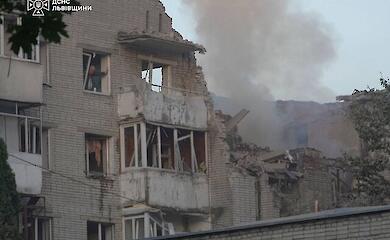
Russia has attacked Lviv with drones and missiles: dozens of residential buildings have been damaged and there are casualties
News about war

The UN has reported a sharp rise in the number of Ukrainian civilians killed as a result of the war

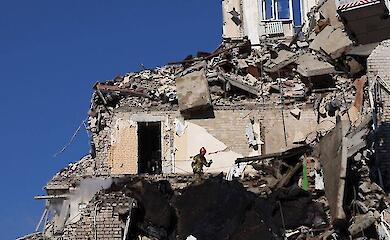
3 July has been declared a day of mourning in Kyiv. The number of dead and injured is rising