Due to sea level rise, Venice may be relocated in the future


Scientists have looked at scenarios to save Venice from sea level rise - up to and including relocating it. This is important because the existing defences will not be able to protect the city indefinitely.
We're talking about long-term risks hundreds of years into the future.
Details
Venice regularly suffers from flooding, and the situation has only gotten worse over the past 150 years.
The city is now protected by movable barriers at the entrance to the lagoon. Scientists estimate that they will be able to cope with a rise in sea level of about 1.25 metres.
But in the long term, this may not be enough.
The researchers have considered several options:
- building more dikes around the city
- isolating the central part of Venice from the lagoon
- closing the lagoon completely with a system of defences
- relocating the city and moving its inhabitants to the mainland
Transfer is the most radical and expensive option. It is considered only in case of extreme sea level rise of more than 4.5 metres, which can happen after 2300.
Why it matters
Venice is not the only city under threat.
The same problems could arise:
- in the Netherlands
- in the Maldives
- in coastal megacities around the world
Research shows that:
even complex engineering systems have limits
long-term solutions need to be planned in advance
climate change requires not only defence but also adaptation
Background
Venice is built on islands in the lagoon and is gradually "subsiding" while facing rising sea levels.
The existing system of protective barriers (MOSE) has already cost around €6bn and has been put in place for decades.
Source
The study is published in the journal Scientific Reports (2026). The scientists analysed adaptation scenarios for Venice based on IPCC climate projections.
Maria Grynevych, project manager, journalist, co-author of Guidebook Sacred Mountains of the Dnieper Region, Lecture Course: Cult Topography of the Middle Dnieper Region.
Related news
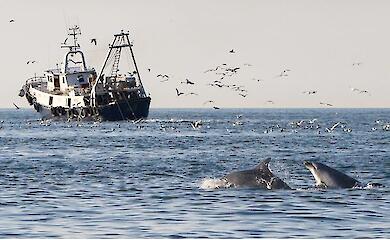
Dolphins are increasingly feeding near fishing boats — and that’s a bad sign

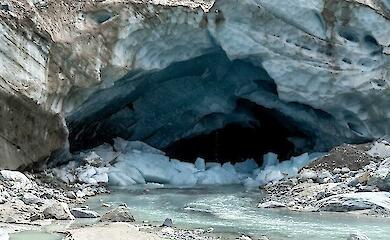

Humans have accelerated the melting of one of Antarctica’s most important glaciers

Scientists have described three scenarios for Earth's future before the year 3000
Popular news

Ukrainian security services have been recognised as among the best intelligence services in Europe – L'Express


Irina Levchenko, the abducted Ukrainian journalist, has been transferred to the Donetsk remand centre: what is known


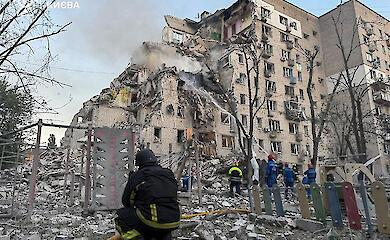
Russia has attacked Lviv with drones and missiles: dozens of residential buildings have been damaged and there are casualties
News about war

The UN has reported a sharp rise in the number of Ukrainian civilians killed as a result of the war


3 July has been declared a day of mourning in Kyiv. The number of dead and injured is rising