Archaeologists have discovered evidence of the real Ragnarök


One and a half thousand years ago, the Northern Hemisphere experienced a dramatic climate change.
It became so cold in Denmark that farming became almost impossible. Scientists from the National Museum of Denmark and Oxford University suggest that this period was the prototype of Fimbulvinter - the legendary three-year winter preceding Ragnarök.
The results are published in the Journal of Archaeological Science: Reports.
When trees couldn't grow, nothing could grow in the fields. In a society where everything depended on agriculture, this had disastrous consequences. We see a dramatic drop in grain production, neighbourhoods abandoned by people and forests growing over empty fields," explained one of the researchers.
The researchers conducted archaeobotanical analyses of plant remains from 39 sites across Denmark, covering the Bronze Age to the Viking Age (500 BC to 750 AD). They found that in the Early Iron Age, settlements increased and people worked together to cultivate common fields. However, some economic practices, such as honey and cheese making, remained family activities.

After the stable Bronze Age around 800 BC, the climate in Scandinavia became colder and wetter. Fields were flooded and people were forced to move, but they continued with their usual way of life. From 250 BC a new period of mild climate began, which ended with a catastrophic cooling in 535-536 AD.
This period saw major volcanic eruptions in North America and possibly Iceland, leading to global cooling. Dendrochronological studies showed a dramatic reduction in annual tree rings from 539 to 541. In Denmark, temperatures dropped by 3.5 degrees, leading to crop failures and the death of up to half the population.
Dendrochronological studies of oaks showed a dramatic decrease in tree growth from 539 to 541, indicating a significant drop in temperature. In Denmark, the average annual temperature dropped by 3.5 degrees, with disastrous consequences for agriculture. It is estimated that up to half of the population in Scandinavia may have died as a result of this climate crisis.
Scientists link these events to the emergence of the myth of Fimbulvinter and Ragnarök. The large gold treasures found by archaeologists dating back to this period could have been sacrifices to the gods asking for the sun to return. However, there is a possibility that the treasures were hidden without sacred purposes, simply because of the instability of the time.
An independent researcher, interested in archaeology and sacred geography. He researches them and writes about them.
Related news
The oldest piece of amber, dating back 385 million years, has been discovered in China


Bones have shed light on the unusual lives of Egyptian princesses
Who lived in Europe’s last pagan state? The answer surprised the scientists

Scientists have uncovered the secret behind Roman concrete, which has remained intact for 2,000 years
Popular news


Scientists have discovered that power among the Scythians was passed down through the family line


Navrotsky has announced a ban on the red-and-black flag in Poland: what will change

News about war
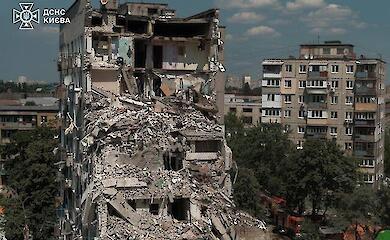
The UN has reported a sharp rise in the number of Ukrainian civilians killed as a result of the war

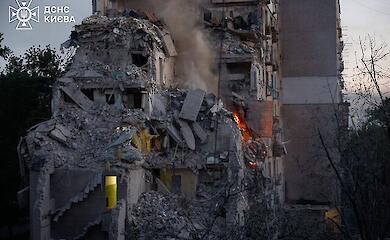
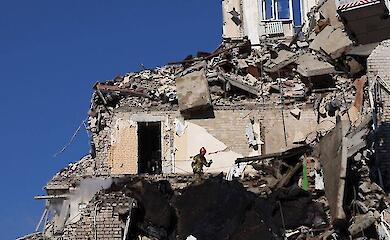
3 July has been declared a day of mourning in Kyiv. The number of dead and injured is rising