
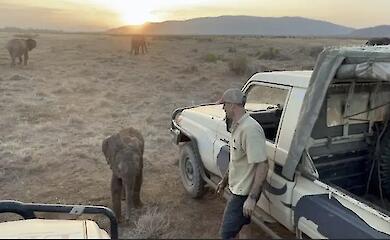

Why people want to get lost in places that don't exist


People are increasingly "travelling" not only to real cities, museums and abandoned buildings, but also to places that don't exist. One such example is Backrooms: endless yellow offices, empty corridors, basements and rooms with no exit that live on in videos, stories, games and discussions on the internet.
Researchers from Lancaster University believe that Backrooms can be seen as a new kind of dark tourism. Only here people do not go to the real place of tragedy or disaster, but immerse themselves in a fictional digital space, where the main feeling is anxiety, emptiness and the desire to understand what is further away. The work is published in Annals of Tourism Research.
Details
Backrooms have grown out of internet legend. They are usually described as an endless expanse of empty offices, corridors, basements and technical rooms. Almost nothing happens there, but that's exactly what's scary: the place looks familiar, but there are no people in it, no exit and no clear rules.
Such spaces are often called "liminal" - transitional spaces. They are places that usually exist between something: a corridor between offices, an empty shopping centre after closing, a service staircase, an office without employees. In real life, we don't stay in such places for long. In Backrooms, it's as if a person gets stuck right there.
The authors of the study studied the r/backrooms community on Reddit. This method is called online netnography: the researcher observes how people behave in the digital community, what stories they tell, what rules they make up, and how they create a common world together.
In Backrooms, people don't just look at scary pictures. They build this world themselves: they write stories, make videos, create diaries of "eyewitnesses", invent levels, maps, entities and survival rules. It's a collective game of exploring a place that doesn't exist.
Researchers call it a form of online legend-tripping. In the usual sense, it's a trek to a place associated with a legend or scary story. For example, to an abandoned house, a cemetery, or a rumoured bridge. In the case of Backrooms, there is no need to physically go anywhere: the "journey" takes place through a screen, but participants still feel like they are exploring a space.
The researchers propose the term para-terrestrial dark tourism for this. Literally, it sounds heavy, so it is easier to explain as follows: it is dark tourism in spaces that are not on the map. They are not real places, but are perceived as places - with atmosphere, routes, dangers and their own legends.
Why it matters
Usually dark tourism is associated with real locations: places of disasters, wars, crime, death or abandoned sites. People go there out of curiosity, fear, a desire to understand the past or to feel strong emotions.
Backrooms show that similar experiences can now occur entirely online. The Internet becomes not just a site where stories are told, but the "destination" itself. The user doesn't read about a place - it's as if they enter it through videos, discussions, games and collective imagination.
This is important for understanding today's digital culture. People are attracted not only by entertainment, but also by a special state: a safe anxiety, a sense of mystery, of being lost and participating in a shared myth. Backrooms provide an opportunity to "get lost" without real danger, but with real emotions.
The authors emphasise that such online worlds are different from classic dark tourism. They have less connection with historical memory, real victims or documentary facts. It is not moralising the tragedy that comes to the fore, but experiencing the unknown and participating in the creation of a frightening legend.
Background
Dark tourism is an interest in places associated with grim events: wars, disasters, prisons, accidents, cemeteries, abandoned cities. Such trips may be controversial, but they have long been part of tourism and the culture of remembrance.
Backrooms are organised differently. They have no real address and one "true" story. They are an internet myth that is constantly changing. One user adds a new level, another makes a video, a third writes rules, a fourth discusses what might have happened there. Thus is born a space that only exists because people keep imagining and describing it.
Interest in Backrooms has grown to such an extent that the phenomenon goes beyond niche forums. Lancaster University separately notes the cultural attention to A24's upcoming film based on Backrooms: what was once an internet horror story is gradually becoming part of popular culture.
Source
Sophie James, James Cronin, "When dark tourism goes para-terrestrial: Online legend-tripping and touring the void", Annals of Tourism Research, 2026.
In the study, the authors examined the online community of r/backrooms on Reddit and described how users together create a digital space of fear, uncertainty, and participation. The researchers concluded that Backrooms can be seen as a new variant of dark tourism: not to a physical place, but to a fictional online environment that feels like a place.
Mykola Potyka has a wide range of knowledge and skills in several fields. Mykola writes interestingly about things that interest him.
Related news

Scientists have explained why the poo emoji looks the way it does




Popular news
A medieval bathhouse in Morocco has kept its secret for a thousand years

Scientists have discovered why one brother was buried in a lavish grave whilst the other was buried on the outskirts of the cemetery

Astronomers have detected a signal that has been travelling towards Earth for over 8 billion years

News about war

Ukrainians have to help wounded during Russian shelling on their own


Pro-Russian march with St. George ribbons and Night Wolves allowed in Vienna

"Grow up!" - Budanov named the main risk for preserving independent Ukraine

