

Scientists intend to "resurrect" one of the extinct species of animals


The last known Tasmanian (marsupial) wolf died in 1936.
Australian scientists have gathered to resurrect the Tasmanian wolves. To do this, they will need marsupial mouse genes. CNN writes about the experiment.
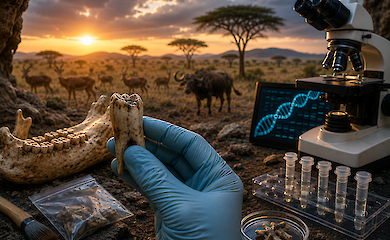
Geneticists plan to use the DNA of fat-tailed marsupial mice in order to bring animals that died out more than 100 years ago back to life, the report says.
However, the experiment will not be so simple. Initially, experts intend to restore the genome of the extinct thylacine, after which they will compare it with the genome of the marsupial mouse, since they are considered the closest relatives.
Further, the mouse cell will be dismantled to the smallest components and literally “mounted” into it the wolf genome. In fact, it will be re-created. Then, using reproductive technology, scientists intend to grow the Tassmanian embryo. It will grow in the uterus of a surrogate beast. As experts suggest, in a marsupial mouse.
Scientists note that marsupials are born small, so they are sure that a mouse can cope with the task of bearing and giving birth to a wolf.
According to preliminary estimates, the first wolves born from mice should appear on the planet in six to ten years.
Tasmanian wolves, or as they are also called thylacines, once lived throughout the vast territory of Australia. However, man first limited their habitat to Tasmania, and then completely exterminated these animals. The last marsupial wolf died in 1936 at the Beaumaris Zoo in Tasmania.
First of all, people were driven by fear. They were afraid for their cattle, which they believed were devoured by predators, and for themselves. The unusual appearance of the wolf inspired horror in many, especially Europeans, who had never met such animals before.
Many years later, scientists were able to prove that thylacines were not so ferocious and had a much smaller jaw than many of the dogs. Vesildi wolves up to 15 kg and hunted small game.
It should be noted that a number of enthusiasts insist that the Tasmanian wolves were buried too early and in fact they are still found in Australia, although it is a real miracle to see them.
Elena Rasenko writes about science, healthy living and psychology news, and shares her work-life balance tips and tricks.
Related news

An antidote to one of the most potent marine venoms has been found in frogs

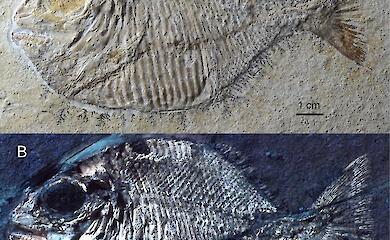
Scientists have described, for the first time, the young of a fish that lived 152 million years ago
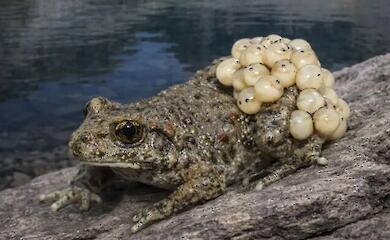
A dangerous fungus has almost wiped out the toads. Some have learnt to survive
Popular news


Scientists have discovered that power among the Scythians was passed down through the family line


Navrotsky has announced a ban on the red-and-black flag in Poland: what will change

News about war

The UN has reported a sharp rise in the number of Ukrainian civilians killed as a result of the war



3 July has been declared a day of mourning in Kyiv. The number of dead and injured is rising