
The study showed what a real offence sounds like


Emotion in the voice plays a key role in how we communicate and how our words are perceived.
A study by scientists from Switzerland and Canada, published in the journal Frontiers in Communication, has shown that complaints do indeed "sound different" depending on the cultural environment.
Read more: The Sound of Complaints, Frontiers in Communication(2025). DOI: 10.3389/fcomm.2025.1592994
"Complaints differ from neutral speech in a number of ways: intonation, pitch, rhythm, and accents. This makes the speech more emotional and expressive," explains the study's first author, neuroscientist Mael Moshan of the Swiss Centre for Affective Sciences at the University of Geneva.
As part of the experiment, the scientists studied how French speakers in France and Quebec, two regions with a common language but different cultures, complain. The results showed: Quebecers sound angrier and more surprised, while French speakers sound sad.
Eight speakers - four each from France and Quebec - participated in the study. Each recorded 84 short sentences in neutral and complaining intonation. Then 40 listeners from Quebec, half of whom grew up in France, rated what they heard on a scale of emotions: anger, sadness, surprise, joy, fear and disgust.
The authors believe that there is a certain universal "tone of complaint" - higher, louder, slower, with pronounced changes in intonation. However, this tone manifests itself differently in each culture.
"The French are more likely to use complaining as a ritualised element of everyday communication. Perhaps that's why they try to make their voice less aggressive - and sound sad rather than angry," suggests Moshan.
In contrast, Quebecers are generally more expressive, reflected in a greater variety of intonation and the expression of more vivid emotions - such as anger and surprise.
The researchers emphasise that complaining is not just an expression of dissatisfaction, but also a way of replaying or reliving a negative experience. That is why it is often accompanied by strong emotions. At the same time, the perception of complaining is influenced by the cultural context - how often it is accepted in society to complain and how people around us treat it.
"The way we complain is the result of a subtle interplay between emotions, social norms and cultural rules for expressing feelings," Moshan says.
In addition, a culture may have a set of unspoken "conventions" that define exactly how a complaint should sound. These are rules we begin to internalise from early childhood.
The authors of the study recognise that the sample was limited, both in terms of the number of participants and the number of cultures. Therefore, the results obtained cannot yet be considered universal. In the future, scientists plan to expand the experiment and check whether similar differences in speakers of the same language who grew up in different countries.
Nevertheless, the study emphasises the importance of intonation in social interactions. Its findings could be useful in the field of communication disorders, in the training of professionals working with speech, and in therapy.
"The practical benefit of our study is simple: it teaches people to be more attentive not only to what is said, but also how it is said - and what it might mean," Moshan summarises.
Elena Rasenko writes about science, healthy living and psychology news, and shares her work-life balance tips and tricks.
Related news

A study has shown how a person’s character changes over the course of their life



In Poland, a man has been charged with assaulting a 15-year-old boy for speaking Ukrainian


Scientists have discovered a hidden mechanism behind the choice of friends
Popular news

Ukrainian security services have been recognised as among the best intelligence services in Europe – L'Express

Irina Levchenko, the abducted Ukrainian journalist, has been transferred to the Donetsk remand centre: what is known


Scientists have put forward an explanation as to why there were no tiny dinosaurs


Russia has attacked Lviv with drones and missiles: dozens of residential buildings have been damaged and there are casualties
News about war

The UN has reported a sharp rise in the number of Ukrainian civilians killed as a result of the war
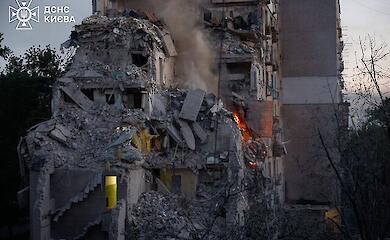
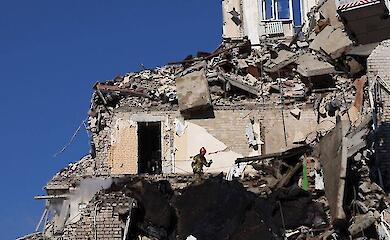
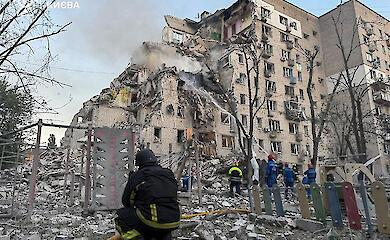
3 July has been declared a day of mourning in Kyiv. The number of dead and injured is rising