


The dark side of freelance life. Here's why this regime is not suitable for everyone


Freelancing is often associated with freedom: working at a convenient time, being able to choose projects and being your own boss.
But this apparent independence hides risks and instability, especially in the creative and cultural industries, where project-based employment has become the norm, according to The Conversation.
Researcher Heidi Ashton has been studying freelance work in film, theatre and other creative industries for more than a decade. According to her, despite the advantages, such workers often find themselves vulnerable to systemic problems.
One of the main difficulties becomes reliance on reputation and acquiescence to injustice.
"You don't want to look problematic," one respondent explained why he chose to remain silent about wrongdoing on the project.
Filmmaker Brian Hill notes: "People are afraid to speak out - afraid of being blacklisted."
Additional complexity is created by a hidden hierarchy. Often one freelancer is hired by another freelancer higher up the contracting chain, and it becomes almost impossible to complain "upstairs." This is especially dangerous when it comes to discrimination based on race, disability or pregnancy.
Working for free is another common practice, despite its illegality. Young professionals accept, hoping to "get a foothold" in the industry. Even for paid projects, money can arrive with long delays.
"I constantly have to be in the negative because of overdue payments," admits one freelancer.
Competition is great, so many take low bids, hoping that the situation will improve later. Unlike company employees, freelancers have no clear system of growth, promotion or corporate training.
"You take whatever work is available because you risk being left with nothing if you refuse," says another survey participant.
And building professional connections with customers "higher up the hierarchy" is difficult if you are hired by a freelancer like yourself.
Young professionals are particularly vulnerable. They have to combine several jobs at the same time, without paid holidays and a stable income. The result is chronic stress and burnout. According to the Film and TV Charity, 64% of creative workers are thinking of leaving because of mental health issues.
The way out is support. Mentors, professional societies, trade unions and the ability to report anonymously can be a defence against exploitation.
Despite the challenges, the majority of freelancers interviewed by the author don't want to change careers. They find in it not only a job, but also personal freedom - albeit at a high cost.
Expert on women's rights, persons with disabilities, motherhood in the modern context, health care reform, education and social welfare.
Related news

Scientists have discovered that the brain can't do two things at the same time




Popular news
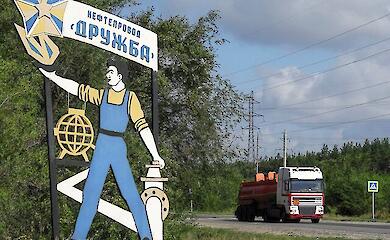
Orban announces "results" of Hungarian mission on Druzhba oil pipeline


Will maternity leave be shortened in Ukraine? Changes for workers with children


Zelensky said that Russia was preparing a new offensive and pointed out the direction of it


Kellogg named the ceasefire condition today and compared Putin to Nicholas II

News about war
Orban announces "results" of Hungarian mission on Druzhba oil pipeline
Kellogg named the ceasefire condition today and compared Putin to Nicholas II
Zelensky said that Russia was preparing a new offensive and pointed out the direction of it
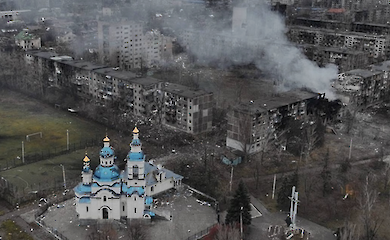
Russia is destroying Ukraine twice as fast as at the start of the war - international report