
The triple trap of the modern office: why we're always online and tired


If your work day starts with looking at your email at 6am, you're not alone.
The Conversation reports that Microsoft's study Breaking the Endless Workday found that 40 per cent of Microsoft 365 users are already checking email at this time, and in a 24-hour period, the average employee receives 117 emails and 153 corporate chat messages.
At 9-11am, the main stream goes off to meetings and then back to emails and notifications - often with interruptions every two minutes. And a third of professionals return to mail even after 10pm. Experts call this the "triple peak" of digital labour: the morning start, the business pressure in the middle of the day and the evening pullback to messages.
This pattern leads to psychological risks. According to boundary theory, people need clear time and mental boundaries between work and personal life to recover. But according to Microsoft, these boundaries are eroding - 29% of employees read work emails late at night.
Such habits affect health: a diary study by Dutch experts showed that frequent use of a smartphone after work leads to poor health and fatigue the next day. Against a background of constant rush and stress, not only the psyche suffers, but also communication - brief or abrupt messages from colleagues cause tension and reduce the well-being of the whole team.
Surveys in the UK and Italy have found that rude and disrespectful emails are directly linked to work-life conflicts and emotional burnout. Moreover, the style of communication in different messengers is perceived differently - the same phrases in mail seem more aggressive to employees than in corporate chats. This is proved by the data collected among 300 British employees: almost 50% of cases of "impoliteness" in email are related to the recipient's reaction.
Companies can change the situation - but it requires a comprehensive strategy. The experts at The Conversation suggest several steps:
1. On an individual level - give people more control. They recommend setting "quiet hours," turning off unnecessary notifications, and training employees to manage their digital workload. When workers feel like they control access to themselves, they have less fatigue.
2. At the team level, create clear communication rules: limit the number of participants in meetings, prepare agendas in advance, and agree on a time to respond to emails. This helps avoid decision fatigue and increases predictability.
3.At the company level, move to evaluating by results rather than by appearances. Measure productivity by tasks completed, not by how quickly you respond to emails. This reduces the pressure to be "on call" all the time and increases employee autonomy.
4. On a technology level - use AI not to speed up routines, but to eliminate them. Automating routine tasks (e.g. sorting emails, drafting responses) should free up time for deep work, not push for more meetings.
The authors highlight that in practice, organisational culture often clashes with official wellbeing guidelines: managers encourage employees to 'switch off' in the evenings, but reward those who are on call 24/7. So despite the development of AI and new digital tools, without a change in the very approaches to workflows and loyalty signalling for staff, the 'endless working day' will remain a reality.
Breaking out of the triple-peak trap requires a collective solution: prioritise not only accessibility but also focus, recovery and a culture of respectful communication. Otherwise, technology designed to make our jobs easier will only accelerate the running in circles.
Mykola Potyka has a wide range of knowledge and skills in several fields. Mykola writes interestingly about things that interest him.
Related news
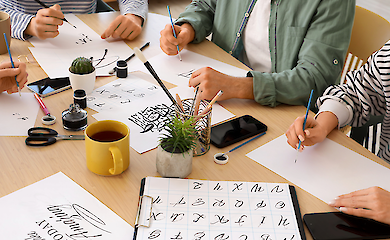
Scientists got strangers to paint together — and six weeks later, they discovered a strange effect


Scientists have discovered which way of expressing gratitude works best

A study has shown how a person’s character changes over the course of their life
Popular news

Russia has received new weapons from North Korea: which regions of Ukraine could be at risk


Henry VIII’s long-lost castle has been found inside another castle


Bones of ancient humans found on the seabed of the Taiwan Strait suggest they were up to 190 cm tall


News about war
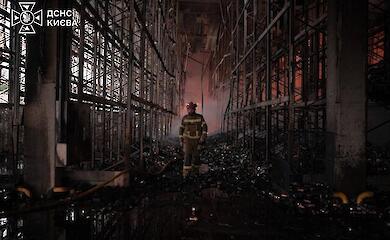
An expert explains how Russia is changing its tactics for strikes on Kyiv


The UN has reported a sharp rise in the number of Ukrainian civilians killed as a result of the war