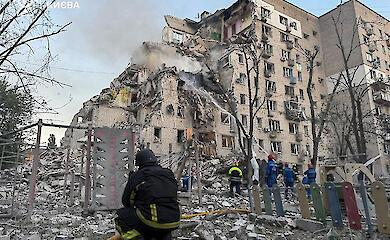

Study: musicians are better at navigating blindly


Extensive music training can improve one's sense of one's body in space - even when one is walking blindly.
This is the conclusion reached by an international team of researchers led by the University of Montreal. Their work was published in the journal Cortex.
What the scientists studied
Spatial perception is what allows us to:
orientate ourselves in a room,
walk straight ahead,
turn in the right direction,
to remember where we are.
An internal "body map" is responsible for this - the brain combines signals from vision, touch and the vestibular system. Sound is part of this system too, helping to orientate when vision is limited.
Musical practice is a constant working of several senses simultaneously:
hearing (accurately distinguishing pitch, volume, timbre),
touch and movement,
sight,
attention and memory.
It has previously been shown that musicians have better development of some cognitive and spatial skills. The new study tested whether this manifests itself in actual body movement in space.
The experiment: blindly stepping in place
The study involved two groups of 19 people:
musicians with 6 to 28 years of study and between 3 and 50 hours of practice per week;
non-musicians who had not studied music seriously.
All had normal hearing and vestibular function.
The classic Fukuda-Unterberger test was used:
participants were blindfolded;
they were asked to step on the spot for 60 seconds at 2 steps per second;
they didn't know what the room looked like;
they were instructed to "stay in place and in the same direction," although this test almost always results in an unnoticeable reversal and sideways movement.
In part of the experiments, an auditory landmark was added - a vocal test signal from a speaker in front of the participant, at an angle of 0°, 45° or 90°.
After each run, we measured:
linear displacement from the reference point,
angle of rotation,
angle of deviation relative to the sound source (if there was one).
What appeared to be
No sound:
the angle of turn was not different between musicians and non-musicians on average;
but musicians moved less away from the starting point: the median displacement was about 95 cm compared to 142 cm for the control group.
With sound:
the overall magnitudes of turn and displacement were similar;
but the musicians were more accurate in their direction to the sound - they had fewer errors in angle relative to the source in all positions (0°, 45°, 90°).
The authors attribute this to the fact that musicians:
somatosensory sensitivity (sense of body position) is better developed,
sound is used as a more accurate "anchor" in space.
Possible medical applications
The results suggest that prolonged musical training can:
improve the perception of body position in space,
assist in standing and moving more steadily,
make better use of auditory landmarks.
This holds promise for:
rehabilitation programmes for patients at risk of falls,
balance and gait training,
cognitive rehabilitation where spatial skills are important.
The scientists emphasise that further studies with larger samples and training programmes for non-musicians are needed to test causality and the minimum training duration required for the effect.
Maria Grynevych, project manager, journalist, co-author of Guidebook Sacred Mountains of the Dnieper Region, Lecture Course: Cult Topography of the Middle Dnieper Region.
Related news

Scientists have discovered how cockroaches recognise ‘their own’


Scientists have explored the glacier on the summit of Mount Ararat for the first time



A parasite turned worker ants into ‘queens’ and extended their lives
Popular news

Ukrainian security services have been recognised as among the best intelligence services in Europe – L'Express


Irina Levchenko, the abducted Ukrainian journalist, has been transferred to the Donetsk remand centre: what is known


Scientists have put forward an explanation as to why there were no tiny dinosaurs
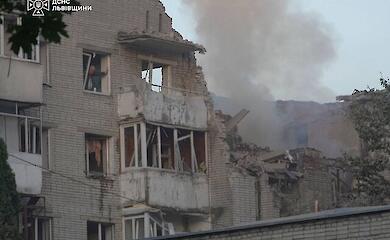
Russia has attacked Lviv with drones and missiles: dozens of residential buildings have been damaged and there are casualties
News about war
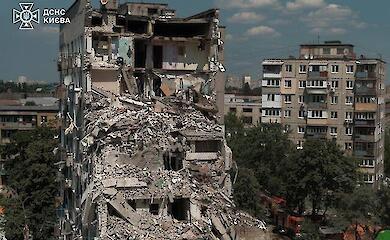
The UN has reported a sharp rise in the number of Ukrainian civilians killed as a result of the war
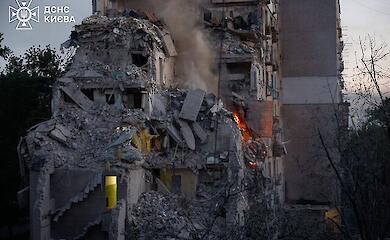
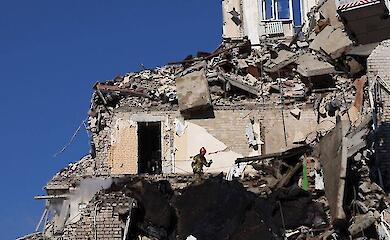
3 July has been declared a day of mourning in Kyiv. The number of dead and injured is rising