Scientists have restored 42 lost pages of an ancient New Testament manuscript


Scientists have restored 42 lost pages of one of the most important early manuscripts of the New Testament - Codex H. It is a copy of the Epistles of the Apostle Paul, created in the VI century.
This is not a new unknown text of the Bible, but restored fragments of an ancient manuscript that help us understand how Christian texts were read, rewritten, and used centuries ago.
Details
Codex H is a 6th-century manuscript containing the Epistles of the Apostle Paul. It was dismantled in the thirteenth century at the Great Lavra Monastery on Mount Athos. Individual sheets were reused as material for bindings and inserts in other books.
Because of this, the surviving fragments are now scattered in libraries in different countries - Italy, Greece, Russia, Ukraine and France.
The University of Glasgow team was able to recover 42 lost pages thanks to an unusual feature of the manuscript. At some point, the text was re-inked. This ink left faint mirror prints on neighbouring pages - a kind of "ghost" text.
These marks are almost invisible to the normal eye. But with the help of multispectral imaging, the researchers were able to read what was no longer physically preserved as individual pages.
In addition, specialists conducted radiocarbon dating of the parchment. It confirmed that the manuscript does indeed date back to the 6th century.
Why it is important
The find is important not because it changes the content of the New Testament, but because it shows the early history of its rewriting and use.
The recovered pages help us understand
- what the manuscript looked like before it was taken apart;
- how scribes corrected and marked the sacred texts;
- how Paul's epistles were divided into meaningful sections in ancient times;
- how old religious books may have been reused in the Middle Ages.
Especially important are the ancient lists of chapters to Paul's epistles. They differ from the modern division of the text and show how early readers structured these books.
Background
Before printed books, New Testament texts were transcribed by hand for centuries. Therefore, each early manuscript is important for understanding how biblical texts were transmitted, edited, and read.
Codex H is considered one of the significant witnesses to the early tradition of Paul's epistles. New research has made it possible to partially restore its original form.
Source
The discovery was reported by the University of Glasgow. The study was carried out by an international team led by Professor Garrick Allen. A digital version of the restored Codex H is available to scholars and the general public.
Maria Grynevych, project manager, journalist, co-author of Guidebook Sacred Mountains of the Dnieper Region, Lecture Course: Cult Topography of the Middle Dnieper Region.
Related news


Human brain cells survived for years in a petri dish — and continued to develop on schedule


Scientists have discovered how cockroaches recognise ‘their own’


Scientists have explored the glacier on the summit of Mount Ararat for the first time
Popular news

Russia has received new weapons from North Korea: which regions of Ukraine could be at risk


Henry VIII’s long-lost castle has been found inside another castle

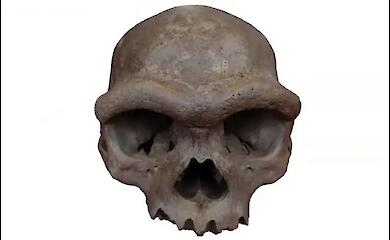
Bones of ancient humans found on the seabed of the Taiwan Strait suggest they were up to 190 cm tall

News about war


An expert explains how Russia is changing its tactics for strikes on Kyiv


The UN has reported a sharp rise in the number of Ukrainian civilians killed as a result of the war