
Scientists have questioned the date of American settlement


Scientists have questioned the age of one of the key archaeological sites, the Monte Verde site in Chile. This is important because it has long been considered the main evidence that humans arrived in the Americas earlier than expected.
It's about a possible revision of the entire chronology of the continent's settlement.
Details
The Monte Verde site has been considered one of the earliest evidence of human presence in the Americas for more than 20 years - it was dated to about 14,500 years ago. The discovery was instrumental in revising the previous theory that the first humans came to the continent about 13,000 years ago.
However, the new study offers a different interpretation. Scientists found a layer of volcanic ash that is about 11,000 years old. All the artefacts of the site are above this layer, which means they may be much younger.
The authors of the paper believe that geological processes - for example, the erosion of rocks - could have mixed the layers. As a result, older materials could be in later sediments, which led to erroneous dating.
According to their estimation, the age of the site may be no more than 8,200 years.
At the same time, other researchers disagree. They point out that many artefacts - including wooden tools and bones - have previously been directly dated and confirm an older age.
Thus, this is not a matter of a definitive revision, but a scientific debate.
Why it matters
Monte Verde is one of the key arguments in the debate over when and how humans settled the Americas.
If its age does turn out to be younger, it could:
- change ideas about when the first humans appeared
- affect theories of migration from Asia
- revive interest in later settlement patterns
In fact, one of the basic reference points in human history in the New World may be called into question.
Background
It has long been thought that the first humans came to the Americas around 13,000 years ago (Clovis culture). However, the Monte Verde discovery has pushed this date further back in time and has become a key argument in favour of earlier settlement.
Source
The study is based on the analysis of geological layers in the Monte Verde site (Chile). The work was published in the journal Science (2026).
An independent researcher, interested in archaeology and sacred geography. He researches them and writes about them.
Related news


A hidden source of resistance to the latest antibiotics has been discovered in Australia

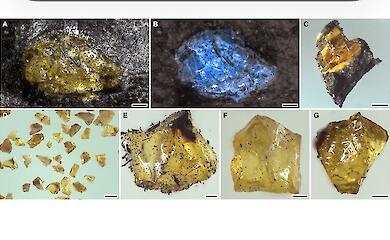
The oldest piece of amber, dating back 385 million years, has been discovered in China


Bones have shed light on the unusual lives of Egyptian princesses
Popular news


Scientists have discovered that power among the Scythians was passed down through the family line


Navrotsky has announced a ban on the red-and-black flag in Poland: what will change

News about war

The UN has reported a sharp rise in the number of Ukrainian civilians killed as a result of the war



3 July has been declared a day of mourning in Kyiv. The number of dead and injured is rising