
Scientists have found an ancient "hamster" that lived alongside dinosaurs


Scientists have discovered a new species of ancient mammal that lived alongside dinosaurs about 75 million years ago. It was similar in size to the golden hamster, but its importance to science is much greater.
The finding helps us understand which mammals were able to survive the catastrophe that wiped out the dinosaurs.
Details
The new species has been named Cimolodon desosai. Its remains were found in Baja California, in what is now Mexico.
This animal belonged to multituberculates - an ancient group of mammals, which appeared in the Jurassic period and existed for more than 100 million years.
The researchers estimate that Cimolodon desosai was small, about the size of a golden hamster. It probably moved around on the ground and in trees, and fed on fruit and insects.
Particularly valuable was the fact that scientists found not only teeth, as is often the case with such ancient mammals, but also parts of the skull, jaws and skeleton. This allowed a more accurate understanding of what the animal looked like and how it might have moved.
At first, the researchers only noticed a small tooth in the rock. But then it turned out that there were many more bones preserved inside.
Why it matters
The find helps to better understand how mammals survived a mass extinction 66 million years ago.
Scientists believe that descendants of closely related species of Cimolodon were able to survive the asteroid impact, when dinosaurs and many other animals disappeared.
They were probably helped by several features: small size, omnivorousness and the ability to live in different environments. Such animals were able to find food and shelter more quickly in changing environments.
It was mammals like these that became part of the evolutionary story that later led to the huge variety of modern animals.
Background
Before the extinction of the dinosaurs, mammals had already existed for millions of years, but were more often small and occupied more modest ecological niches.
That changed after the catastrophe 66 million years ago, as many large animals disappeared and mammals began to spread rapidly and occupy new places in ecosystems.
The new species shows that some of the future "winners" of this evolutionary realignment were already living alongside the dinosaurs long before their extinction.
Source
The study is published in the Journal of Vertebrate Paleontology (2026). The new species Cimolodon desosai was described by a team led by scientists at the University of Washington.
Maria Grynevych, project manager, journalist, co-author of Guidebook Sacred Mountains of the Dnieper Region, Lecture Course: Cult Topography of the Middle Dnieper Region.
Related news
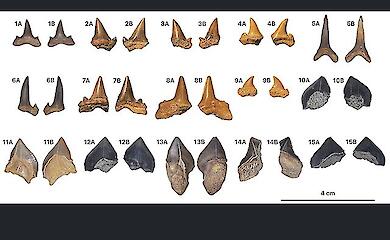
A ‘shark graveyard’ dating back some 80 million years has been discovered in the Egyptian desert



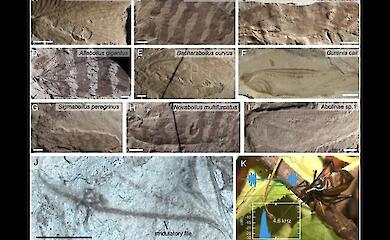
165 million years ago, the forests were already filled with ultrasound — scientists have discovered who was producing it

Turtles capable of crossing the ocean have unexpectedly turned out to be “homebodies”
Popular news

Russia has received new weapons from North Korea: which regions of Ukraine could be at risk


Henry VIII’s long-lost castle has been found inside another castle
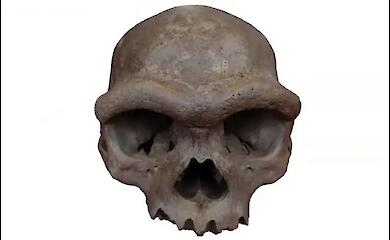
Bones of ancient humans found on the seabed of the Taiwan Strait suggest they were up to 190 cm tall

News about war

An expert explains how Russia is changing its tactics for strikes on Kyiv


The UN has reported a sharp rise in the number of Ukrainian civilians killed as a result of the war