Prehistoric copper mining camp found in the Pyrenees


Archaeologists have found traces of a prehistoric camp in the eastern Pyrenees, where people climbed again and again, probably to extract and process a copper-bearing mineral. The Cova 338 cave is at an altitude of 2,235 metres and the earliest traces of active use date back some 5,500 years.
The Cova 338 cave is located in the Fraser Valley in the eastern Pyrenees. Previously, it was thought that prehistoric people mainly passed through highland areas briefly, rather than using them as important sites for economic activity. The new find shows a different picture: people may have returned to this cave regularly for thousands of years.
Details
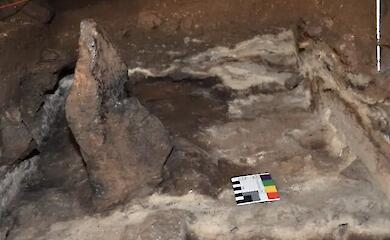
Archaeologists excavated an area of about 6 square metres at the entrance to the cave and identified four layers. They found 23 hearths in the middle two layers, and within them they found many crushed and burnt green mineral fragments. According to preliminary estimates, this could be malachite, a mineral rich in copper. It may have been heated and processed to produce copper.
The researchers emphasise that the stones were burnt for a reason. Many of the green fragments show signs of heat treatment, while other materials in the cave show no such traces. This indicates intentional treatment of the mineral by fire.
Radiocarbon analysis showed that the hearth from the second layer dates back to about 3000 years ago, while the hearths from the third layer date back to about 5500 to 4000 years ago. This means that the cave was used not once, but repeatedly, with long breaks between visits.
Human remains were also found in the third layer - a finger bone and a milk tooth belonging to at least one child of about 11 years old. So far, there is not enough data to talk about the cause of death or to say that both finds belonged to the same person. Scientists admit that there may be burials deeper in the cave, but this has yet to be verified.
In addition, two pieces of jewellery were found in the second layer: a shell pendant and a brown bear tooth pendant. The shell pendant has parallels in other monuments in Catalonia, which may indicate cultural links between different prehistoric communities.
Why it's important
The find changes the way prehistoric people used the highlands. Cova 338 shows that the mountains may not have been a random route, but a place of purposeful activity - mining, mineral processing, temporary campsites and possibly ritual practices.
If the green mineral is finally confirmed as malachite, it will be one of the earliest examples of copper-bearing resource exploitation in a high mountain environment in Europe. The study authors call Cova 338 an unprecedented monument for the Pyrenees and one of the earliest highland mineral mining contexts in Europe.
Background
Malachite is a green mineral rich in copper. In prehistoric societies it may have been used both as a raw material for jewellery or pigment and as a source of copper for early metallurgy. In the case of Cova 338, the identification of the mineral is still preliminary: further analyses are being carried out by experts from the University of Granada and the Autonomous University of Barcelona.
The excavations are not yet complete: the archaeologists have not reached the full depth of the deposits and plan to continue their work. Therefore, future findings may clarify how long people stayed in the cave, where they brought the mineral from and whether Cova 338 was only a work camp or also a burial site.
Source
The study Beyond 2000 metres, the first evidence of intense prehistoric occupation in the Pyrenees is published in Frontiers in Environmental Archaeology in 2026. The authors studied the high-altitude cave Cova 338, located at an altitude of 2,235 metres, and described hearths, green mineral fragments, jewellery and human remains.
An independent researcher, interested in archaeology and sacred geography. He researches them and writes about them.
Related news

A discovery in Spain has brought us closer to unravelling the mystery of human origins

Two babies were found carefully buried in an abandoned Roman latrine
Historians have discovered an unexpected origin for the term ‘burnout’

Traces of a vast ancient civilisation have been found beneath the Amazon rainforest
Popular news

Ukrainian security services have been recognised as among the best intelligence services in Europe – L'Express




Irina Levchenko, the abducted Ukrainian journalist, has been transferred to the Donetsk remand centre: what is known

Evidence has been found in Australia of an unusual ritual that has been practised for thousands of generations
News about war

The UN has reported a sharp rise in the number of Ukrainian civilians killed as a result of the war

3 July has been declared a day of mourning in Kyiv. The number of dead and injured is rising