
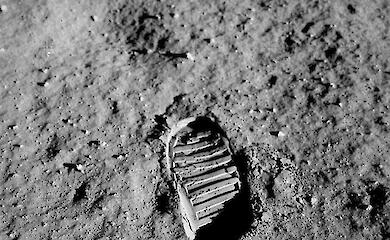

Paleontologists have solved the mystery of a "mini Tyrannosaurus" from Montana


There's a new sensation brewing in palaeontology.
For nearly a century, scientists have debated: is this a separate species of dinosaur or just a young Tyrannosaurus rex? Now, thanks to a new skeleton found in Montana, researchers are leaning towards the first option. This is according to a study published in the journal Nature.
It all started back in the 1940s, when palaeontologists dug up the skull of a predator, but could not figure out whether it was an adult or a cub. Later there was another important discovery - a skeleton, named "Jane". However, even he did not allow to put an end to the question.
Now a team of scientists led by Lindsay Zanno from the North Carolina Museum of Natural History said: found in 2006, a complete skeleton belongs not to a juvenile T. rex, but an adult dinosaur of another species.
The key is the so-called "growth rings" in the bones. They show that the dinosaur was an adult and reached maturity being about half the size of an adult Tyrannosaurus rex. The scientists also found structural differences in the skull - including the structure of the nerve canals and sinuses - that could not simply be the result of growing up.
Incidentally, the new skeleton was nicknamed "Fighting Dinosaurs" because it was found mixed with the remains of Triceratops. Now it is exhibited in the Museum of Natural History of North Carolina.
According to the authors, the dinosaur is a member of the species Nanotyrannus lancensis, a close relative of T. rex, but not its cub.
"This discovery rewrites decades of research on Earth's most famous predator," Zanno says.
Despite the compelling data, some scientists remain sceptical. Paleontologist Thomas Carr of Carthage College believes the new skeleton may be a sister species rather than an entirely different dinosaur. He points out the similarity of the skull shape to young individuals of T. rex.
Fossil expert Holly Woodward of Oklahoma State University, who was not involved in the work, admits: there's more data now than ever, but still doesn't consider "Jane" a separate species.
Figuring out who's who among predatory dinosaurs isn't just a matter of taxonomy. It could change ideas about the food chain of the Late Cretaceous. There may have been another formidable predator, albeit smaller, alongside the legendary Tyrannosaurus.
An independent researcher, interested in archaeology and sacred geography. He researches them and writes about them.
Related news
Scientists have discovered how crested geese were bred in the 17th century

Scientists have discovered why one brother was buried in a lavish grave whilst the other was buried on the outskirts of the cemetery
Scientists have discovered why the Incas sacrificed children
Archaeologists have discovered an ancient curse containing the names of enemies and demons
Popular news

A medieval bathhouse in Morocco has kept its secret for a thousand years
Scientists have discovered why one brother was buried in a lavish grave whilst the other was buried on the outskirts of the cemetery

Astronomers have detected a signal that has been travelling towards Earth for over 8 billion years

News about war

Ukrainians have to help wounded during Russian shelling on their own


Pro-Russian march with St. George ribbons and Night Wolves allowed in Vienna

"Grow up!" - Budanov named the main risk for preserving independent Ukraine

