
Nobel laureate alarmed by the development of AI, which he himself helped create

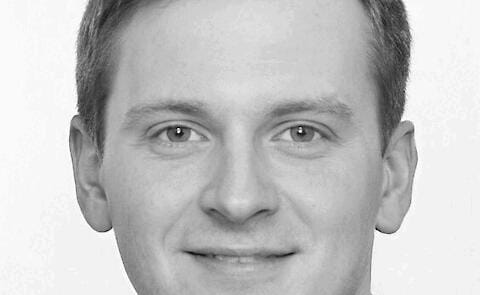
The US scientist, who won the 2024 Nobel Prize in Physics for his pioneering work in artificial intelligence, said he found recent advances in the technology "very worrying" and warned of potential disaster if they are not contained.
Speaking to an audience at Princeton University via video link from the United Kingdom, the 91-year-old professor said he has seen the rise of two powerful but potentially dangerous technologies in his lifetime: biological engineering and nuclear physics.
'We are used to technologies that can be both useful and harmful,' Hopfield said. - 'As a physicist, I'm very concerned that we don't have complete control and understanding, especially if we don't know what limitations can be placed on the technology.'
He emphasised that current AI systems, while looking like "absolute marvels", operate on principles that are not fully understood by scientists.
'This is very, very worrying,' he added.
He believes that the inner workings of deep neural networks need to be further explored to prevent AI from possibly spiralling out of control.
John Hopfield is known for creating the "Hopfield network", a theoretical model that demonstrates how an artificial neural network can mimic the process of memory storage and retrieval in the biological brain. His work became the foundation for further AI research.
British-Canadian scientist Geoffrey Hinton, often referred to as the "godfather of AI", developed Hopfield's model by introducing an element of randomness in the "Boltzmann machine". This paved the way for modern AI applications such as image generators.
Geoffrey Hinton also expressed his concerns about the future of AI.
'There are very few examples of more intelligent beings being controlled by less intelligent beings,' the 76-year-old professor told a press conference at the University of Toronto. This begs the question: when AI becomes smarter than us, won't it take control?
Hopfield compared the situation to a science fiction scenario from Kurt Vonnegut's novel Cat's Cradle, where an artificially created substance leads to the death of civilisation.
I'm disturbed by anything that says, 'I'm faster than you, I'm bigger than you...'. Can we coexist peacefully? I don't know, I'm worried," he noted.
Both scientists are calling for more research into AI safety.
'We urgently need more research to understand how to avoid catastrophic scenarios,' Hinton emphasised.
He suggested that the best young researchers should work on AI safety and that governments should oblige large companies to provide the necessary computing resources for this research.
Mykola Potyka has a wide range of knowledge and skills in several fields. Mykola writes interestingly about things that interest him.
Related news

AI has almost entirely excluded female characters from stories about animals


When a chatbot starts reinforcing delusions: psychiatrists study a new AI risk

Scientists came up with a fake disease - and AI believed it was real


Who finished El Greco's masterpiece? Scientists have tapped into AI
Popular news

Ukrainian security services have been recognised as among the best intelligence services in Europe – L'Express

Irina Levchenko, the abducted Ukrainian journalist, has been transferred to the Donetsk remand centre: what is known

Scientists have put forward an explanation as to why there were no tiny dinosaurs
Russia has attacked Lviv with drones and missiles: dozens of residential buildings have been damaged and there are casualties
News about war
The UN has reported a sharp rise in the number of Ukrainian civilians killed as a result of the war
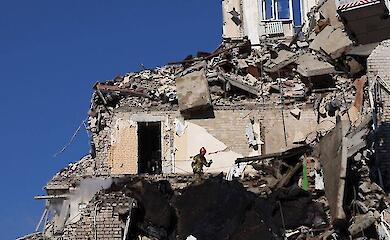
3 July has been declared a day of mourning in Kyiv. The number of dead and injured is rising