

Military experts of NATO countries change their assessment of Russian army capabilities


The war in Ukraine forces NATO defense planners to admit that they misjudged Russia's military power and President Vladimir Putin's ambitions.
It is reported by Foreign Policy.
All these assessments [about the military power of Russia], which I have read over the past ten years or more, were erroneous, - quotes the publication of former Pentagon official Christopher Skaluba.
I cannot believe that the miserable results that we have been seeing for several months reflect the full capabilities of the Russian army,” he said.
Across NATO, defense planners are overestimating Moscow's military strength in their plans for the unlikely war between the alliance and Russia, according to many current and former US and European defense officials. The reassessment came after Moscow's shameful military failures in Ukraine, and the Kremlin's readiness to launch a full-scale military invasion.
There are two main assumptions that defense planners in NATO's major capitals have been wrong for years, former NATO Secretary General Anders Fogh Rasmussen told Foreign Policy.
Despite huge investments in military equipment and the reopening of old Soviet bases, we see a very weak Russian army, Fogh Ramussen said.
Another miscalculation is that we underestimated the brutality and ambitions of President Putin, Rasmussen added.
Now, in the capitals of Europe and North America, experts in defense ministries are dusting off decades-old assessments of the fighting qualities of the Russian military and are beginning to question long-held assumptions about what a conventional war between NATO members and Russia would look like.
Whether it's morale, or communications, or lack of preparedness, there are a bunch of factors that add up to something you just don't expect from a frontline military, Skaluba said of Russian forces, even if the initial conditions or assumptions under which they entered [Ukraine], turned out to be insolvent.
One possible scenario for which the NATO military has long been preparing is the rapid capture of the territories of the Baltic states located on NATO's vulnerable eastern flank. NATO members planned and prepared exercises to retake these countries from Russian forces, assuming that Russia could quickly overpower their military forces and seize territory in the first place.
After seeing how unsuccessfully Russian forces have been battling Ukrainian forces, some US and other Western defense planners are pushing for NATO to rethink the plan: It seems more realistic that with the right numbers and mix of alliance forces, command structures and military hardware in the Baltics, they will be able to effectively deter, and if not, then resist and repel the invasion of Russian troops. On the other hand, a Russian attempt to invade NATO territory in the Baltics also suddenly seems a much less likely scenario.
At the upcoming NATO summit in Madrid at the end of June, Baltic leaders are expected to propose NATO to expand its presence in the region. If the proposal is accepted, Baltic officials say, the increase in NATO forces could be a more effective form of "deterrence by denial" against Putin's plans to seize Baltic territory.
With US intelligence about a pending Russian invasion confirmed, the Baltic states are hoping that laggards like France and Germany will sign on to their plan.
Maria Grynevych, project manager, journalist, co-author of Guidebook Sacred Mountains of the Dnieper Region, Lecture Course: Cult Topography of the Middle Dnieper Region.
Related news

Why Ukrainians may not return home after the war: it's not just about security

Ukrainians in the EU are increasingly being pressured to return: the Council of Europe has warned of a dangerous trend


Why migration policy in Ukraine is becoming a matter of rebuilding the country

Pro-Russian march with St. George ribbons and Night Wolves allowed in Vienna

Popular news

How to cook sweetcorn properly so that it’s juicy and sweet: the best method revealed


Archaeologists have discovered who actually built Colombia’s ancient canals


Scientists have uncovered the ‘true curse of the mummy’—and it turns out it’s not mystical at all
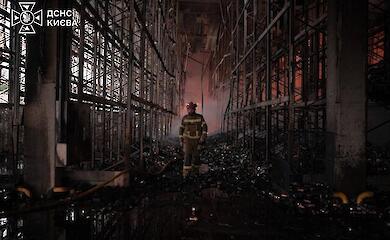
An expert explains how Russia is changing its tactics for strikes on Kyiv

News about war
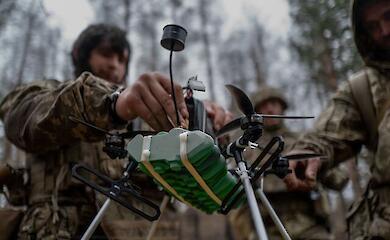
An expert explains how Russia is changing its tactics for strikes on Kyiv

The UN has reported a sharp rise in the number of Ukrainian civilians killed as a result of the war

