


Melitopol mayor speaks out about the consequences of yesterday's "arrivals" in the city


In the temporarily occupied territories, "arrivals" are increasingly common.
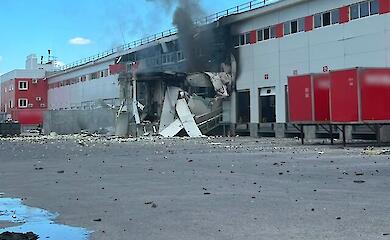
On Saturday, 3 June, a group of occupants located on the territory of the Russian-occupied town of Melitopol, Zaporizhzhya Region, near the village of Obilnoye, was killed with a precision strike at an industrial enterprise in the region. The mayor of Melitopol, Ivan Fyodorov, told this during a telethon.
He noted that the invaders were producing mortars at the seized facility there. Explosions were heard there yesterday.
There were also explosions in Berdyansk near the territory of the seaport.
Unfortunately, civilians suffered from the enemy's air defence system. Yesterday the enemy started trying to activate their air defence system, but their missiles were falling on the dacha cooperatives near the village of Myrne, of course without reaching anywhere, because the air defence system is completely leaky. This week their air defence also killed one 24-year-old civilian," Fedorov said.
He added that the elimination of the occupants in the Zaporizhzhya direction continues. On the territory of temporarily occupied Melitopol, Berdyansk, Tokmak - almost every day. A protest movement is going strong in the region and people are waiting for the Ukrainian Armed Forces to arrive.

Artur Zayonts specialises in news from the frontline. A historian by education, Arthur has always sought to bring depth and context to his journalistic work.
Related news

Germany has urged its citizens to avoid travelling to Ukraine ahead of Independence Day


An expert explains how Russia is changing its tactics for strikes on Kyiv


Irina Levchenko, the abducted Ukrainian journalist, has been transferred to the Donetsk remand centre: what is known

Russia struck a "Nova Poshta" terminal near Kharkiv: staff members were killed and more than 20 people were injured
Popular news

How to cook sweetcorn properly so that it’s juicy and sweet: the best method revealed

Archaeologists have discovered who actually built Colombia’s ancient canals


Scientists have put forward an explanation as to why there were no tiny dinosaurs


Scientists have discovered how snakes lived during the age of the dinosaurs
News about war
An expert explains how Russia is changing its tactics for strikes on Kyiv

The UN has reported a sharp rise in the number of Ukrainian civilians killed as a result of the war

3 July has been declared a day of mourning in Kyiv. The number of dead and injured is rising