


Do even atheists tend to believe? A new study has surprised scientists

A new international study has found that even atheists living in countries with very low levels of religiosity subconsciously prefer religious belief to non-belief.
Researchers from several universities, including Brunel University and Royal Holloway (UK), conducted an experiment involving residents of eight countries with low levels of religiosity: Canada, China, Czech Republic, Japan, Netherlands, Sweden, UK and Vietnam.
Details: Will M. Gervais et al, Belief in belief: Even atheists in secular countries show intuitive preferences favouring religious belief, Proceedings of the National Academy of Sciences (2025). DOI: 10.1073/pnas.2404720122
The study utilised a psychological phenomenon known as the "Noba effect". This phenomenon shows that people tend to consider actions as intentional if their consequences are harmful rather than beneficial. In this case, scientists studied how people evaluate a situation where a person's actions lead others to either religiosity or atheism.
The results were unexpected: most of the participants in the experiment believed that the actions that led to the abandonment of religion and the transition to atheism were done intentionally. This suggests that people subconsciously perceive religiosity as a positive phenomenon and atheism as something undesirable.
What was particularly interesting was that such intuitive attitudes were not only characteristic of believers, but also of those who called themselves atheists.
Study leader Dr Will Gervais noted that even in societies where levels of religiosity are declining, the belief that belief in something supernatural is positive in itself remains persistent at a deep subconscious level.
Professor Ryan Mackay added that this research highlights how strongly religious traditions influence our subconscious even when religion itself is officially sidelined. People, including convinced atheists, still internally believe that belief in God or a higher power is more "right" than no such belief.
The authors of the study believe that these data show a more complex picture of the secularisation process than is commonly believed. Even if people stop going to church and formally call themselves non-believers, subconsciously many people continue to experience religious beliefs as natural and preferable.
Mykola Potyka has a wide range of knowledge and skills in several fields. Mykola writes interestingly about things that interest him.
Related news

Scientists have explained why the poo emoji looks the way it does



Popular news
A medieval bathhouse in Morocco has kept its secret for a thousand years


Scientists have discovered why one brother was buried in a lavish grave whilst the other was buried on the outskirts of the cemetery
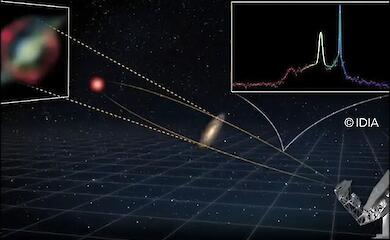
Astronomers have detected a signal that has been travelling towards Earth for over 8 billion years

News about war

Ukrainians have to help wounded during Russian shelling on their own


Pro-Russian march with St. George ribbons and Night Wolves allowed in Vienna

"Grow up!" - Budanov named the main risk for preserving independent Ukraine

