


'Release day is my second birthday': military woman tells the story of her imprisonment


Ukraine has a rehabilitation programme for Ukrainian women released from captivity. Women with their children come to the camp of the psycho-emotional stabilisation programme "Unbreakable Mother" from the Masha Foundation, where they receive qualified help.
One of the women who spent 8 months in detention told her story. For security reasons, we do not publish her photo and real name.
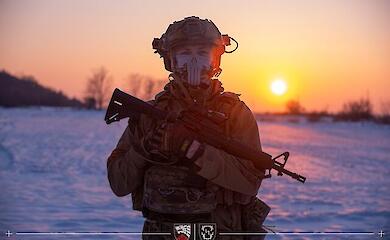
Irina is a servicewoman who in December 2021 went on a two-month business trip to Donetsk region. Therefore, the woman did not panic when news about a possible invasion began to spread in February. However, Irina was later evacuated from the first line of defence to a safer place - Mariupol. About this period the woman recounts:
The heat started from the first day of our stay in Mariupol. Constant chaotic shelling. We never took off our helmets or armour for a second. At every command "air" went down underground. At first we were outside the city, but on 26 or 27 February we were moved to the territory of the Ilyich plant. I remember the road on which we were travelling. Everywhere - burnt equipment, trams derailed, abandoned trolleybuses, broken wires. There were dead people lying on the pavements. There was panic, chaos in the city. Then came the realisation that this was really war. I've been in the service for many years, but I wasn't prepared for this. But is it possible to be prepared for something like this?
At the factory, we heard explosions all the time. We realised it was the city being bombed. When we could go outside, it was scary to see how houses were burning, how Mariupol was burning.
Irina was captured in early April. The military ran out of food and water. For a fortnight they ate almost nothing and drank technical water. It was also impossible to deliver food, because the Russians shot down helicopters with the wounded, did not give humanitarian corridors, cut off access to water and food.
You know, there was a day when I panicked a little bit, and then I said to myself, God, you are here with such a big brigade. They will go in with their bare hands to prevent the enemy from advancing an inch deep. You are in no danger." But unfortunately my hopes were not fulfilled. Our men needed food! So one night we went on a breakout to get outside the city and gain access to supplies. And with that, the ability to fight and hold the defences. But the Russians were outnumbered. And we were captured," the woman shared.
Barracks and Olenevka
The Russians took the prisoners out at night separately, dividing them into men and women. The prisoners were transported standing up in open cars.
They drove through destroyed towns. Over ruins, over corpses. At one point the lorries stopped, we were told to put our hands up. We were met by a column of Russian military, DNR soldiers with dogs and searchlights. The first thing they did was to go through our rucksacks and take away our phones and equipment. They left only our sleeping bags and karemats.
Then they put us in the second car. They took us to some village and took us into a shed. It was a long room with barred windows without glass. The first thing that caught our eye when we entered the shed were our wounded guys lying on the concrete against the walls. No one was trying to help them. Aren't prisoners of war human beings? Shouldn't they be examined by doctors?
For the next five hours, Irina says, they were searched again, not allowed to raise their heads and look at them. After that they were allowed to lie down on their sleeping mats and sleeping bags. Rain and wet snow came into the room from the street.
There were no latrines in the room, and the prisoners were not allowed to go outside. Only a bucket was left behind.
The next morning we realised that our barrack was not the only one. Through the bars we could see another one, another one, we saw our guys there. We lived in the shed for two days. During that time we were fed once. It was frozen stew in cans, tea and a piece of bread," Irina says.
After that, the prisoners were transported to Olenevka. Upon arrival, the men had to pass through a living corridor of Russian officers who beat the prisoners with batons.
We thought we would be beaten in the same way. But an officer entered the bus and said, "If we don't want to be treated like that, we should keep our heads down and not look out of the windows. I got off the bus in the first five. I had no strength to take this step, but I realised that I had no choice. They cut off all our shoelaces, belts. We were examined from underwear to the insoles of our boots. It was in Olenovka that they took off all my gold, all my jewellery. They said they'd give it back. Of course, they didn't.
In Olenivka, the woman was in a room of about 10 square metres, designed for six people. However, there were 40 people in the room, who took turns sitting, sleeping and eating. They also ate from unwashed utensils, passing the plate and spoon to their neighbours. There was no clean drinking water.
We were allowed outside twice in 5 days. There was a toilet in the cell. But there was no water to flush it. You can imagine the stench there. There was no talk about showering or hygiene at all," the woman added.
Taganrog pre-trial detention centre
In April, the prisoners were transferred to the Russian territory, to the Taganrog pre-trial detention centre, where they were treated cruelly:
Imagine: a man takes you with a strong hand and with hatred squeezes your neck and bends you to the ground. And you have to stand against the wall with your arms and legs spread wide, and your head at that moment should be very low. You had to answer questions in this posture.
The most humiliating thing was when we were stripped naked in the presence of men. None of them turned their eyes away. All our clothes were taken away from us. Then they put us in a shower with ice-cold water for 2 minutes. They gave us a wet dirty rag to wipe ourselves. They made us look like convicts. And in the same pose, with my head down to my knees, we were processed: we took fingerprints, saliva, cut off hair and fingernails. They said it was for DNA.
The prisoners were given mattresses and very dirty bed linen, in which a mug, a spoon, a small tube of toothpaste and some toilet paper were wrapped.
During the day, one could not sit down or lie down in the cell, one had to stand against the wall with one's head down all the time. There was almost no lighting, only a window with a grate, from which there was siphon. It was forbidden to look out the window. It was forbidden to sit down without a command. In addition, it was forbidden to speak loudly and communicate in Ukrainian.
We were told to learn Russian. In the pre-trial detention centre we were first given a poem "Forgive us, native Russians" and demanded that we learn it by heart. The wardens enjoyed asking us and we had to tell it. They forced us to sing the Russian anthem, "Victory Day." At every inspection the female warders dragged us by the hair, beat us on the legs if, in their opinion, we did not spread them wide enough against the wall. Almost every day at the inspection we were beaten. Humiliation and name-calling were the norm.
The oldest prisoner, according to Irina, was 56 years old and was treated just as horribly. No one gave us any leniency for feeling unwell.
If we were sick, we did not seek help. I had back problems, once I asked for painkillers. A medic came, gave me two pills, said they wouldn't help, but he didn't advise me to go to a doctor. Because it will get worse," the woman shared.
After that, the woman was moved twice more. The next place was Belgorod colony, where the prisoners were treated more or less loyally. The prisoners were allowed to keep their heads up, to sit on the bed during the day.
After 3.5 months, the woman was transported again - to a penal colony in the Kursk region.
Here we were not just forced to listen to the Russian anthem every morning, but to sing it very loudly. Once we had to sing the anthem 17 times in a row. Because they wanted it so much. They were having so much fun," Irina said.
In the penal colony there were penalties for breaking the rules. Once, when a woman covered herself with a light jacket over a blanket at night, in the morning the caretaker hit the woman's head on the iron door.
I was tasered once. The warden wanted to test the charge. After that I felt sick, my blood pressure went up, but it didn't stop him. So he tasered me again. The taser was used there to intimidate: they flicked it at the ear, at the naked body," she said.
All this time the captives did not know what was happening in Ukraine. The Russians told only that the country had been seized and "the authorities forgot about us", urging them to get Russian citizenship. No one agreed. The Russians were surprised. Equally surprised when the captive women learnt to thread their eyebrows and comb their hair with a toothbrush.
Liberation
The long-awaited return took place in winter. The women were given clothes and taken to a doctor, tested on a polygraph. After that, with a bag over their heads, they were put on the plane.
I was still with a bag on my head and they put me between two guys. It was very cold, and they shrugged me on the sides, as if to let me know: hold on! I knew they were our guys. When the plane landed, and I heard neither the whirring of the autozaks' engines nor the barking of dogs, I calmed down a little. The bags were removed from us only in some room where there was a large swimming pool. There were cots with mattresses around the perimeter.
Irina says that until the last moment she was afraid to think about an exchange:
The next day we were loaded onto a bus according to lists and taken away. They told us to keep our heads down. When the bus stopped, there was a field all around. The thought flashed through my mind that we were being brought to be shot. I was afraid to think about an exchange until the last moment. It seemed impossible. Until I heard "Glory to Ukraine!" on the bus. I clearly remember the face of the man who was calling the names. He called mine, saw my tears and started crying. And I started, out of habit I lowered my head and folded my hands behind my back. He said: "Don't ever do that again in your life." I will remember those words for the rest of my life.
Despite the experience and the health consequences, the woman notes that the captivity did not kill her desire to continue serving.
Over 10 years in journalism. Media analyst from Volyn.
Related news
The loss of the middle class: what a new study on Ukrainian refugees showed


Scientists have developed a five-minute test for early detection of endometriosis

Thousands of people will be able to receive assistance: how the law for Ukrainian critical infrastructure workers was changed

Popular news
Orban announces "results" of Hungarian mission on Druzhba oil pipeline


Will maternity leave be shortened in Ukraine? Changes for workers with children
Zelensky said that Russia was preparing a new offensive and pointed out the direction of it

Kellogg named the ceasefire condition today and compared Putin to Nicholas II

News about war
Orban announces "results" of Hungarian mission on Druzhba oil pipeline
Kellogg named the ceasefire condition today and compared Putin to Nicholas II
Zelensky said that Russia was preparing a new offensive and pointed out the direction of it
Russia is destroying Ukraine twice as fast as at the start of the war - international report