


China says the risk of a "disease X" pandemic is on the rise


Disease could be the next global threat after coronavirus.
China has announced the growing risk of a "disease X" pandemic, which is likely to become the next global threat after the coronavirus. This was stated by the head of the State Administration for Disease Control and Prevention of China Wang Hesheng, the Chinese government reports.
The official urged to prepare for the worst-case scenario and pointed out that the country's authorities are improving the mechanism for switching between ordinary and emergency response measures, improving the multi-channel monitoring and early warning system, and have also started investing in new research on infectious diseases.
Wang pointed out that this yet-to-be-launched epidemic, caused by a hypothetical unknown pathogen, has already caused great concern worldwide because of its likely deadly nature, rapid spread, ability to mutate and great uncertainty. However, he noted that climate change and expanding human activities will contribute to the disease's rapid spread.
He also noted that China, in the event of a threat, is ready to co-operate with all international institutions. He also noted that the prevention and control of infectious diseases in China has achieved remarkable results.
Disease X is a collective term. This is the name given to a pathogen that could hypothetically cause a new pandemic. Specialists are discussing a range of possible pathogens, including pandemic influenza and avian flu. Medics believe that the disease "X", for which the world is preparing for a pandemic and which can become 20 times more deadly than the coronavirus.
Over 10 years in journalism. Media analyst from Volyn.
Related news
China may have been secretly importing thousands of tonnes of uranium from Africa – media reports

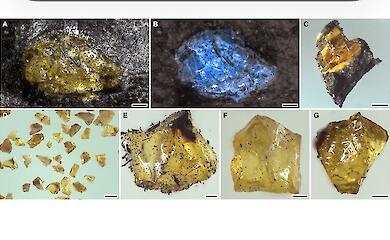
The oldest piece of amber, dating back 385 million years, has been discovered in China

Media: EU has received evidence of China’s involvement in training Russian military personnel for the war in Ukraine

Blood can tell you which disease is coming next - long before symptoms appear
Popular news

Archaeologists have discovered who actually built Colombia’s ancient canals

Russia has received new weapons from North Korea: which regions of Ukraine could be at risk

Henry VIII’s long-lost castle has been found inside another castle

Bones of ancient humans found on the seabed of the Taiwan Strait suggest they were up to 190 cm tall

News about war


An expert explains how Russia is changing its tactics for strikes on Kyiv


The UN has reported a sharp rise in the number of Ukrainian civilians killed as a result of the war

